King Arthur — the sword in the stone, the Round Table, Camelot — is the most iconic symbol of British identity in history. Over a thousand years of books, movies, poems, and political propaganda. And almost every version of it gets one thing wrong.
Arthur wasn't British. He was Roman.
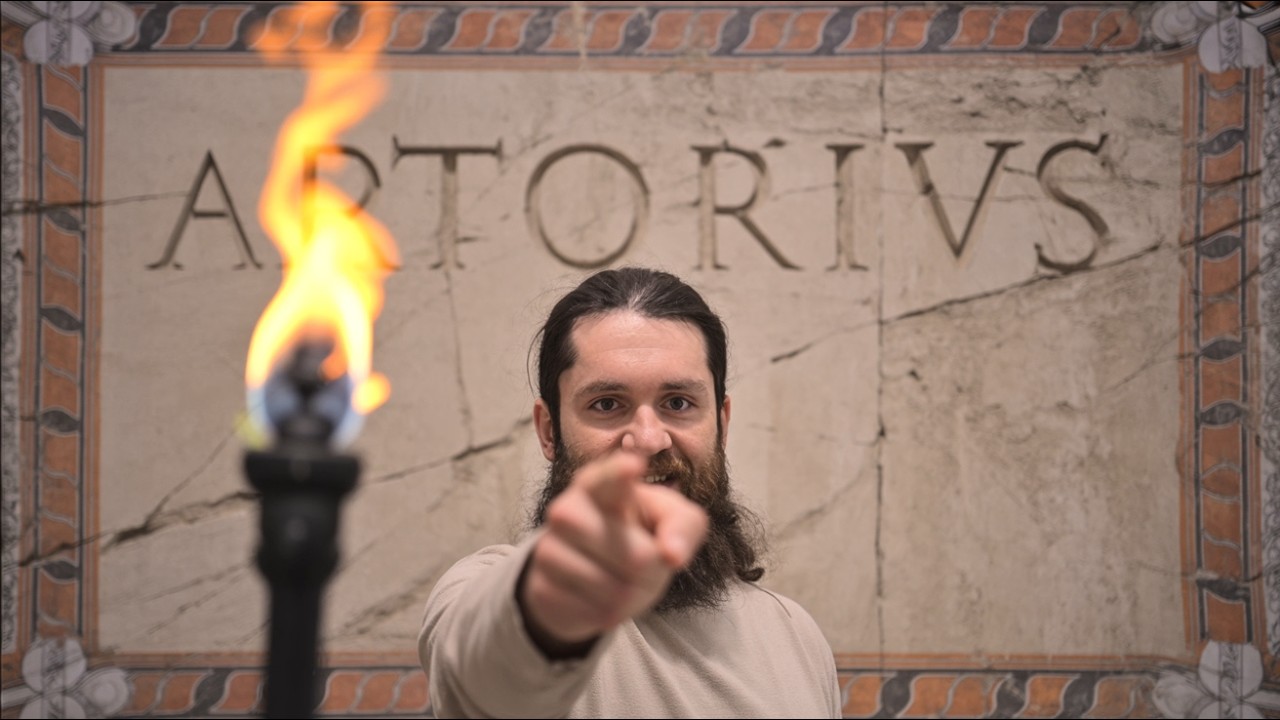
The evidence has been sitting in plain sight for a century, carved into actual stone, studied by actual scholars, and largely ignored by the version of history most people get. In this video, Alex Arnold follows the evidence from Julius Caesar's first landing in 55 BC through the fall of Roman Britain, the Anglo-Saxon migrations, the Viking settlements, and straight to the door of a real Roman military officer named Lucius Artorius Castus — the man whose name, cavalry command, and warrior legacy may be the historical seed of the greatest legend Britain ever claimed as its own.
Facts over feelings. Always.
⏱️ CHAPTERS
0:00 — Introduction
2:30 — Rome Arrives
8:00 — The Fall of Roman Britain
13:30 — Lucius Artorius Castus
19:00 — How Arthur Survived: The Welsh Preservation
23:30 — The Vikings and the Normans
31:00 — The Full Picture
33:30 — Outro
📚 SOURCES
Roman Britain
Salway, Peter. Roman Britain. Oxford University Press, 1981.
Frere, Sheppard. Britannia: A History of Roman Britain. Routledge, 1999.
Millett, Martin. The Romanization of Britain. Cambridge University Press, 1990.
Wacher, John. The Towns of Roman Britain. Batsford, 1975.
English Heritage — english-heritage.org.uk
Historic England — historicengland.org.uk
The Fall & Dark Ages
Gildas. De Excidio et Conquestu Britanniae, c.540 AD — thelatinlibrary.com/gildas.html
Dark, Ken. Britain and the End of the Roman Empire. Tempus, 2000.
Halsall, Guy. Worlds of Arthur. Oxford University Press, 2013.
Härke, Heinrich. Anglo-Saxon Immigration and Ethnogenesis. Medieval Archaeology, 2011 — tandfonline.com
The Ruin, The Exeter Book, c.10th century — anglo-saxons.net
Lucius Artorius Castus
Malone, Kemp. Artorius. Modern Philology, 1925 — jstor.org
Malcor, L.A. & Littleton, C.S. From Scythia to Camelot. Garland, 2000.
Inscriptions CIL III 1919 & CIL III 14927 — manuskriptum.de
Nickel, Helmut. The Dawn of Chivalry. Met Museum Bulletin, 1975 — metmuseum.org
Welsh Preservation & Early Sources
Nennius. Historia Brittonum, c.830 AD — avalon.law.yale.edu
Geoffrey of Monmouth. Historia Regum Britanniae, c.1138 — fordham.edu
Koch, John T. Celtic Culture: A Historical Encyclopedia. ABC-CLIO, 2006.
Vikings & Normans
Richards, Julian D. Viking Age England. Tempus, 2004.
Roesdahl, Else. The Vikings. Penguin, 1998.
Ashe, Geoffrey. The Discovery of King Arthur. Guild Publishing, 1985.
JORVIK Viking Centre — jorvikvikingcentre.co.uk
Full source list with links pinned in comments.
🖼️ IMAGE CREDITS
All images in this video were generated using Ideogram AI (ideogram.ai). These images are AI-generated original works produced for this video. No third-party copyrighted images were used. AI-generated content produced via Ideogram AI is used in accordance with Ideogram's Terms of Service and content usage policies.
🔔 SUBSCRIBE to Arnie's Brain Train for evidence-based investigations into history's most controversial and overlooked stories.
The world isn't always this simple. But it's always this interesting.
#KingArthur #RomanBritain #History #ArniesBrainTrain #DarkAges #Vikings #AngloSaxons #Camelot #BritishHistory #AncientRome #LuciusArtoriusCastus #Documentary











Информация по комментариям в разработке