Will Mauritania become the inaugural African nation to host a NATO military base? The groundwork for this prospect finds its roots in a series of strategic maneuvers and partnerships that have unfolded over the years. The initiative of China to establish a naval base in Equatorial Guinea further underscores the intricate dynamics of the global scramble for Africa's valuable resources. Let's delve into these matters, beginning with the noteworthy relationship between Mauritania and NATO.
The intricate web of relations between Mauritania and NATO has its origins dating back to the year 1995 when Mauritania took its first steps towards collaboration by joining NATO's Mediterranean Dialogue Partnership Forum. Since then, this relationship has burgeoned significantly, with each passing year seeing it evolve into a more substantial alliance. Notably, in 2013, Mauritania took a pivotal step by enrolling in NATO's Defense Education Enhancement Program, further solidifying its affiliation with the organization. However, the pinnacle of this partnership was realized in 2022 when President Mohamed Ghazouani of Mauritania received a coveted invitation to attend NATO's Summit held in Madrid. During this summit, the Heads of State and Government representing the NATO member countries demonstrated their unanimous support by endorsing a defense security capacity-building package dedicated to Mauritania's advancement.
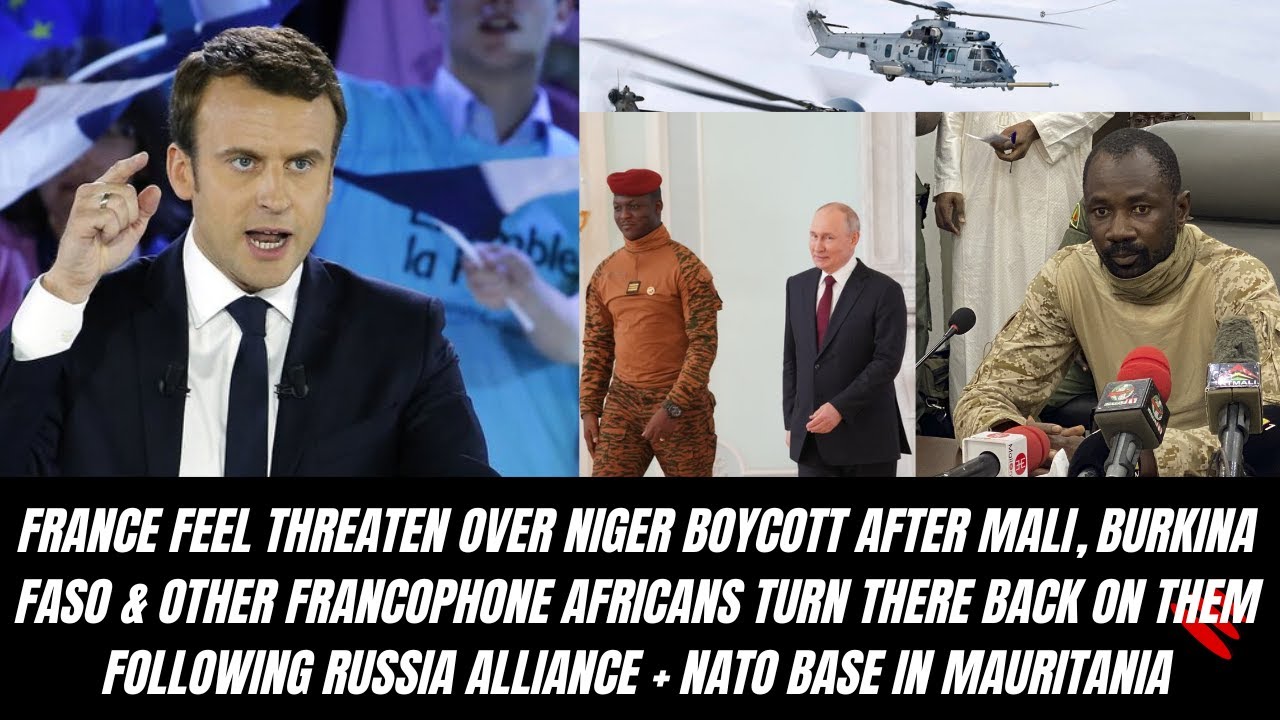
A fundamental factor facilitating this amicable collaboration between Mauritania and NATO is the historical bond shared with France. Mauritania, as a francophone nation, holds an intimate connection with its former colonial power, France, which is further demonstrated by the French military's presence within its borders. While France initially maintained a military base in neighboring Mali, recent events led to their expulsion from the nation. The Malian military officials orchestrated this expulsion as they sought to assert their sovereignty and reduce foreign influence after nearly a decade of combatting insurgent forces. In response, France withdrew its troops from Mali, subsequently relocating a portion of its military assets to Niger. However, a similar impending expulsion now looms in Niger, a testament to the growing complexity of France's military involvement in the region.
The void left by France's departure from Mali was quickly filled by the Russian private security entity known as the Wagner Group. The impact of this transition is distinct, as it underscores the evolution of diplomatic dynamics between Mali and Russia, in contrast to the previous relationship with France. Evident in the provision of advanced military equipment, such as combat helicopters and fighter jets, the Russians forged a unique camaraderie with Malian authorities, characterized by equality in negotiations and flexibility in providing resources. This stark departure from France's approach highlights the Malian authorities' perception of an equitable partnership with Russia, ultimately influencing the country's comfort in dealing with a new global power.
Amidst these shifting allegiances and dynamics, France perceives a looming challenge in the form of Russian expansion within its historical domain. Faced with this burgeoning power dynamic, France appears to view NATO as a potential ally in curbing the perceived Russian encroachment. This strategic motivation leads France to entertain the possibility of inviting NATO's intervention to counterbalance and neutralize Russia's growing influence. Consequently, the evolving narrative of "Scramble for Africa" takes shape, encompassing not only resource acquisition but also geopolitical maneuvers that extend well beyond the African continent's borders.
Yet, the complexities of these developments also warrant scrutiny. China's venture into Equatorial Guinea with the establishment of a naval base requires analysis in the context of regional security dynamics. This move stems from China's previous engagement in Djibouti, where they established their first foreign naval base. The primary motivation behind this endeavor was to address security concerns related to piracy and instability in the Horn of Africa, subsequently safeguarding vital shipping routes. The outcomes from their Djibouti base, which include a reduction in maritime threats, underscore the efficacy of China's approach.
#gulfofguinea #niger #nigerrepublic #militarycoup #mali #military #france #macron #putin #alassaneouattara #alassane #tinubu #breakingnews #breakthrough #politics #democracy #trendingvideo

Информация по комментариям в разработке