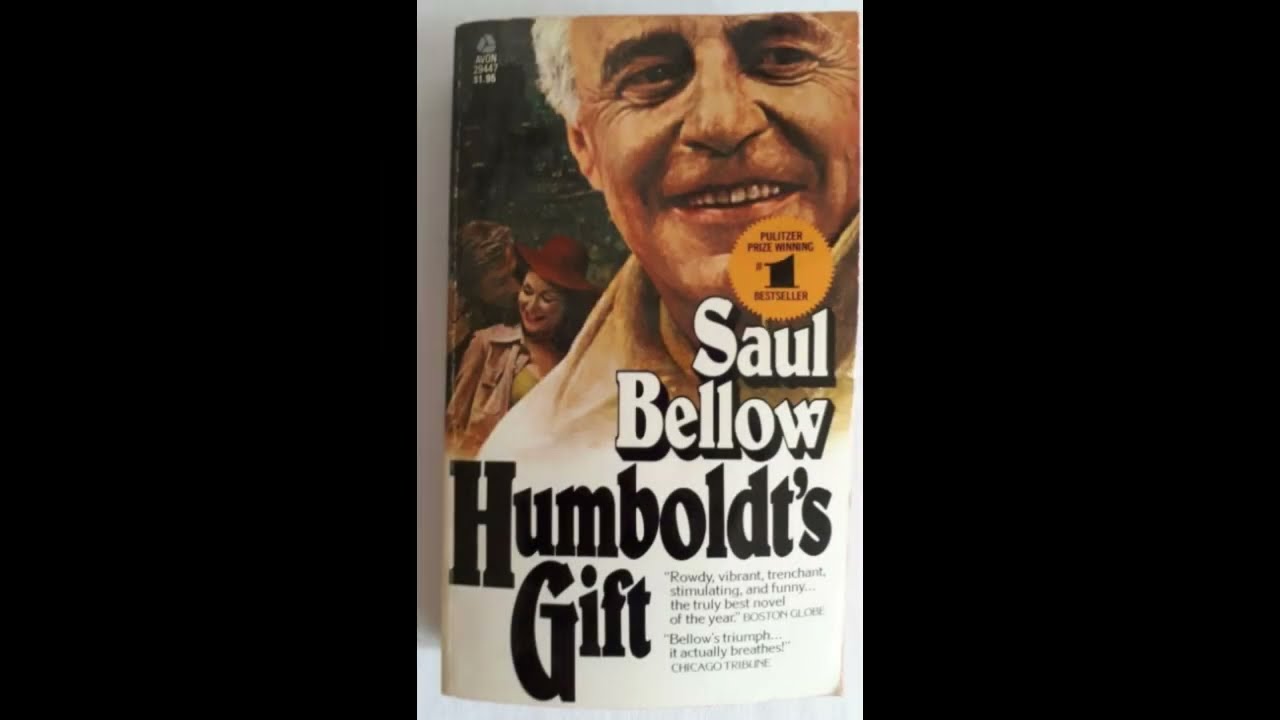
Saul Bellow's Humboldt's Gift presents a powerful meditation on the tensions between artistic inspiration, intellectual ambitions, and the encroaching pragmatism of American life. The novel, through the lens of protagonist Charlie Citrine, explores the impact of a materialistic culture on the minds of those who strive to live with a higher sense of meaning and value. Citrine, a successful but conflicted writer, reflects on his relationship with the late poet Von Humboldt Fleisher, a man of great talent and spiritual depth who nevertheless struggled against the inevitable erosion of his own ideals in the face of society’s demands.Bellow crafts Citrine as a narrator steeped in self-awareness, grappling with profound existential questions. He embodies the paradoxes that emerge from the clash of material and spiritual pursuits. As Citrine reminisces about his mentor, Humboldt, he is struck by the way society both celebrates and consumes its artists, ultimately discarding them when they no longer serve as sources of entertainment or novelty. Humboldt’s tragic descent into irrelevance and mental instability reveals the vulnerability of the artist in a culture that values productivity and financial success over artistic and intellectual contributions.Bellow uses Humboldt as a foil to Citrine’s character, with the former representing the unbridled, idealistic spirit of art, and the latter embodying the compromises one makes with the world. While Humboldt succumbed to frustration, bitterness, and ultimately disillusionment, Citrine continues to navigate the demands of his fame and the allure of worldly success. His financial prosperity and acclaim stand in contrast to Humboldt's decline, yet they also symbolize his own inner conflict: despite his success, Citrine is plagued by guilt and a feeling of unfulfillment. The inheritance of Humboldt’s “gift,” a secret literary manuscript, serves as a metaphor for the elusive promise of enlightenment and creative inspiration, which remains tantalizingly out of reach.In addition to Citrine’s internal struggle, the novel also engages with the theme of friendship as a sanctuary and a source of conflict. Humboldt and Citrine share a complicated bond that fluctuates between admiration, resentment, and dependency. Humboldt’s jealousy and erratic behavior disrupt their connection, yet Citrine remains devoted to his memory. The manuscript left behind by Humboldt offers Citrine a chance at redemption—a way to honor his friend’s legacy while reconciling with his own anxieties about authenticity and purpose. Through this relationship, Bellow underscores the notion that artists are not only shaped by their creations but are deeply affected by their associations and by society’s perception of their work.Bellow’s prose is intellectually dense, laden with philosophical inquiries and social criticism that challenge the reader to consider the role of art and the artist within the American landscape. The novel’s setting in Chicago emphasizes the contrasts between high culture and everyday life. As Citrine navigates both realms, he is confronted by a collection of characters—lawyers, mobsters, former lovers—who epitomize the cynical and pragmatic facets of American society. These interactions underscore the way commercial interests and personal ambition can distort and suppress the creative spirit.Despite his frustrations, Citrine’s journey is also marked by humor and a resilient optimism that punctuate his existential ruminations. Bellow’s wit and ironic observations soften the novel’s darker themes, allowing moments of lightness within Citrine’s struggle. This humor does not trivialize his dilemmas but rather highlights the absurdity of his circumstances. The novel’s juxtaposition of humor and philosophical reflection reflects Bellow’s view of life as a tragicomedy, where profundity and absurdity are intertwined.Ultimately, Humboldt's Gift delves into the complexities of artistic ambition, the sacrifices entailed in a life dedicated to intellectual pursuits, and the inevitable compromises that arise in a world driven by material concerns. Bellow examines the tension between one’s inner aspirations and the external forces that shape, distort, or even stifle them. Through Citrine’s introspective journey, Bellow invites the reader to consider the cost of authenticity in a world that prizes commodification. Humboldt’s legacy serves as both a warning and a beacon, reminding Citrine—and the reader—of the enduring power of art to transcend the mundane, even as it remains vulnerable to the demands of the world around it.

Информация по комментариям в разработке