Batch Processing with Simple Tools
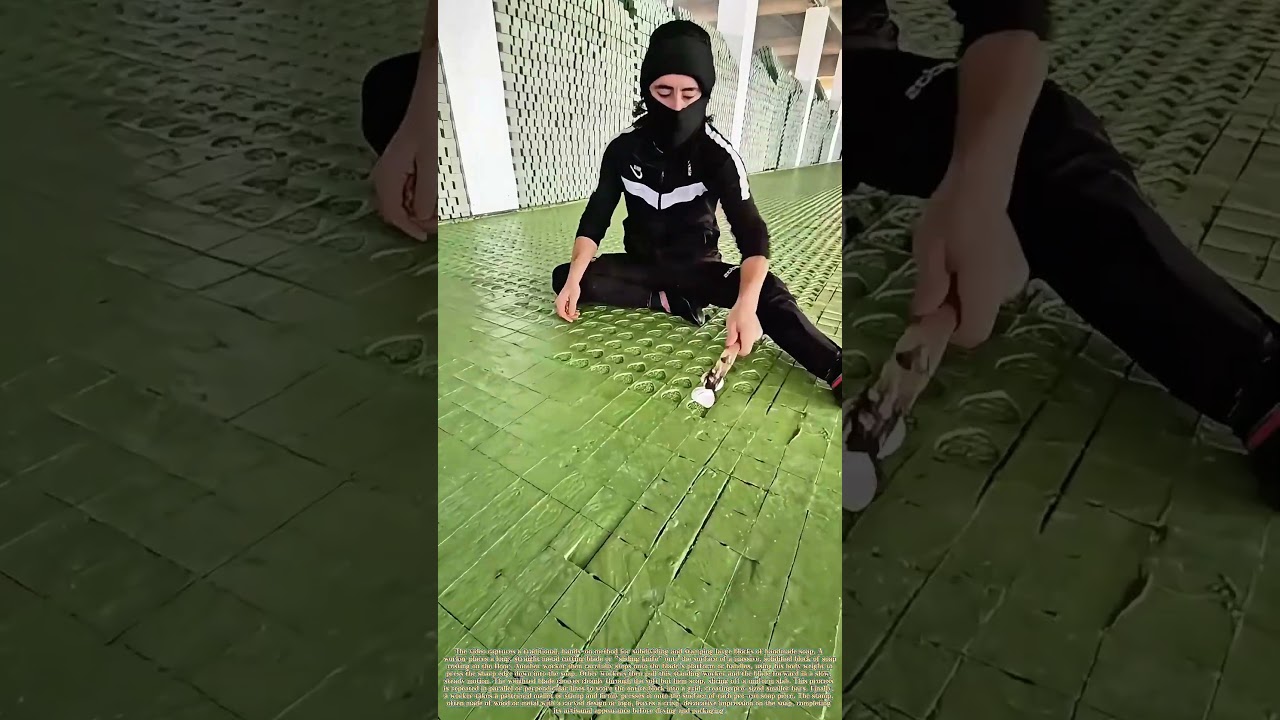
Before industrialized soap extrusion and stamping machines, this was a common method for small-scale or artisanal soap production. The process elegantly combines several steps: sizing, cutting, and stamping. It relies on the physical properties of the cured soap, which is firm enough to hold its shape but soft enough to be cut cleanly with steady pressure. The technique uses human weight as a precise, controllable force and transforms a linear motion into a perfectly straight cut. The stamping at the end is not just decorative; in historical contexts, it often identified the soapmaker, indicated the soap's ingredients (like olive oil), or added texture for better grip. This method represents a batch-oriented, tactile approach to manufacturing that prioritizes simplicity and direct control over speed.
• The Physics of the Weighted Cut. The key is the downward force applied by the standing worker. This force, concentrated along the thin edge of the blade, creates enough pressure per square inch to initiate and propagate a fracture through the soap. The pulling motion ensures the cut is continuous and straight. The soap's consistency is critical—too soft and it will tear; too hard and it will crack. The blade must be kept perfectly vertical to produce uniform slabs.
• Efficiency in Repetition and Teamwork. The division of labor is efficient. One person guides the blade with their weight and balance, while others provide the horizontal pulling force. Scoring the entire block into a grid with consecutive cuts maximizes yield and minimizes waste. This teamwork turns a potentially laborious task of sawing individual bars into a swift, coordinated process.
• The Stamp as a Maker's Mark and Finishing Touch. The stamping serves multiple purposes. It compresses the surface slightly, giving the bar a smoother finish. More importantly, it brands the product. The design, pressed into the still-malleable surface, becomes a permanent feature. This step adds significant perceived value, transforming a generic block of cleaning material into a distinct, crafted item.
• A Link to Pre-Industrial Craft. This entire process is a snapshot of pre-industrial, workshop-based production. Every step is visible and physical, connecting the worker directly to the material. The size and shape of the final bar are determined by the spacing of the cuts and the size of the stamp, reflecting a standard set by human hands and simple tools, not by automated dies. It's a method where consistency is achieved through skill and coordinated action, not digital calibration.
In the steady, gliding cut of the weighted blade and the final thump of the stamp, we witness the rhythmic creation of a humble household essential. This method is a testament to the intelligence of manual batch processing, where gravity, leverage, and teamwork are orchestrated to transform a monolithic raw material into multiple finished goods with identity and purpose. The final stamped bars are more than soap; they are artifacts of a process that values the direct translation of human effort and simple mechanics into a functional, branded product. It reminds us that standardization and branding have deep roots in the physical workshops of the past, achieved not with circuits and code, but with blades, weight, and carved wood.

Информация по комментариям в разработке