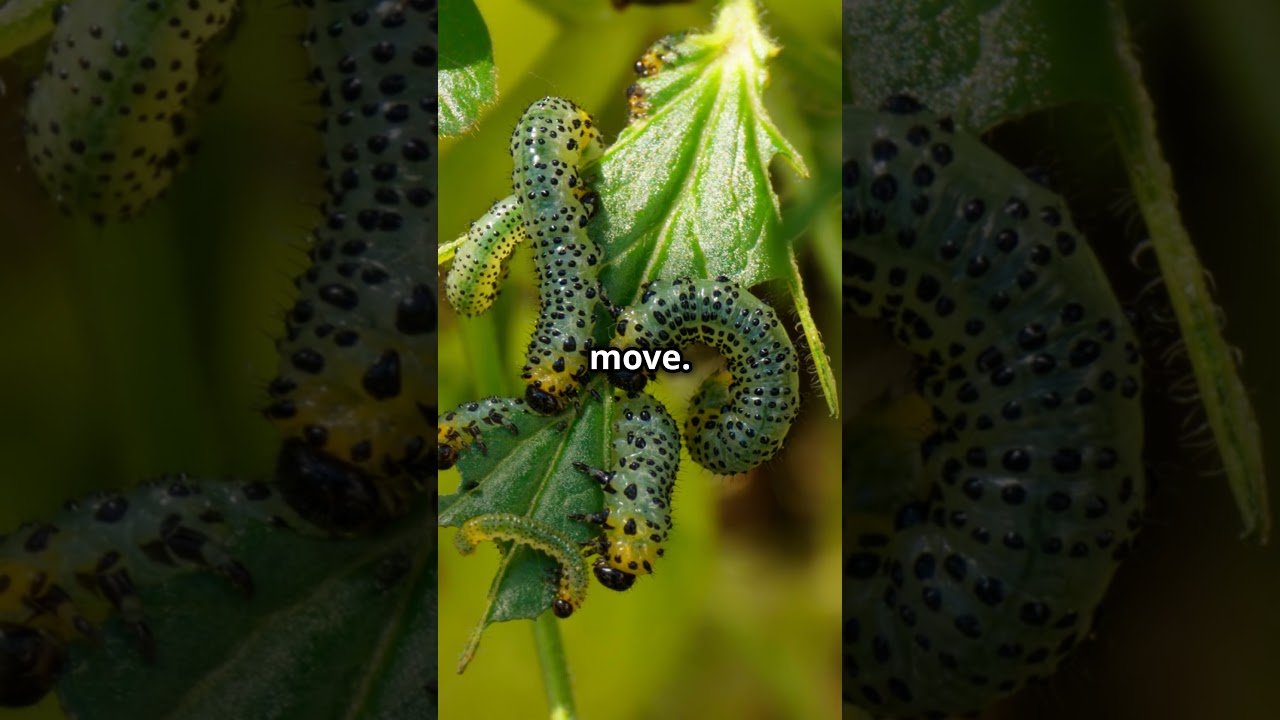
Sawfly larvae belong to the suborder Symphyta, which is part of the order Hymenoptera, making them relatives of wasps, bees, and ants. Unlike their adult counterparts, which resemble flies or wasps, sawfly larvae are caterpillar-like in appearance and behavior. They often get mistaken for caterpillars, but they can be distinguished by their distinct anatomical features.
General Biology of Sawfly Larvae
Morphology: Sawfly larvae usually have a soft body and are cylindrical, ranging from a few millimeters to several centimeters in length. They have a well-defined head, three pairs of thoracic legs, and several pairs of prolegs on their abdominal segments. Unlike caterpillars (Lepidoptera), which have only a few pairs of prolegs, sawfly larvae typically have six or more pairs of these fleshy appendages.
Feeding Habits:
Sawfly larvae are herbivores and feed on a wide variety of plants, including trees, shrubs, and herbaceous plants. Different species are often specific to particular host plants.
They feed in groups, which can cause severe defoliation to their host plant. Their collective feeding can lead to economic damage in forestry and agriculture.
Life Cycle:
The life cycle of a sawfly includes egg, larval, pupal, and adult stages.
Adult sawflies lay their eggs in slits they create in plant tissue using a saw-like ovipositor (hence the name “sawfly”).
Larvae emerge from the eggs and feed voraciously on plant material. Depending on the species, the larval stage may last several weeks.
Once mature, the larvae drop to the ground and burrow into the soil to pupate, emerging as adults in the following season.
Defensive Mechanisms:
Sawfly larvae have a variety of defenses against predators. Some species secrete chemicals that are distasteful or toxic. Others may adopt specific postures, such as curling their body or dropping off leaves when disturbed.
Behavior and Social Structure:
Sawfly larvae often feed in groups or gregariously, which helps them overwhelm plant defenses and may reduce the effectiveness of predators.
Some species exhibit coordinated movement patterns or form aggregations, which might help in thermoregulation or defense.
Ecological Role:
Sawfly larvae play a significant role in ecosystems as both herbivores and prey. They are a food source for many birds, small mammals, and predatory insects.
They also contribute to plant population control and influence plant community dynamics.
Distinguishing Sawfly Larvae from Caterpillars
Prolegs: Sawfly larvae typically have more than five pairs of prolegs, while most caterpillars have five or fewer.
Proleg Crochets: Caterpillar prolegs have tiny hook-like structures called crochets, whereas sawfly larvae lack these features.
Movement: Caterpillars move by “looping” their bodies, while sawfly larvae have a more straightforward crawling motion.
Understanding these distinctions is important for proper identification and management, as control measures effective against caterpillars may not work against sawfly larvae.

Информация по комментариям в разработке