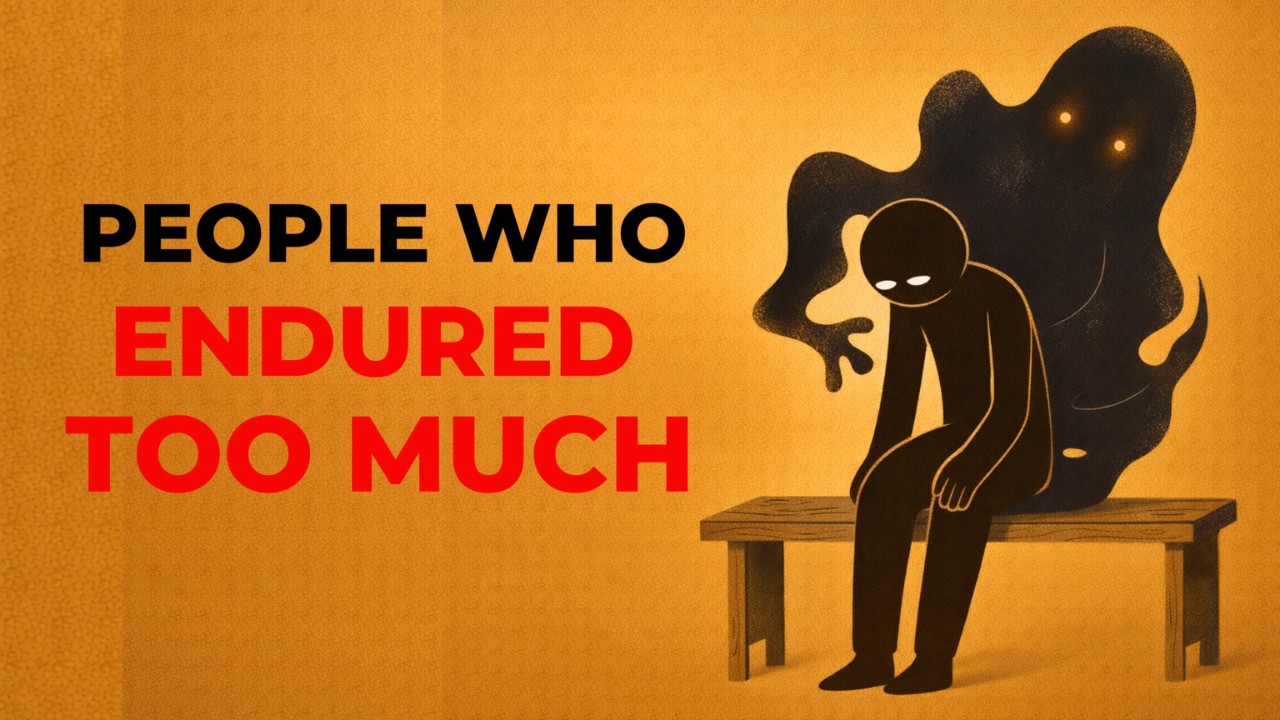
People who have gone through too much don’t always look broken.
They adapt. They endure. They stay functional while something inside quietly shifts.
This video explores the psychology of people who have endured prolonged emotional stress, trauma, or overwhelming life pressure. Not the dramatic version of trauma — but the subtle, long-term changes that affect personality, emotional regulation, relationships, and the nervous system.
Using psychology, trauma research, and nervous system science, this video explains why some people become emotionally distant, hyper-aware, overly tolerant, calm in crisis, but disconnected during peace.
If you’ve ever felt strong but unsafe, calm but exhausted, or emotionally muted even when life improves — this video will help you understand why.
This isn’t motivation.
It’s recognition.
#psychology #humanbehavior #psychologyofpeople
TIMESTAMPS:
00:00 You Don’t Break When You’ve Endured Too Much
00:42 How Endurance Quietly Rewires the Nervous System
01:45 Why You Feel Calm in Crisis but Empty in Peace
02:48 Emotional Distance Isn’t Coldness (It’s Protection)
03:50 Hyper-Awareness and Overthinking After Trauma
04:50 Why You Tolerate More Than You Should
05:50 When Life Gets Better but You Don’t Feel It
06:40 You’re Not Broken — You Adapted
psychology of endurance, people who have gone through too much, quiet trauma psychology, emotional survival psychology, nervous system trauma, chronic stress psychology, emotional suppression, hyper awareness psychology, childhood trauma effects, emotional numbness explained, why i feel empty psychology, mental exhaustion psychology, trauma adaptation, overthinking nervous system, psychology explained calmly, psychology of trauma, people who have been through too much, trauma psychology, emotional exhaustion, emotional burnout, mental resilience, emotional numbness, complex trauma, human behavior psychology, deep psychology facts, mental health awareness, emotional intelligence, trauma healing, overthinking psychology, attachment styles psychology, signs of trauma, psychological effects of trauma, psychology facts, mental strength, resilience psychology, attachment styles
#psychology
#psychologyofpeople
#humanbehavior
#psychologyofendurance
#traumaPsychology
#quietTrauma
#emotionalEndurance
#nervousSystem
#deepThinkers
#mentalHealthAwareness
#psychologyExplained
#emotionalHealing
#selfUnderstanding
Topics Covered:
– Psychology of emotional endurance
– What prolonged stress does to personality
– Nervous system survival responses
– Emotional distance and hyper-awareness
– Trauma without obvious symptoms
– Why strong people still feel exhausted
– Understanding quiet psychological adaptations
Topics include:
– emotional endurance and survival adaptations
– nervous system regulation and chronic stress
– emotional suppression and quiet trauma responses
– hyper-awareness, overthinking, and vigilance
– why calm doesn’t always mean healed
– personality changes after prolonged hardship
This video is for thinkers, observers, and people who learned to endure instead of being supported.
References Used (Referenced conceptually, not diagnostically):
– Polyvagal Theory (Stephen Porges)
– Trauma and nervous system regulation research
– Emotional suppression and affect regulation studies
– Chronic stress and cortisol impact research
– Attachment theory and emotional self-containment
– Clinical psychology literature on trauma adaptation
Disclaimer:
This video is for educational and informational purposes only.
It does not diagnose, treat, or replace professional mental health care.
If you are experiencing distress, consider speaking with a qualified mental health professional.

Информация по комментариям в разработке