Exchange transfusion
Exchange transfusion is a specialized, life-saving procedure that systematically removes and replaces a patient’s blood with donor blood to eliminate harmful substances, correct hematologic imbalances, and maintain circulatory stability. This intervention is primarily used in conditions such as sickle cell disease, severe neonatal hyperbilirubinemia, and neonatal polycythemia, particularly when conventional treatments such as phototherapy, intravenous immunoglobulin, or anti-D immune globulin prove insufficient. By reducing abnormal red blood cells, circulating toxins, or excessive bilirubin, exchange transfusion helps prevent severe complications such as kernicterus, vaso-occlusive crises, and multi-organ dysfunction. While medical advancements have reduced its routine use, this procedure remains essential for managing critical cases where first-line therapies fail.
Neonates typically undergo a double-volume isometric exchange transfusion for hyperbilirubinemia using the 1-catheter push-pull or the 2-catheter isovolumetric (continuous) approach. The required volume is 160 mL/kg, replacing approximately 85% of the neonate's circulating blood. Unstable infants may undergo single-volume exchange using an 80 mL/kg blood volume, replacing approximately 60% of the circulating blood. The neonate should receive irradiated, cytomegalovirus-safe, crossmatched reconstituted blood using washed RBCs and fresh frozen plasma with a hematocrit volume of approximately 40% to 45%.
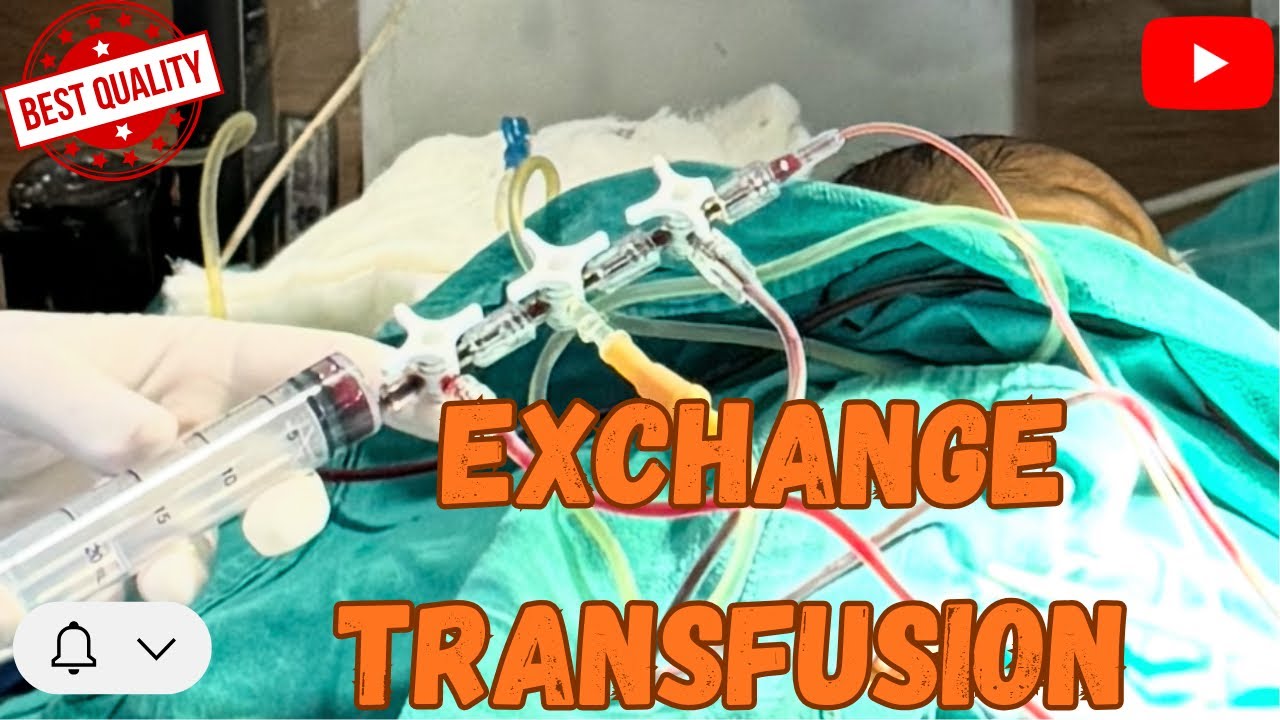
The neonate should undergo continuous cardiopulmonary monitoring throughout the procedure. Continuous exchange is the preferred method and requires 2 healthcare professionals. Donor blood hangs with tubing passing through the blood warmer. One healthcare professional infuses blood or saline through the venous line, whereas the other simultaneously withdraws blood through the arterial line at the same rate. Ideally, for this method, blood is withdrawn from an umbilical arterial catheter and infused into an umbilical venous catheter with a tip in the inferior vena cava or right atrium. Peripheral arterial or venous access may be necessary.
A 3-way stopcock connects the umbilical venous line, tubing from the donor blood, and an appropriately sized syringe. A second 3-way stopcock connects the umbilical arterial line, the syringe, and the discard bag. A predetermined aliquot is withdrawn from the arterial line, typically 8% to 10% of the total blood volume or 6 to 8 mL/kg per aliquot. In contrast, donor blood or normal saline infuses through the venous line at the same rate. The withdrawal catheter should be flushed with heparinized saline every 10 to 15 minutes to prevent clotting.
The push-pull method uses a single-lumen umbilical venous catheter.
The 2 types of exchange transfusions typically performed in neonates are double-volume exchange transfusion, primarily used to treat hyperbilirubinemia, and partial exchange transfusion, most commonly used to treat polycythemia and other neonatal conditions. During a double-volume exchange transfusion, healthcare professionals replace the baby's total blood volume twice, leaving the intravascular amount the same. A partial exchange transfusion involves slowly removing some of the blood volume and replacing the withdrawn blood with normal saline to help dilute the RBC concentration. Before any procedure, informed consent must be obtained, including a complete discussion of the procedure, risks, benefits, and alternatives.


Информация по комментариям в разработке