#pacificwar #ww2 #audiobook#germany#america
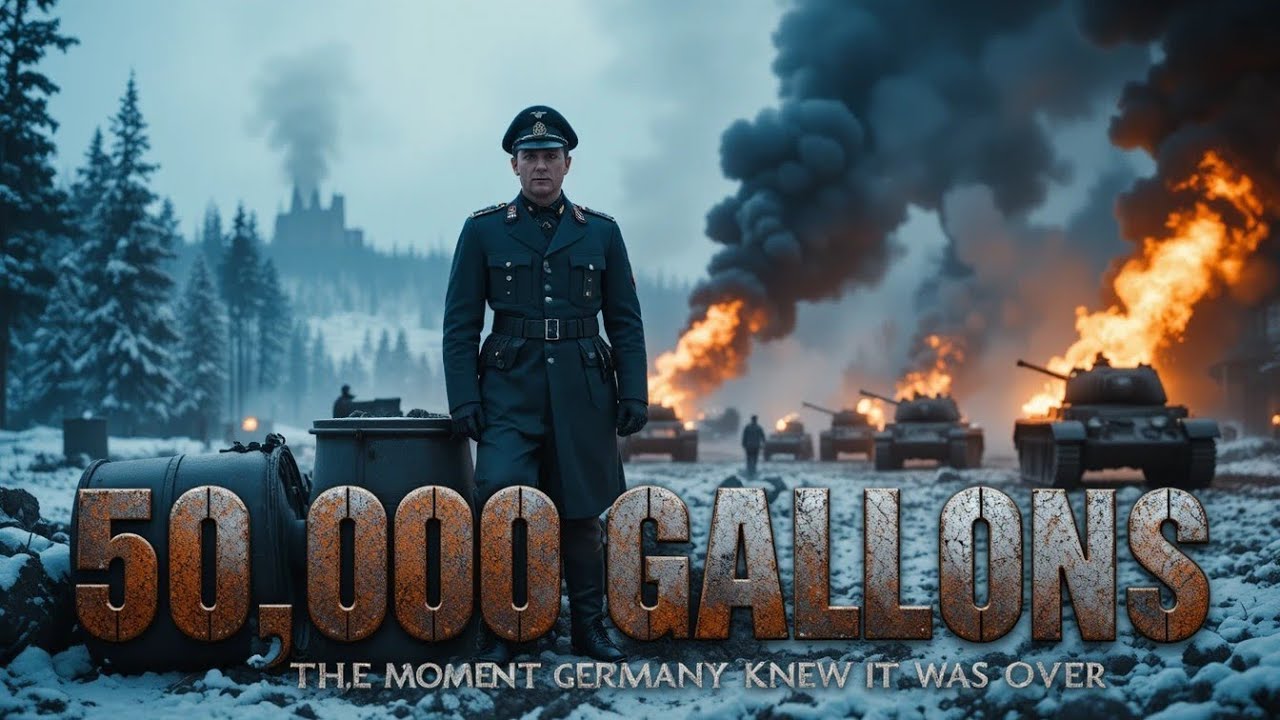
The Ardennes episode is a study in how industrial capacity and logistics can decide the fate of armies: German armored formations burst through weakly held sectors in December 1944 and, at first, everything seemed to tilt in their favor, yet their drive was fatally dependent on a single, scarce resource—fuel. Elite units like Kampfgruppe Piper pushed forward in some of the finest tanks of the war, machines designed to dominate the battlefield but built to drink gasoline at alarming rates; in broken forest terrain consumption soared, forcing commanders to treat every mile as a gamble. When Piper’s men overran an American rest area and discovered tens of thousands of gallons of high-octane fuel stacked in American jerry cans, the moment felt like salvation: a tangible, immediate solution to a problem that had been strangling the Wehrmacht for months. That elation evaporated when manifests and newspapers revealed the wider truth—this was not an abandoned hoard but a single withdrawal from a constantly replenished flow supplied across the Channel by pipelines, ports, convoys, and the Red Ball Express. The arithmetic was brutal: one Allied pipeline could deliver in a single day more fuel than a German panzer division might consume in a month of heavy fighting, so the captured 50,000 gallons suddenly appeared petty and strategically irrelevant. Worse still, Allied commanders intentionally denied caches they could not afford to lose: engineers opened valves, drained drums, and burned millions of gallons of petrol to prevent it from falling into German hands. For soldiers who had believed propaganda about American weakness, seeing whole depots set on fire while replacement fuel arrived almost immediately was a psychological abyss. To the Germans it looked like obscene waste; to the Allies it was sound, ruthless logistics—destroy what an enemy could use and replace it from a production system capable of absorbing the loss. The result for Piper and his comrades was catastrophic: immobilized tanks, abandoned armor, and the disintegration of elite formations not because of inferior tactics but because of an empty gauge and an opponent who could afford to fight by burning supplies. By Christmas the Germans were forced to leave behind most of their heavy vehicles and withdraw; of thousands who had attacked, only a small fraction returned. The battle therefore crystallized a broader truth of modern war: victory often flows from industrial output, supply chains, and the psychological effects of material abundance or scarcity. The panzer ace and the heroic charge mattered less than oil wells, refineries, docks, and the anonymous logistics workers and truck drivers whose labor translated barrels into mobility. The Ardennes offensive was less a failure of courage than a failure of economics and planning—a high-stakes bet that captured enemy supplies could substitute for a collapsed industrial base, a bet that the Allied logistical system and willingness to deny resources made impossible to win. In the end the clash in the snowy Belgian forests was as much a contest of assembly lines and tanker fleets as it was of tactics and bravery; the Germans discovered not a key to victory but a yardstick that measured the vast gap between their exhausted economy and the industrial colossus arrayed against them.
Disclaimer
This expanded account is a narrative synthesis based on widely reported historical events and aims to preserve the original meaning while using different wording; for precise figures, primary-source verification or detailed archival research is recommended, as some numbers and anecdotal details can vary between sources.
KEYWORDS 🔐 🔐 🔐 🔐 🔐 🔐 🔐 🔐 🔐 🔐
Battle of the Bulge, Ardennes, Kampfgruppe Piper, fuel logistics, Red Ball Express, PLUTO pipelines, Tiger II, Panther tank, Allied supply chain, German supply collapse, strategic logistics, American industrial output, fuel interdiction, depot destruction, Stavelot, Honsfeld, Meuse River, Antwerp, psychological impact, WWII logistics
#BattleOfTheBulge #Ardennes #WWII #Logistics #FuelSupply #RedBallExpress #PLUTO #MilitaryHistory #TigerII #Panzer #Antwerp

Информация по комментариям в разработке