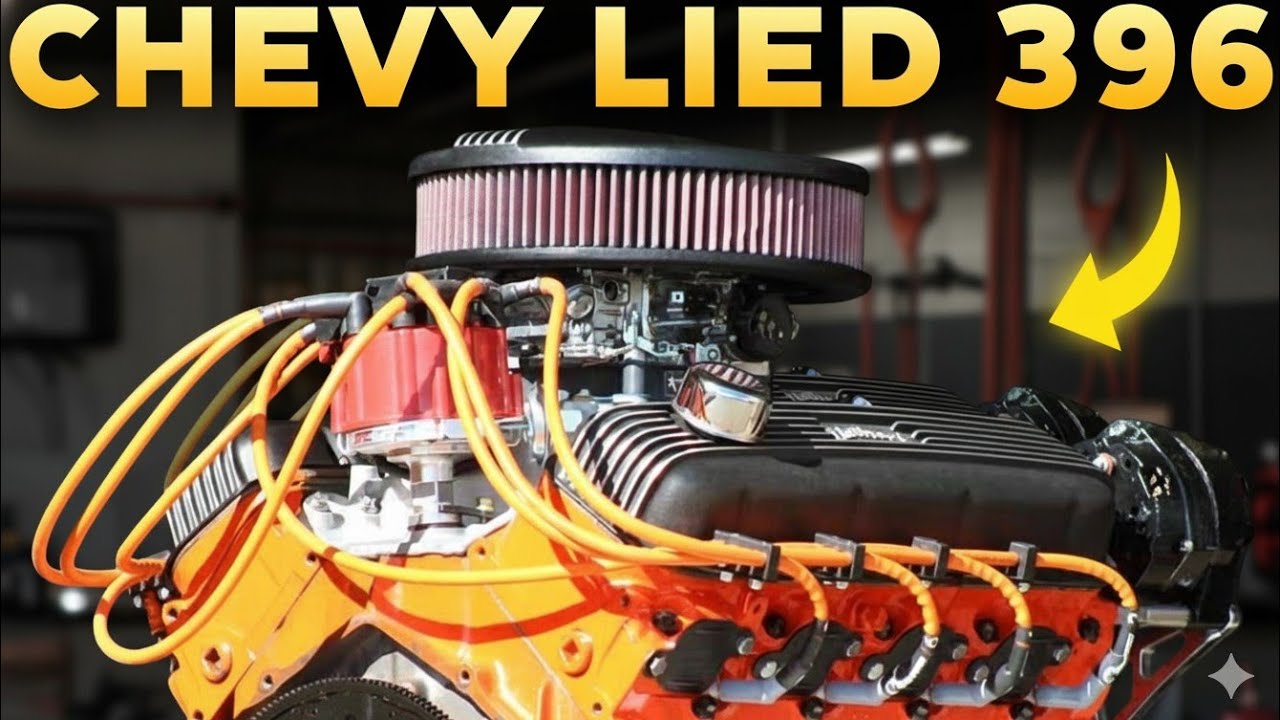
The Shocking Truth behind Chevrolet Banned 396 Big Block Engine!
Uncover the shocking truth behind Chevrolet banned 396 Big Block Engine in this must watch video! Learn about the history and controversy surrounding this legendary engine.
this is a tale of engineering brilliance, corporate secrecy, and a powerplant so soo Powerful NASCAR had to "outlawed it" to keep the competition fair.
history
The Chevrolet 396 Big Block L78 is one of the most legendary high-performance engines ever produced by General Motors. It was part of Chevrolet's Mark IV Big Block engine family and was introduced in the mid-1960s as a high-output option for muscle cars and performance vehicles. The L78 was a beast of an engine, known for its raw power and durability, making it a favorite among drag racers and street performance enthusiasts.
Key Specifications
Displacement: 396 cubic inches (6.5 liters)
Configuration: V8
Bore x Stroke: 4.094 x 3.76 inches
Compression Ratio: 11.0:1 (high compression for maximum power)
Horsepower: 375 hp (gross) at 5,600 RPM
Torque: 415 lb-ft at 3,600 RPM
Carburetor: Holley 4-barrel (typically a 780 CFM or 800 CFM unit)
Camshaft: High-lift, high-duration solid lifter camshaft (aggressive profile for performance)
Cylinder Heads: Rectangular port, open-chamber heads with large valves (2.06" intake, 1.72" exhaust)
Block: 4-bolt main caps for added strength
The Origins of the Porcupine Heads
The porcupine heads were developed by Chevrolet's engineering team, led by Dick Keinath, for use in NASCAR and other forms of racing. The design featured canted valves (valves angled in opposite directions) to improve airflow and combustion efficiency. This was a radical departure from traditional wedge-head designs and was intended to give Chevrolet a competitive edge in racing.
The Mystery of the 396 Porcupine
While the porcupine heads are most commonly associated with the 427 and 454 Big Block engines, there are rumors and stories of a 396 version being tested. However, documentation on a 396 porcupine engine is scarce, and its existence remains a topic of debate among enthusiasts. Some believe that Chevrolet experimented with the 396 as a testbed for the porcupine design before scaling it up to larger displacements.
NASCAR Ban
The porcupine heads were so effective that they caught the attention of NASCAR officials. In 1963, NASCAR banned the use of the porcupine heads, citing concerns that the design gave Chevrolet an unfair advantage. This ban forced Chevrolet to abandon the porcupine heads in favor of more conventional designs. The ban also contributed to the mystique and rarity of these engines.
Best Community Comments
@lanewilkinson-k2r
1963 was first year for a Mystery 427, but it looked like a 409, only used in very few Impala's which had aluminum body panels and no options, it drew fresh air from the inside of the car with a special breather and cowl vent, It was banned by Nascar and was used to cover up the building of the first canted head 427 in 1965. Smokey and GM kept it hid until it was time.
@bigdave8040
The Mark III was a big bore Big Block that was scrapped not due to any federal law or MASCAR edict but because the bigger bore required all new tooling. The cost of the BBC tooling and casting copes and cores were normally offset by sales of truck engines (the tall deck 366, 427 and 454). These truck engines were all standard bore center engines. The bigger bore (4.5 inch and larger bores) required the centerline of the bores to be widened (as is the case with big bore short stroke Pro Stock NHRA engines). It was killed by the bean counters at GM.
corections
Champions1960-1970-- Rex White 1960 Louis Clements, Prepared Chev, 1961-Ned Jarrett, Chevy.-1962 Joe Weatherly Pontiac, Prepared-Bud Moore Car-1963 Joe Weatherly, Bud Moore prepared Mercury, 1964, Richard Petty, Plymouth, 1965-Ned Jarrett-Ford-Crew Chief -James Hylton, 1966 David Pearson, Cotton Owens-Dodge, 1967-Richard Petty Plymouth, 1968, David Pearson, Holman & Moody Ford, 1969, Holman Moody Ford, and 1970, Bobby Isaac Dodge, prepared By Harry Hyde.

Информация по комментариям в разработке