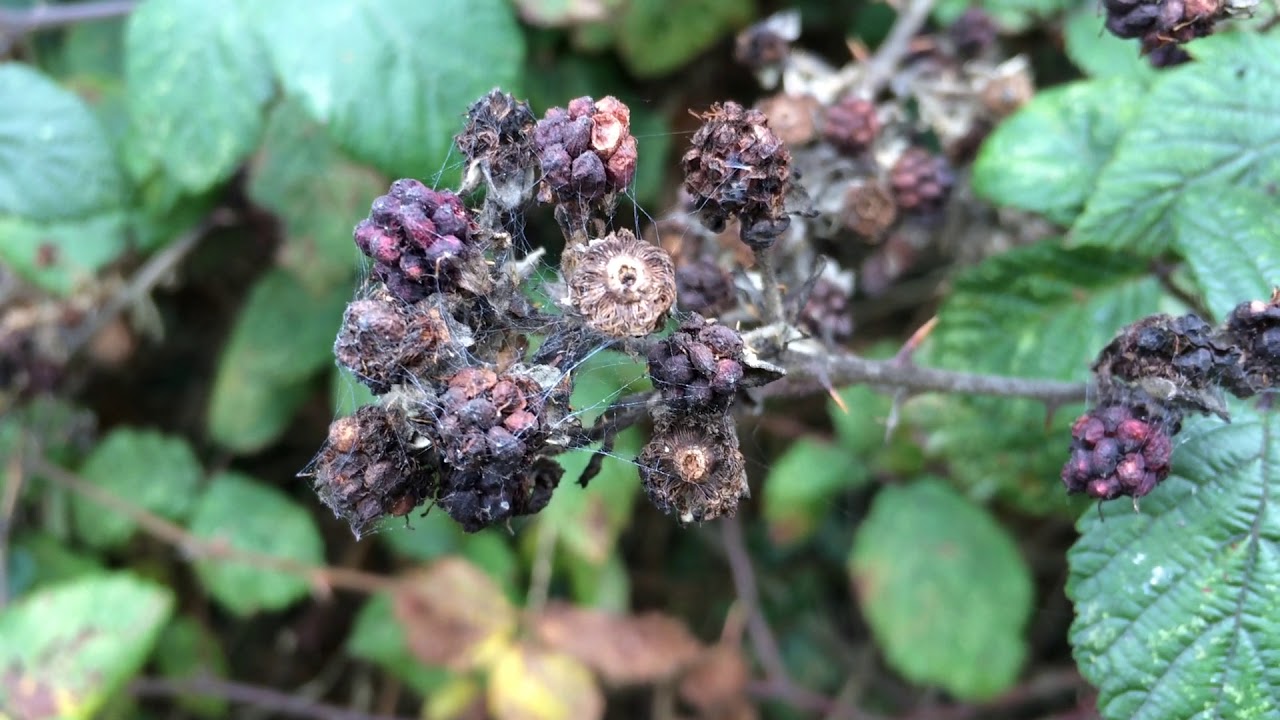
One of many Common blackberry bushes within the Hill Barton industrial estate of Exeter, UK.
====
It is a widespread and well known group of over 375 species. The blackberry grows to about 3 m in height and tolerates poor soil very well.
The flowers are an excellent source of food for our bees and other busy pollinators.
Blackberries are an edible fruit of the Rosaceae family, which are commonly consumed raw, or in desserts, jellies, jams, pies, crumbles, and can even be made into wine. Blackberries, like most berries, are extremely high in antioxidants, fibre, and a variety of other health promoting nutrients.
Blackberries have been consumed for centuries and have many uses.
Blackberries are similar to raspberries except that they have larger seeds and when picked. The torus (stem) remains attached to the blackberry, whereas when a raspberry is picked the stem stays on the plant. Blackberries are low in calories but very high in many healthy nutrients.
In the UK folklore stipulates that picking blackberries after October 11th (Old Michaelmas Day) should be avoided because the devil has made them rotten or poisonous by spitting or doing other damage to the berries.
100 grams of blackberries contain only 43 calories.
100 grams of whole blackberries contains 14% of the recommended daily intake of fibre in one's diet.
Blackberries are very high in antioxidants which are known to protect against inflammation, cancer, neurological diseases and ageing.
100 grams of blackberries contain 23 mg of vitamin C which is equal to 35% of the recommended daily intake. In addition to vitamin C, blackberries also contain vitamin A, vitamin E, and vitamin K.
Blackberries contain copper which is essential for bone metabolism. It is also essential to the production of white and red blood cells in the body.
Blackberries contain B vitamins, folic acid, riboflavin, pantothenic acid, and niacin. These are all essential for metabolising carbohydrates, fats, and protein in the body.
Blackberries are general in season from June until September depending on the region they are grown.
Blackberries are very perishable. They will only last for a few days once picked and are best eaten as soon as possible after picking for maximum freshness and taste.
The very dark colour of blackberries is evidence of the high antioxidant levels contained in the fruit.
Other names for blackberries include lawers, thimbleberries, dewberries, and brambleberries.
Blackberries have been used by women in labour to help relieve labour pain as they have high levels of vitamin K which can act as a muscle relaxant.
Blackberries have slightly higher levels of antioxidants than blueberries.
Evergreen blackberries are considered to be anti-viral, anti-bacterial, and anti-cancer because of the level of ellagic acid contained within the fruit.
The nutrients in blackberries contribute to improved immune function, improved digestive health, healthy heart function, cancer prevention, weight management, strong bones, improved eye sight, proper blood clotting, healthier skin, improved memory, and various cognitive benefits.
Blackberries can be found growing in the wild and on farms where they are cultivated in North America and other parts of the world.
Traditionally, the leaves and barks of the plant have also been consumed. The leaves of blackberries have been used to treat mild inflammation of the gums and sometimes even sore throats.
Simply put - they are pretty amazing!
===
Scientific classification
Kingdom: Plantae
(unranked): Angiosperms
(unranked): Eudicots
(unranked): Rosids
Order: Rosales
Family: Rosaceae
Genus: Rubus
Subgenus: Rubus
Species: R. allegheniensis
Binomial name
Rubus allegheniensis
Category
Education
Licence
Standard YouTube Licence
Category
Education
Licence
Standard YouTube Licence

Информация по комментариям в разработке