How do we save nature? For Eduardo Brondizio, the answer lies not just in science—but in listening. As one of the 2025 Tyler Prize Laureates, Brondizio has spent over three decades working alongside Indigenous communities in the Amazon, documenting how their deep-rooted knowledge holds solutions to our planet’s biodiversity crisis.
🎙 Featuring: Julia Marton-Lefèvre, Yadvinder Malhi, Joji Carino, Emilio Moran, Anne Larigauderie, #EduardoBrondizio
📝 Written by: Rebecca Rhodes
✂️ Edited by: Sid Quah
🎥 Produced by: ReAgency | Jayde Lovell
#indigenousknowledge #Biodiversity #Amazon #IPBES #Conservation #environmentaljustice #tylerprize
---
We think that nature is made up of intact wilderness or key biodiversity areas. But all of these areas are lived in and managed by people.
Some of the world’s most biodiverse places aren’t untouched—they’re cared for by Indigenous communities.
Globally, Indigenous peoples and local communities represent some of the most important players in the biodiversity crisis and climate crisis. They manage over 25% of the Earth's surface. They carry millennia of learning about nature.
There is a half billion indigenous people. And on their land, we are losing biodiversity less than in other land.
Despite their essential role in conserving nature, Indigenous communities are often overlooked in both science and policy.
They tend to be invisible to policymakers, but also in part because they tend to be invisible to society. But if we fail to recognize them today, we're also failing to recognize that our biggest partners in confronting the biodiversity crisis.
So I grew up, you know, in the country in transformation. We were also very fortunate to have parents that were narrating that transformation to us, getting us to pay attention—to disappearing forests, to the disappearing water springs, to the pollution that was becoming part of our daily lives.
Eduardo Brondizio grew up watching nature disappear—and decided to do something about it.
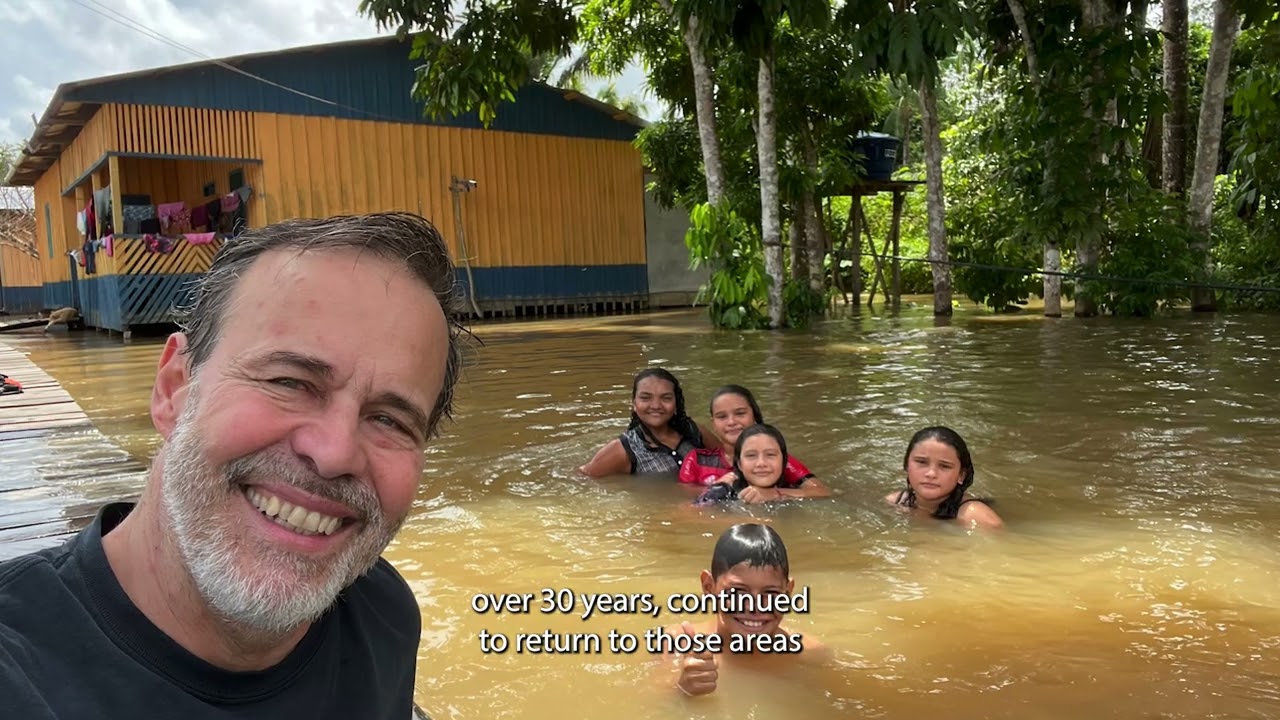
He first went to the Amazon in 1989, and he returned to those families again, and has over the years—over 30 years—continued to return to those areas to get ever deeper knowledge of how they manage.
Eduardo has worked with Indigenous peoples in the Amazon and also across the world, carefully documenting how they manage the ecosystems. And he has revealed that working with nature's intelligence has brought us the rich biodiversity that we have today.
Indigenous producers are protecting territories, protecting forests, and innovating in production systems that bring the biodiversity of the forest to the rest of the world.
Most people see the Amazon as vast forests, but Eduardo saw the people who were living in the forests. What has been seen as backward is actually invaluable understanding of living with nature.
Eduardo, from this year's research, has illuminated the vital role of Indigenous peoples and local communities in conservation.
Brondizio brought this understanding to the global stage as co-chair of the Intergovernmental Platform for Biodiversity and Ecosystem Services Global Assessment alongside Sandra Díaz and Josef Settele. It became one of the most influential reports on nature and biodiversity ever produced.
The global assessment of IPBES—Eduardo, Josef, and myself—were the driving wheel of a huge, huge undertaking.
The IPBES report was really of historic importance. It had great impact on governments who were discussing a global strategy for halting biodiversity loss. And it started to change thinking and policies about the important values of nature and culture.
Brondizio played a crucial role in the report’s systematic integration of Indigenous and Local Knowledge: a world first for reports of its kind.
That’s also been welcomed not only by scientists, but by many Indigenous people and other communities, as a way of getting their voices truly heard at the international stage.
Respecting traditional knowledge is his greatest gift to our world.
By truly listening and honoring local knowledge, Brondizio has made the invisible visible—reshaping how science understands the world and who gets to speak for nature.
I feel very lucky to be able to conduct longitudinal research—to follow the same place, you know, over many decades, in an effort to follow generations and to understand their aspirations.
He's somebody who cares deeply about people, which is why he's so successful in his field research with local people. People see he’s genuine.
He shows that by paying attention to people, we can do better science.
The combination of scientific rigor in research with empathy for culture and people—it's very rare to see among scientists. And this is something that we urgently need today.

Информация по комментариям в разработке