KOCSÁR Miklós: Májusi kétségbeesés
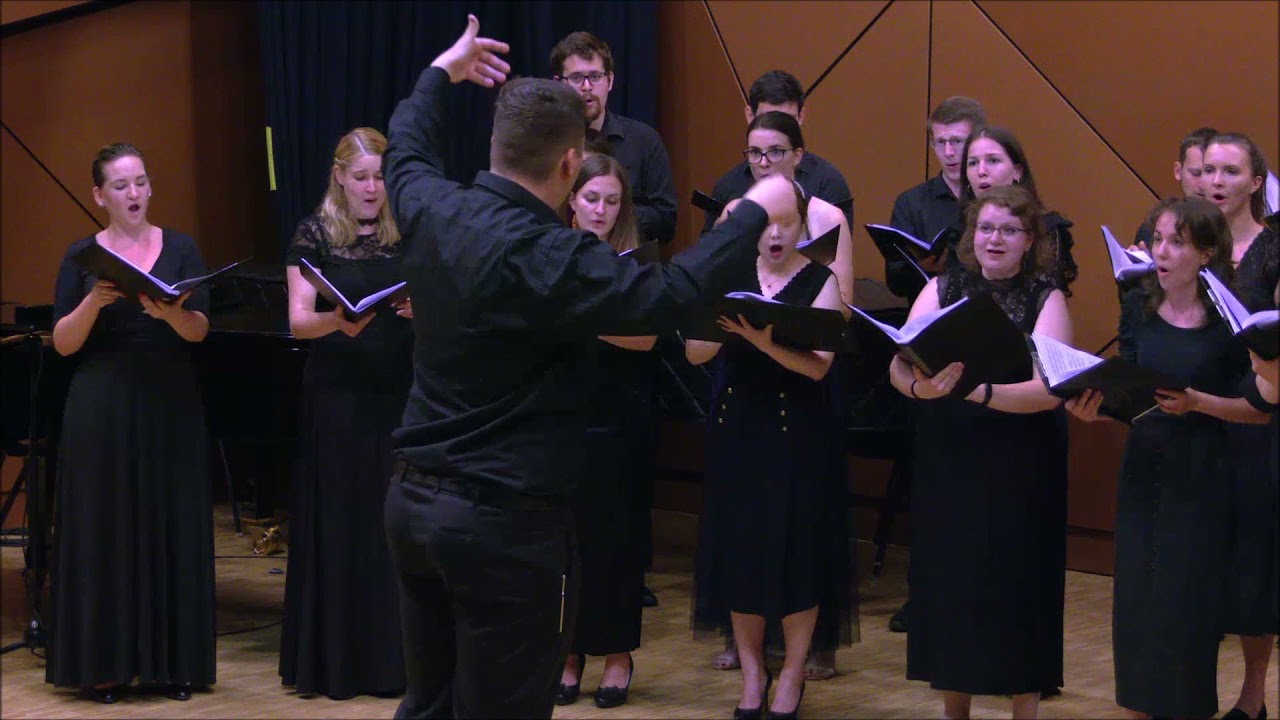
előadja: a PTE MK ZMI kibővített diplomakórusa
vezényel: KISS Benedek Győző
A felvétel 2021. június 26-án készült, a Pécsi Tudományegyetem Művészeti Kar Zeneművészeti Intézetének karvezetés diplomakoncertjén, a ZMI Liszt Ferenc hangversenytermében.
Kányádi Sándor 1957-ben írta meg májusi kétségbeesés című versét.
"Mintha szögesdrótot hullatnának a láger-álmú sötét felhők". Milyen világba érkeztünk? 1957 Romániájába. Oda, ahol a forradalom elmaradt, de a megtorlás annál brutálisabban dúlt. 1956 őszén egy-egy egyetemi gyűlést szerveztek, ahol a kollektivizálás és az orosz nyelv ellen, a szabad sajtóért szólaltak fel. Azután megindult egy durva leszámolás-- nem valóságos szabadságharcosokkal, hanem potenciális ellenségekkel, A megtorlás súlyosabb lett, mint Magyarországon, és lefejezte a magyar kisebbséget. Az anyaország (Kádár) nem állt ki a kétmilliós magyarságért. Több ezer tanult embert, papot, tanárt, diákot koholt vádakkal börtönbe zártak, megkínoztak, százakat kivégeztek. Sokan a Duna-deltai kényszertáborokban vesztették életüket. Megszüntették a kolozsvári Bolyai egyetemet, magyar középiskolák sorát zárták be. Professzorok menekültek öngyilkosságba. Ez a borzalom kezdődött el 1957-ben.
A vers döbbenetes valósága ellentétes mindazzal, amit a májustól várunk. Az élet éledezése elmarad, a természet gyilkos indulattal tör ránk. És hol az Isten?
A képes beszédben megjelennek a törpeségbe és félelembe lökött emberek is. Ellentétek sorakoznak: nem pacsirta szól, az ég sír. A rügyek remény helyett hervadt álmokat rejtenek. A hajdan édes szerelem most zokog. Irtóztató! Az eddig éltető patak, tó, folyó szennyben fuldoklik. Sír az ég, sír a föld, és sír a sár.
A rettenet a végére elcsitul. Előttünk a költő áll, aki meggyötört lelkivilágát --tehetetlenségében--a tájra vetítette. Részvéte megnyugvást hoz. Békesség árad el a versben.
Kányádi Sándor versét Kocsár Miklós írta át négyszólamú vegyeskarra.
Miklós KOCSÁR: Májusi kétségbeesés
chorus: the extended diploma choir of the Institute of Music, University of Pécs
conducting: Benedek Győző KISS
The recording was made on the 26th of June, 2021, at the graduation concert of the Institute of Music of the Faculty of Arts of the University of Pécs, in the Liszt Ferenc Concert Hall.
Sándor Kányádi wrote his poem, Despair in May in 1957.
,,As if the lager-dreamlike dark clouds were dropping barbed wire'' What world have we arrived at? Romania, 1957. Where revolution did not occur, yet retaliation raged brutally. In Autumn, 1956 multiple university gatherings took place, where they spoke against collectivization and the Russian language, and discussed the issue of the freedom of speech. Later began a vicious take down.! - Not with trained freedom fighters, but rather with potential enemies. Revenge striked heavier than in Hungary, and beheaded the Hungarian minority. The Motherland (Kádár) did not stick up for the two million Hungarians. Thousands of educated people, priests, teachers and students were tortured and imprisoned with false accusations. Hundreds were executed. Many lost their lives at labor camps in the area of the Danube Delta (?). They abolished the Bolyai University of Kolozsvár, a number of Hungarian secondary schools were shut down. Professors escaped into suicide. This horror started in 1957. The unexpected realness of the poem contradicts with everything we would expect from May. The awakening of life does not come, nature attacks us with murderous rage. Where is God? People who were tossed into fear and smallnes also appear in the symbols. Opposites line up: It is not the skylark that sing, it is the sky that sheds tears. Seedlings hide withered dreams instead of hopes. Once so sweet love now weeps. Horrendous! The once nurturing stream, lake, river now drowns in filth. Cries the sky, cries the Earth and cries the mud. Atrocity comes to peace in the end. In front of us stands a poet, who projected his tormented soul - in helplessness - on the scenery. His condolences bring calmness. Peace fills this poem.
The poem of Sándor Kányádi was edited by Miklós Kocsár for a four-part mixed choir.












Информация по комментариям в разработке