Art has a unique way of engaging our senses, and among the many techniques artists employ, impasto painting stands out for its captivating texture. One artist who mastered this technique was Oskar Mulley, a maestro of impasto, renowned for his ability to create artworks that not only appeal to the eyes but also entice the sense of touch. In this blog post, we will delve into the world of Oskar Mulley's textured impasto paintings, exploring the technique, the artist's life, and the impact of his work on the art world.
Understanding Impasto Technique
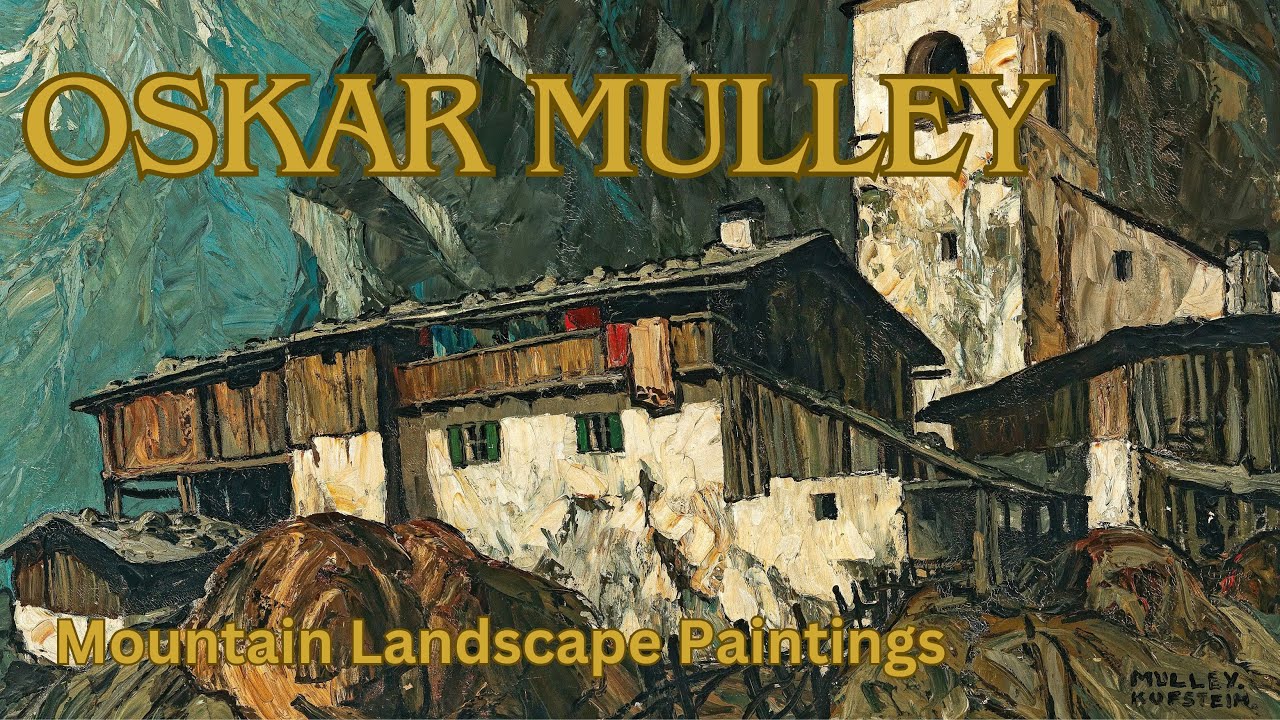
Impasto is a painting technique where the paint is applied in thick, textured layers, creating a tangible, three-dimensional surface on the canvas. The result is a visually striking artwork that invites viewers to experience the painting not only visually but also through touch. Oskar Mulley was a master of this technique, skillfully using palette knives and spatulas to create intricate, tactile surfaces in his paintings.
The Life and Artistry of Oskar Mulley
Born in 1891 in Klagenfurt, Oskar Mulley's artistic journey began at the School of Crafts in Munich and later continued at the prestigious Academy of Fine Arts in Vienna. Mulley's early works primarily focused on rural still life and motifs, but it was his move to Kufstein in 1918 that marked a significant shift in his artistic style. Inspired by the scenic beauty of the mountains, Mulley transitioned into creating landscapes, where impasto became his signature technique.
Mulley's Unique Impasto Style
What set Mulley's impasto paintings apart was his meticulous layering of colors. He applied paints in multiple layers, building depth and texture, resulting in artworks that seem to come alive. The impastos, crafted with palette knives and spatulas, gave the paintings a tangible quality, making viewers feel the roughness of the mountain terrain or the smoothness of a chapel's facade. Each stroke of the knife brought the scenes to life, capturing the essence of the mountains, farms, and chapels in a way that was both visually stunning and emotionally evocative.
Impasto and Emotional Connection
Mulley's textured impasto paintings weren't merely about technique; they were about eliciting emotions. The rough texture of a mountain range could be felt under the fingers, creating an immediate connection between the viewer and the artwork. The layers of paint seemed to carry the artist's passion, inviting viewers to immerse themselves in the landscape's raw beauty. The impasto technique became a vehicle for Mulley to convey not just visual aesthetics but also the profound emotions he felt for the subjects he painted.
The Impact on Art Lovers and Critics
Mulley's impasto paintings were met with immense admiration from both art lovers and critics alike. His ability to infuse life into his landscapes, making them almost tangible, left a lasting impression on anyone who encountered his work. Critics lauded his technique, recognizing the depth and richness he achieved through impasto. Art enthusiasts marveled at the interplay of light and shadow on the textured surfaces, mesmerized by the realism that impasto brought to Mulley's paintings.
Legacy and Influence
Oskar Mulley's textured impasto paintings have left an indelible mark on the art world. His innovative use of impasto has inspired generations of artists, encouraging them to explore the tactile possibilities of painting. Today, artists continue to experiment with impasto, drawing inspiration from Mulley's techniques to create their own textured masterpieces.
Conclusion
Oskar Mulley's impasto paintings are more than just artworks; they are sensory experiences. Through layers of paint and expert brushwork, Mulley brought landscapes to life, allowing viewers to not only see but also touch the rugged mountains, the quaint farms, and the serene chapels. His legacy as a master of impasto lives on, reminding us of the power of texture in art. As we appreciate Mulley's work, we are invited to explore the world of impasto painting, where the canvas becomes a playground for both the eyes and the fingertips, creating a truly immersive artistic encounter.

Информация по комментариям в разработке