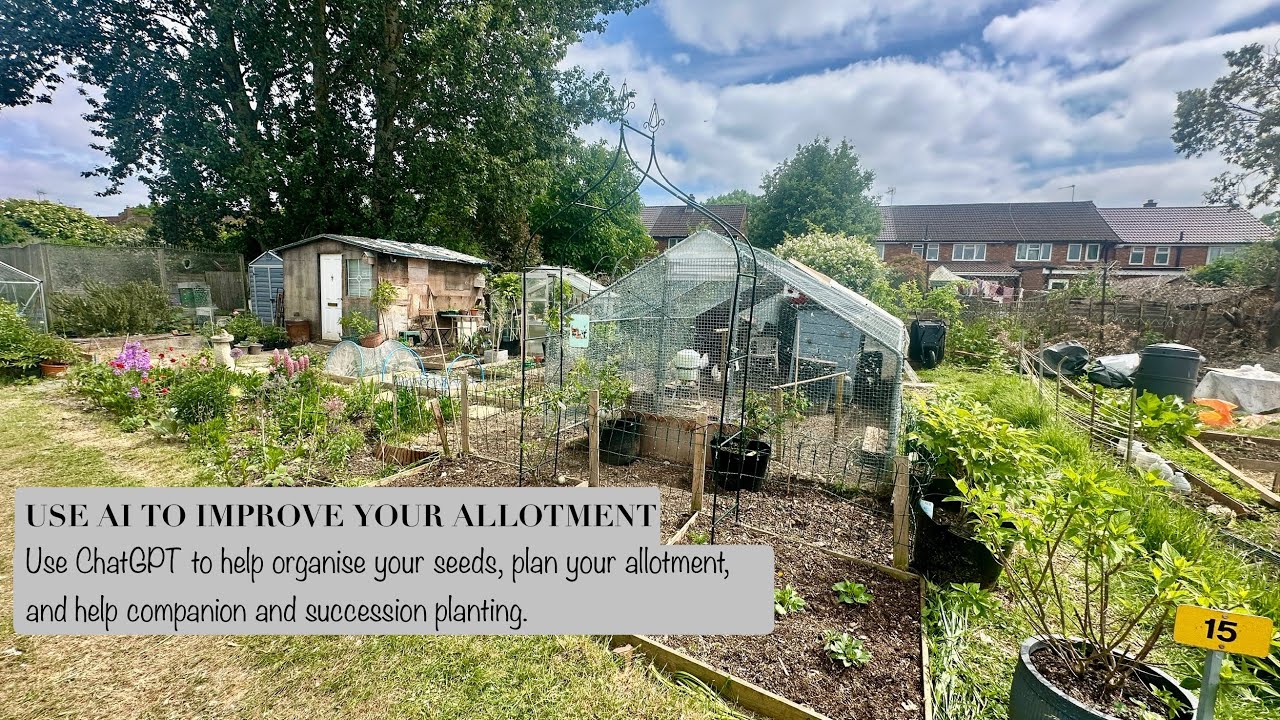
Discover how I leverage ChatGPT to efficiently plan my vegetable garden. In this video, I provide a step-by-step guide on using AI to organize planting schedules, manage crop rotations, and optimize your allotment space. #allotment #chatgpt
What You’ll Learn:
• Setting up ChatGPT for garden planning
• Creating seasonal planting schedules
• Managing crop rotations and companion planting
• Tips for maximizing yield in small spaces
Whether you’re a novice gardener or looking to incorporate technology into your gardening routine, this guide offers valuable insights to enhance your allotment planning.
0:00 Identifying your growing space
2:31 Organising your seeds with ChatGPT
4:49 Creating your notes app for later referral
7:50 Downfall of using ChatGPT
10:22 ChatGPT responses and recommendations
Growing space prompt-
Let’s dive into your allotment setup! To get a thorough understanding, let’s break it down by each growing space. First off, where are you currently growing? Once you let me know the overall layout or the number of beds you have, we’ll go through each one individually. For each bed, I’ll ask you about its key growing conditions—like how much sunlight it gets, the soil type, and any special characteristics. Let’s start with an overview: where are you growing, and how many beds or spaces are we looking at?
Seed organisation prompt-
I’m uploading pictures of my seed packets. Please extract the following for each one and create a list I can refer back to later:
1. Seed Type (e.g., carrot, tomato, lettuce)
2. Variety (e.g., Purple Haze, Sungold, Little Gem)
3. (Optional: Other useful details like sowing period, supplier, or F1 status if visible)
Format each entry like this:
Seed Type – Variety
Allotment planner prompt (used at the end of the growing space and seed list notes)
Here is the current layout of my beds, what’s growing in each, what’s in the greenhouse, and seed packs I own. Based on this, please provide:
1. Detailed observations about plant combinations, plant counts per bed (based on spacing), and whether anything is over- or under-planted.
2. Highlight any inefficiencies, conflicts (e.g. allelopathy or pest attraction), or crop rotation issues.
3. List immediate tasks to complete this week (sowing, transplanting, pruning, feeding, netting, etc.).
4. Recommend succession or follow-on crops for each bed that will become free soon. Give an estimated harvest date based on planting date and UK weather.
5. Suggest companion plants (beneficial or protective) that can still be sown or interplanted now.
6. Flag any potential pest or disease risks based on current crops and season, and how to pre-empt or deal with them.
7. Include a planting density check — are my bed layouts realistic for the number of crops I’ve chosen?
8. Provide forward-looking planning tips for the next 4–6 weeks — what I should start preparing, sowing, or ordering now.
Assume bed sizes are 100x120 cm unless stated otherwise, numbers after plants are dates in UK format. Tailor advice for an experienced gardener in the UK with access to a greenhouse, compost, and tools. Optimise for productivity, succession, long-term soil health, and break down each bed one at a time.

Информация по комментариям в разработке