LTV A-7 CORSAIR II, THE FIRST AMERICAN COMBAT AIRCRAFT TO GET A FULLY INSTRUMENTED HUD
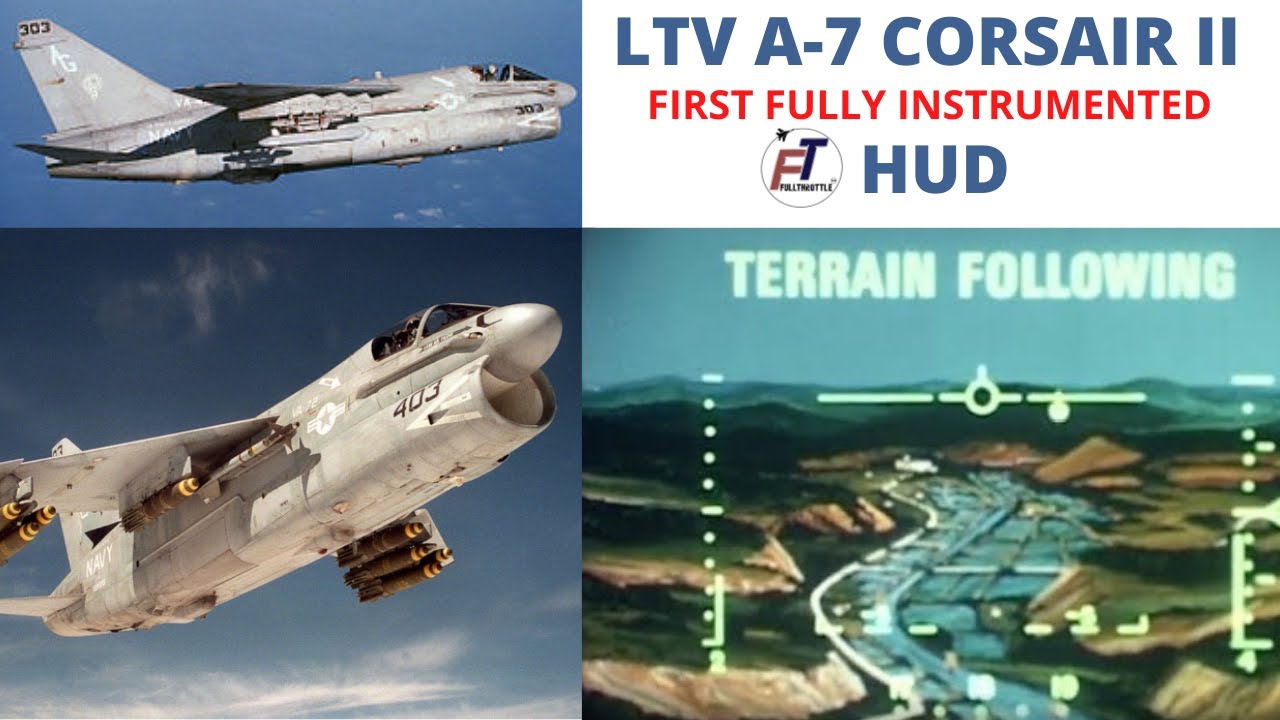
The Ling-Temco-Vought A-7 Corsair II looked like a stubby and a shorter variant of F-8 Crusader, but it sure was much sophisticated and smarter than her cousin. It featured many state of the art avionics that would make it's single pilot’s workload easier and their attacks far more precise. One of these features was the AN/AVQ-7(V) HUD, which was made by Elliott Flight Automation along with Marconi during mid-60s, making the subsonic A-7 the first American combat aircraft to be equipped with a HUD.
Before the A-7, tactical jets were receiving increasingly complex holographic gunsights with simple symbology, but nothing was tied directly to computers that worked to present all the key weapons aiming, delivery and primary flight information right up in front of the pilot's eyes as they peered through the windscreen. The HUD, weapons aiming and delivery computer also other navigational and avionics systems made the A-7 a precise weapons delivery platform in a time that predated the widespread use of precision-guided weapons. Much of the HUD's general layout and symbology is still in use today, and just how deeply integrated the HUD was with the jet's radar, navigation, and other systems is absolutely remarkable. Flight data 'tapes,' velocity vector, pitch ladder, steering cues, targeting points, bomb azimuth guides, AoA E-bracket, and much more are all there, just as they remain on so many tactical aircraft HUDs today.
The A-7 continued to make history with the introduction of the first raster scan/CRT HUD that allowed for video imagery, as well as HUD symbology, to be projected in front of the pilot. As such, video from a forward-looking infrared (FLIR) pod could be projected into the pilot's forward field of view, giving them a degree of night vision and along with terrain-following radar, precision all-weather, day-night attack capability was added. Roughly over a decade and a half later, this capability would become a staple on many U.S. fighters, especially those that used the LANTIRN system, such as the Block 40 F-16C/D and the F-15E. The F/A-18 Hornet also had this capability via its AAS-38A/B Nite Hawk pod and its raster-scan HUD.
This video illustrates the general characteristics of A-7 variants, quick accessibility to aircraft's maintenance and built-in testing systems for avionics, the operation of aircraft inertial navigation and the terrain-following system as well as the weapons delivery and aiming computer, the AN/AVQ-7(V) HUD and it's operational parameters as well as the offset bombing capability in low visibility and raster scan /CRT HUD employment. Altogether shows its effectiveness in precise attack roles employing these major avionics components.
Video by Vought Corporation Systems Division.
Reference - THE WARZONE, The A-7 Attack Jet's Head-Up Display Was A Revolution In Air Combat Tech by TYLER ROGOWAY.
Disclaimer: We don’t own and created this or any part of this footage.

Информация по комментариям в разработке