This video documents the Changhua County Fire Bureau's 114 Advanced Fire Rescue Training Program, an intensive, 10-day concentration course held at the National Fire Agency Training Center (NFATC). The program is designed to enhance firefighter safety, master rescue skills for complex scenarios, and strengthen concepts of risk prediction and fireground survival. The training methodology emphasizes hands-on simulation and practical exercises guided by certified instructors, including US RIT specialists.
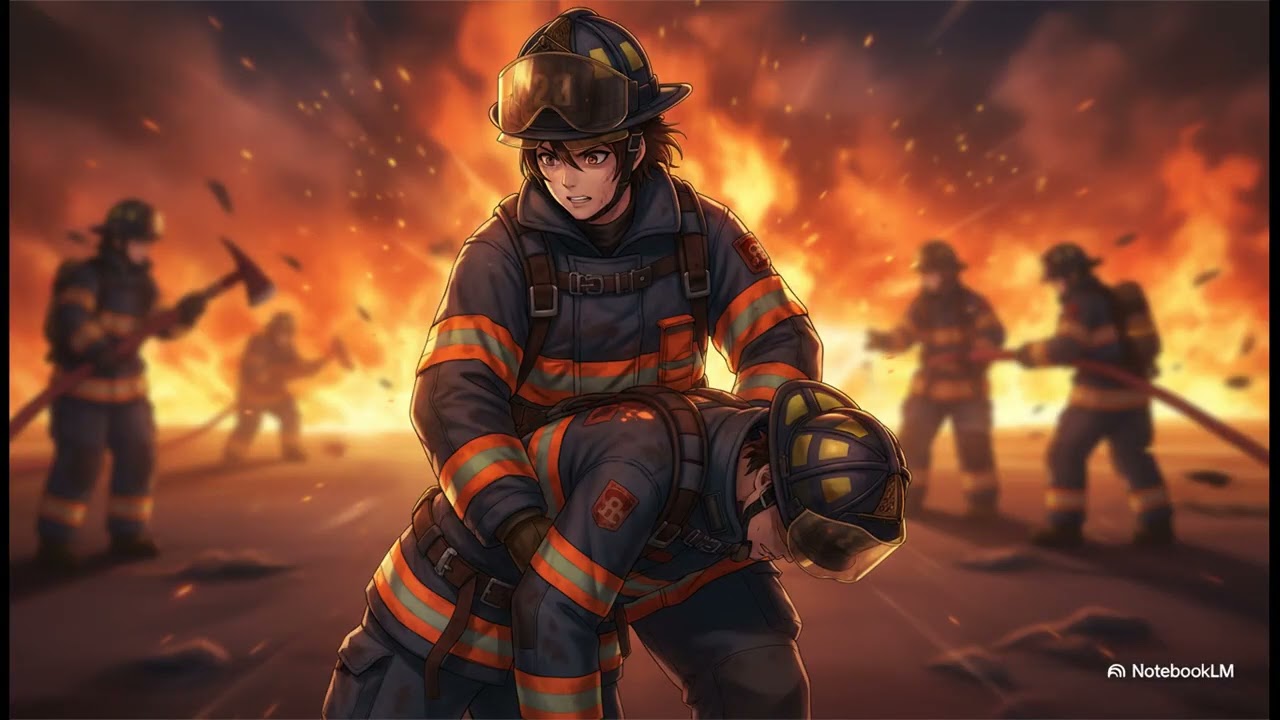
I. RIT and Firefighter Survival: A major focus is placed on RIT (Rapid Intervention Team) Rescue and firefighter safety and emergency procedures. Trainees practice critical life-saving techniques, including the Denver Drill and Pittsburgh Drill, simulating the immense difficulty of rescuing a downed partner. The course details the MayDay Procedure, requiring firefighters to communicate using the LUNAR format (Location, Unit, Name, Air/Assignment, Resources) when facing emergencies like SCBA failure or being lost. Personnel also learn specialized skills, such as horizontal and vertical rapid escapes using hoselines, and the proper deployment of RIT equipment like the FAST Board and Courant multi-functional rescue webbing.
II. Fire Control and Search Tactics: The curriculum incorporates Search and Rescue Techniques utilizing Thermal Imaging Cameras (TIC) for enhanced safety and efficiency. Advanced tactics such as VEIS (Ventilation, Entry, Isolation, Search) are practiced. Firefighters are trained to interpret extreme fire behavior through VVCD analysis (Volume, Velocity, Color, Density), noting that light-colored smoke indicates danger. Flashover container training exposes participants to environments exceeding 600°C to demonstrate fire dynamics. This reinforces the principle that ventilation before extinguishing is a dangerous action, and teaches the use of transitional attack to control fire spread.
III. Water Supply Logistics and Command: Training covers Intermediate Water Supply Application and Foam Extinguishing Skills. Trainees simulate optimal circulating water supply modes using specialized tools (like poker cards representing 1,000 gallons) to coordinate the roles of water tenders, relay vehicles, and attack vehicles. Essential technical knowledge includes calculating hoseline friction loss (FL)—approximating that a 1.5-inch hoseline loses about 12 times the pressure of a 2.5-inch line at 100 GPM. Limits on large flow drafting are also analyzed (e.g., a 4-inch pipe yields approximately 700-900 LPM).
The Incident Command System (ICS) is taught to establish trust, achieve consensus, and manage tasks. The system's core goals are L-I-P: Life Safety, Incident Stabilization, and Property Conservation. Crucial safety mechanisms covered include the Roll Call Control System and the Personal Accountability Report (PAR) mechanism, which verifies the safety, location, and air levels of crews.
IV. Case Study Review: The training includes mandatory case study briefings. One notable example, the Lukang Binhai Road Iron Sheet Factory Fire, highlighted the absence of local fire hydrant water as the maximum challenge. The success of the operation was attributed to the commander's swift resource allocation (requesting seven water tenders) and the effective use of foam defense lines to protect adjacent residences.
#AdvancedFirefighting #RIT #RapidInterventionTeam #ics #IncidentCommandSystem #firefightersafety #MayDayProcedure #lunar #WaterSupplyLogistics #CirculatingWaterSupply #FrictionLoss #DenverDrill #PittsburghDrill #veis #thermalimagingcamera #tic #VVCD #FlashoverTraining #PAR #PersonalAccountabilityReport #lifesafety #IncidentStabilization #PropertyConservation #NFATC #ChanghuaCounty #TaiwanFireService #searchandrescue
彰化縣消防局2025年火搶進階課程_訓中_Created by NotebookLM

Информация по комментариям в разработке