Edinburgh, UK (1800 – 2025) – Then and Now Cities – City Evolution
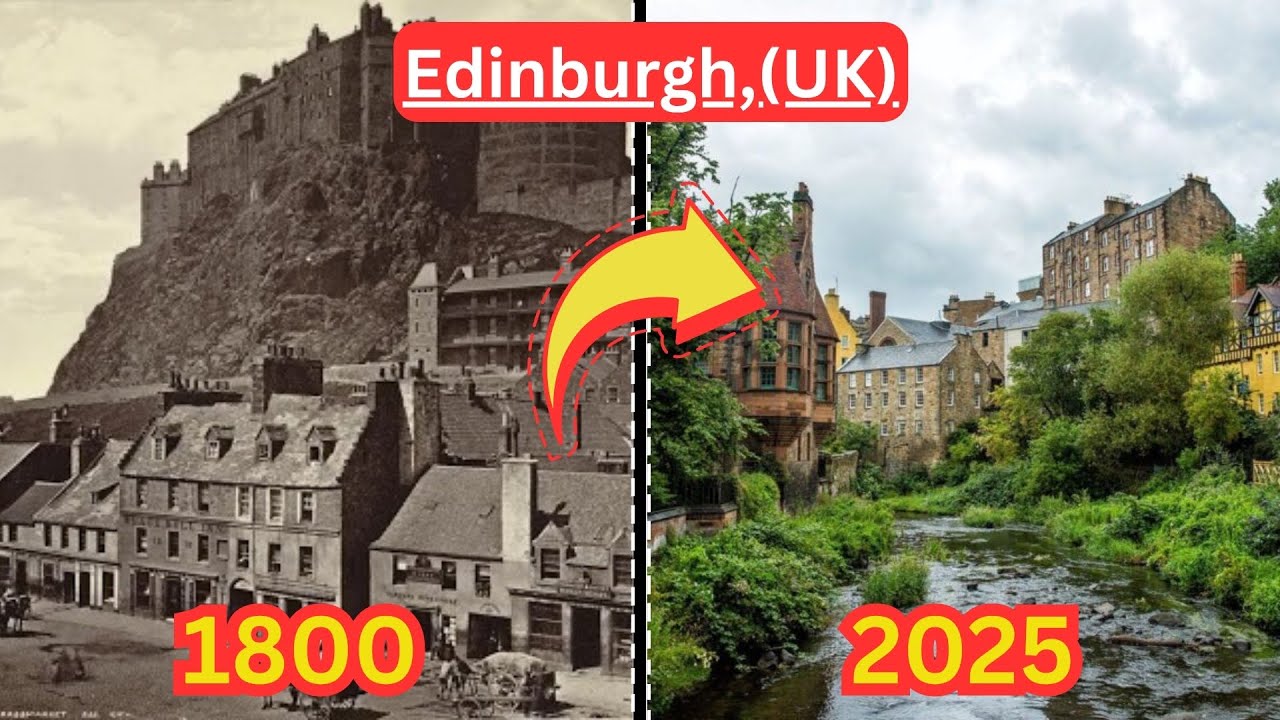
Edinburgh, the historic and cultural capital of Scotland, has transformed dramatically over the last two centuries—seamlessly blending ancient charm with modern progress. From its cobbled medieval streets and Enlightenment-era architecture to contemporary urban life, the city stands as a living museum shaped by time.
In the early 1800s, Edinburgh was known for its Old Town, with narrow alleys, gothic buildings, and the imposing Edinburgh Castle overlooking the city.
The New Town, built in the late 18th century, expanded further during the 19th century, reflecting neoclassical design and organized urban planning.
It became a hub of the Scottish Enlightenment, with scholars, philosophers, and architects shaping the city’s intellectual and visual identity.
The 20th century brought industrialization, railways, and increased connectivity, transforming Edinburgh into a vital economic center while preserving its heritage.
The late 1900s and early 2000s saw a boom in tourism, education, and the arts, fueled by global recognition of events like the Edinburgh Festival.
Urban revitalization added modern trams, business parks, and eco-friendly housing, while historic districts remained protected under UNESCO World Heritage status.
Today in 2025, Edinburgh balances historic preservation with modern living, offering a mix of ancient castles, tech hubs, green spaces, and a thriving multicultural society.
From medieval fortresses to innovation-driven growth, Edinburgh is a city that proudly honors its past while embracing the future.
#EdinburghThenAndNow #CityEvolution #HistoricEdinburgh #ModernScotland #Edinburgh1800to2025 #CulturalCapital #ScottishHeritage #TimelessCity #OldMeetsNew #UNESCOWorldHeritage
Disclaimer:
The content on this channel is created for educational and informational purposes only. While we strive to provide accurate and up-to-date information about cities around the world, including historical and modern comparisons, some visuals and data may be based on publicly available sources, artistic interpretations, or estimates. We do not claim ownership of all media used; all rights belong to their respective owners. If you own any content featured and wish to have it removed or credited properly, please contact us directly.

![Edinburgh, Scotland 1930s in color [60fps,Remastered] w/sound design Added](https://i.ytimg.com/vi/L-nITiS8IqQ/maxresdefault.jpg)







![Новосибирск (фильм о городе) СССР, 1976 год. [Редкая хроника, предназначена для показа за рубежом]](https://i.ytimg.com/vi/VLu2dyy2C48/maxresdefault.jpg)



![25 ЛУЧШИХ МЕСТ В ЕВРОПЕ, КОТОРЫЕ НУЖНО УВИДЕТЬ В ЖИЗНИ [СПИСОК]](https://i.ytimg.com/vi/uot_VH42ZaY/maxresdefault.jpg)
Информация по комментариям в разработке