• STORIES FROM THE 78
/ @storiesfromthe78
Horror doesn’t always announce itself with a scream. Sometimes it waits, patient and still, like a row of corn stretching toward a flat Midwestern horizon.
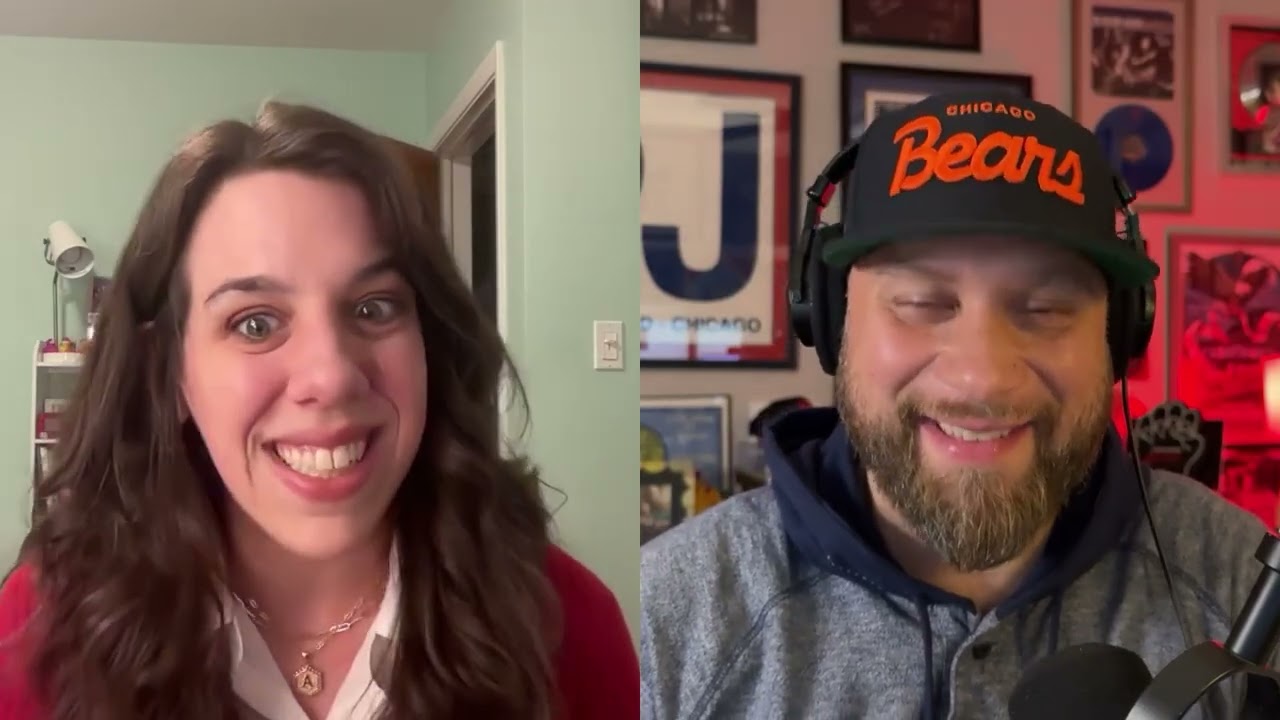
In a wide-ranging conversation, Tom Barnas and author Audrey Wilson explore how the Midwest has quietly become one of the most effective settings for modern horror. Far from gothic castles or fog-soaked cities, the region’s open spaces, rural isolation, and subtle social codes create a uniquely unsettling atmosphere, one that seeps into the mind rather than startling it outright.
Wilson, whose novel EverEnd leans heavily into psychological horror, draws deeply from her personal experiences in rural and Midwestern environments. Places like Iowa’s cornfields are not just backdrops, but active participants in fear. Their vastness creates vulnerability. Their stillness amplifies unease. In these spaces, nothing has to happen quickly for dread to take hold.
Central to Wilson’s approach is the idea that true horror often lives beneath the surface. Rather than relying on spectacle, her work focuses on insidious tension, the kind that grows quietly and refuses to leave once the story ends. Fear, in this sense, becomes psychological rather than physical, rooted in discomfort, memory, and emotional recognition.
One recurring theme in the discussion is politeness. In Midwestern culture, courtesy is often prized, sometimes at the expense of instinct. Wilson examines how this social conditioning can trap people in unsettling or dangerous situations, forcing characters to ignore their gut feelings in order to maintain harmony. It’s a subtle but powerful engine for horror, one grounded in everyday behavior rather than supernatural threat.
The Midwest’s changing seasons also play a crucial role. Long winters, brief summers, and the slow decay of fall add emotional texture to horror narratives. These shifts mirror internal states, loneliness, anticipation, and dread, allowing setting and psychology to move in lockstep.
The conversation also reflects on the evolving landscape of horror literature, particularly the growing presence and influence of women writers. Wilson stands among a wave of authors expanding the genre’s emotional and thematic range. Their stories often prioritize interiority, cultural nuance, and lived experience, reshaping horror into something more personal and more resonant.
In EverEnd and beyond, Audrey Wilson demonstrates that the Midwest is not an empty space between coasts, but a fertile ground for fear. Its landscapes, customs, and quiet pressures offer endless possibilities for horror that doesn’t shout, but lingers, long after the final page.
====================================================================
Email Stories from the 78: [email protected]
Brand Deal Inquiries: [email protected]
====================================================================
Associated channel for front stoop conversations
/ @frontstooptombarnas:
====================================================================
COPYRIGHT DISCLAIMER UNDER SECTION 107 OF THE COPYRIGHT ACT 1976
Copyright Disclaimer Under Section 107 of the Copyright Act 1976,
allowance is made for "fair use" for purposes such as criticism, comment, news reporting, teaching, scholarship, and research. Fair use is a use permitted by copyright statute that might otherwise be infringing. #storiesfromthe78
====================================================================
Find more videos at www.storiesformthe78.com
#CHOOSECHICAGO #DO312 #WGN #MidwestHorror
#AudreyWilson
#EverEnd
#PsychologicalHorror
#WomenInHorror
#HorrorLiterature
#RuralHorror
#AuthorInterview
#ModernHorror
#ChicagoWriter
#BookTalk

Информация по комментариям в разработке