Canada Breaks Ranks With U.S. on China, Cuts EV Tariffs in Major Trade Shift
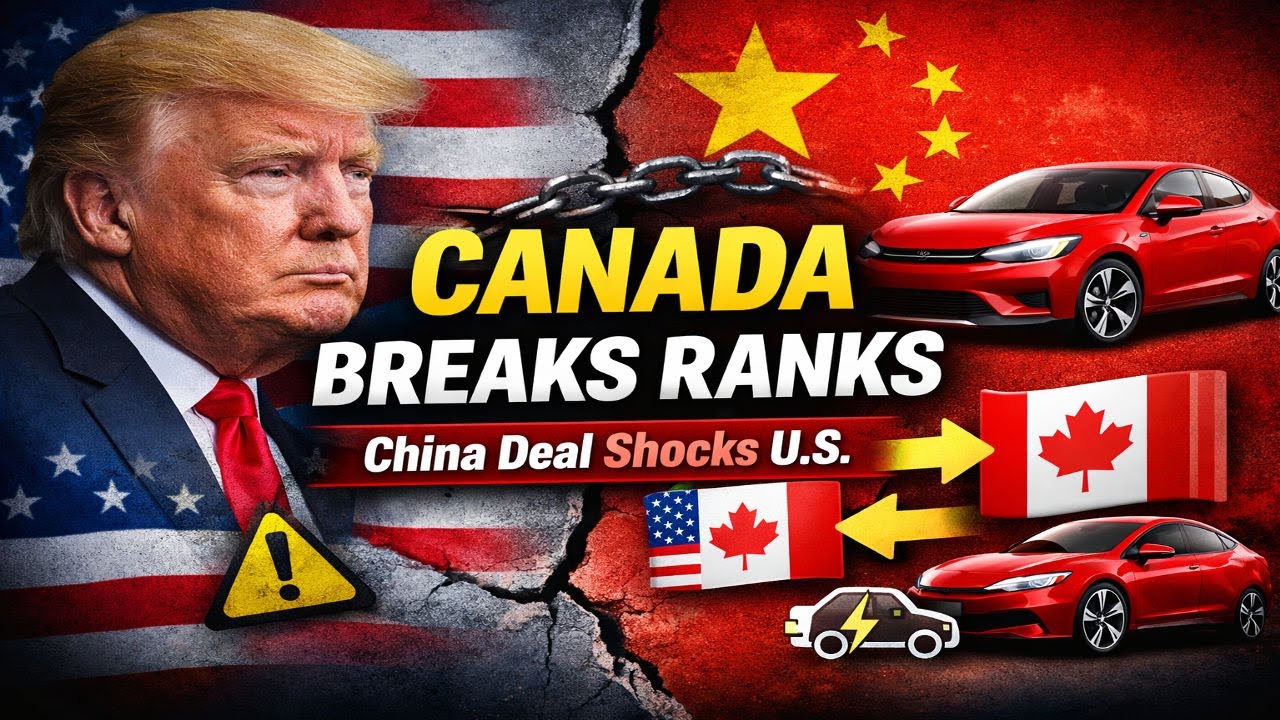
Canada has agreed to roll back its 100% tariff on Chinese electric vehicles in exchange for sweeping tariff relief for its agricultural exports, signaling a notable departure from the U.S.-led trade front against Beijing and highlighting growing strains between Washington and one of its closest allies.
Prime Minister Mark Carney announced the deal Friday after high-level meetings in Beijing with Chinese leaders, including President Xi Jinping. The agreement marks Canada’s most significant reset with China in nearly a decade and comes as Ottawa struggles to secure tariff relief from the United States.
A Deal That Redraws the Trade Map
Under the agreement, Canada will allow an initial quota of 49,000 Chinese-made electric vehicles into its market at a sharply reduced tariff rate of 6.1%, with the cap rising to about 70,000 vehicles over five years. In return, China will slash tariffs on Canadian canola seeds—from 84% to roughly 15%—restoring access to a market that had effectively been closed.
While the quota represents only about 3% of Canada’s annual vehicle sales, the move is symbolically significant. Canada had previously aligned closely with Washington, imposing steep tariffs on Chinese EVs, steel, and aluminum as part of a broader effort to counter what the U.S. views as unfair Chinese industrial subsidies.
Friction With Washington
The agreement underscores Ottawa’s frustration with stalled talks in Washington. President Donald Trump’s tariffs on Canadian exports remain in place, hitting key sectors of Canada’s economy, and his repeated suggestions that Canada could become the “51st state” have further strained relations.
Carney acknowledged that the U.S. remains Canada’s most important economic partner but said the current environment requires diversification.
“Canada’s relationship with the United States is deep and enduring,” Carney said. “But we are operating in a period of global trade disruption, and resilience requires options.”
For U.S. policymakers, the deal raises questions about the durability of allied coordination on China, particularly as Washington continues to pressure partners to restrict Chinese access to Western markets.
Implications for U.S. Industry
Critics warn that lower Canadian tariffs could create an indirect pathway for Chinese electric vehicles to reach North America, potentially undercutting U.S. automakers and complicating Washington’s efforts to build a protected EV supply chain.
Ontario Premier Doug Ford echoed those concerns, warning that the agreement risks harming North American auto manufacturing and could threaten Canadian and U.S. jobs tied to tightly integrated supply chains.
Supporters counter that Canada has imposed strict caps on imports and secured commitments for Chinese investment in Canadian EV manufacturing, potentially creating production that could eventually fall under North American trade rules.
China Seizes an Opening
The deal appears to validate Beijing’s strategy of exploiting fractures among U.S. allies. Analysts say China sees an opportunity to weaken Washington’s united front by offering targeted economic incentives to partners under U.S. trade pressure.
“China is testing the limits of allied cohesion,” said one trade analyst. “Canada is the first major U.S. partner to blink.”
Carney pushed back on the idea of a geopolitical pivot, emphasizing that Canada and China continue to disagree on human rights and governance issues. Still, he acknowledged that cooperation will proceed where interests align.
A Reset After Years of Retaliation
Canada’s relationship with China deteriorated sharply after Ottawa imposed tariffs aligned with U.S. policy. Beijing responded with heavy duties on Canadian canola oil, meal, pork, seafood, and seeds—moves that effectively shut Canadian farmers out of the Chinese market.
The economic impact was significant. China’s imports from Canada fell more than 10% last year, according to Chinese trade data, putting pressure on Ottawa to find a path forward.
Global Trade Order Under Strain
During his visit, Carney warned that the post–World War II global trading system is increasingly being replaced by bilateral and regional deals, driven largely by protectionist policies and geopolitical rivalry.
“The question is what replaces it,” he said, “and whether that system is more stable or more fragmented.”
What Comes Next
Carney leaves China this weekend and will travel to Qatar before attending the World Economic Forum in Switzerland, where trade fragmentation and economic security are expected to dominate discussions.
For Washington, Canada’s move serves as a warning: sustained tariff pressure on allies may push them to seek alternative arrangements with Beijing—potentially weakening the coordinated strategy the U.S. has sought to build against China.

Информация по комментариям в разработке