When The Knights Betrayed Their Own King — The Fall of Richard II” (England, 1399)
To understand how Richard II fell, we must first understand how he rose — and how power, pride, and betrayal forged one of England’s most tragic monarchs. Born in 1367, Richard of Bordeaux was the grandson of the great Edward III and son of the legendary Black Prince. From his earliest years, destiny seemed to crown him in gold. Yet behind that brilliance lay the shadows of a fragile court, greedy nobles, and a kingdom on the edge of rebellion.
As a child king surrounded by ambitious uncles and power-hungry lords, Richard grew up watching others rule in his name. But in 1381, when the Peasants’ Revolt threatened to tear England apart, the fourteen-year-old monarch stunned the world by riding out to face the rebels himself. His courage, calm, and commanding words turned chaos into order — proving that charisma could rule where swords could not. That day, a boy became a king.
Yet the very traits that made Richard extraordinary — his intelligence, theatricality, and sense of divine purpose — also planted the seeds of his downfall. As he matured, he imagined a monarchy far greater than any before him: one ruled not by compromise, but by absolute power and sacred authority. He surrounded himself with poets, artists, and loyal favorites. He rebuilt Westminster Hall into a cathedral of majesty and demanded that even his empty throne be revered. Richard did not merely wish to rule — he wanted to embody kingship itself.
But England was not ready for an absolute monarch. The great lords — Gloucester, Arundel, Warwick, and young Henry Bolingbroke — feared the rise of a tyrant. They rebelled, and in the Merciless Parliament of 1388, Richard watched his friends executed and his power stripped away. Yet he bided his time. For ten long years, he smiled, plotted, and waited — until his revenge came swift and brutal. Gloucester was murdered, Arundel beheaded, and his enemies crushed. For a moment, Richard II stood supreme — untouchable, unchallenged, and utterly alone.
Then came the fatal mistake. In 1399, he exiled Bolingbroke, seized his inheritance, and provoked the wrath of every noble in England. When Bolingbroke returned from exile, he claimed only what was his — but the realm, weary of Richard’s tyranny, rallied to his side. Betrayal spread like wildfire. Armies deserted. Friends defected. Even family turned against the king they had once sworn to defend.
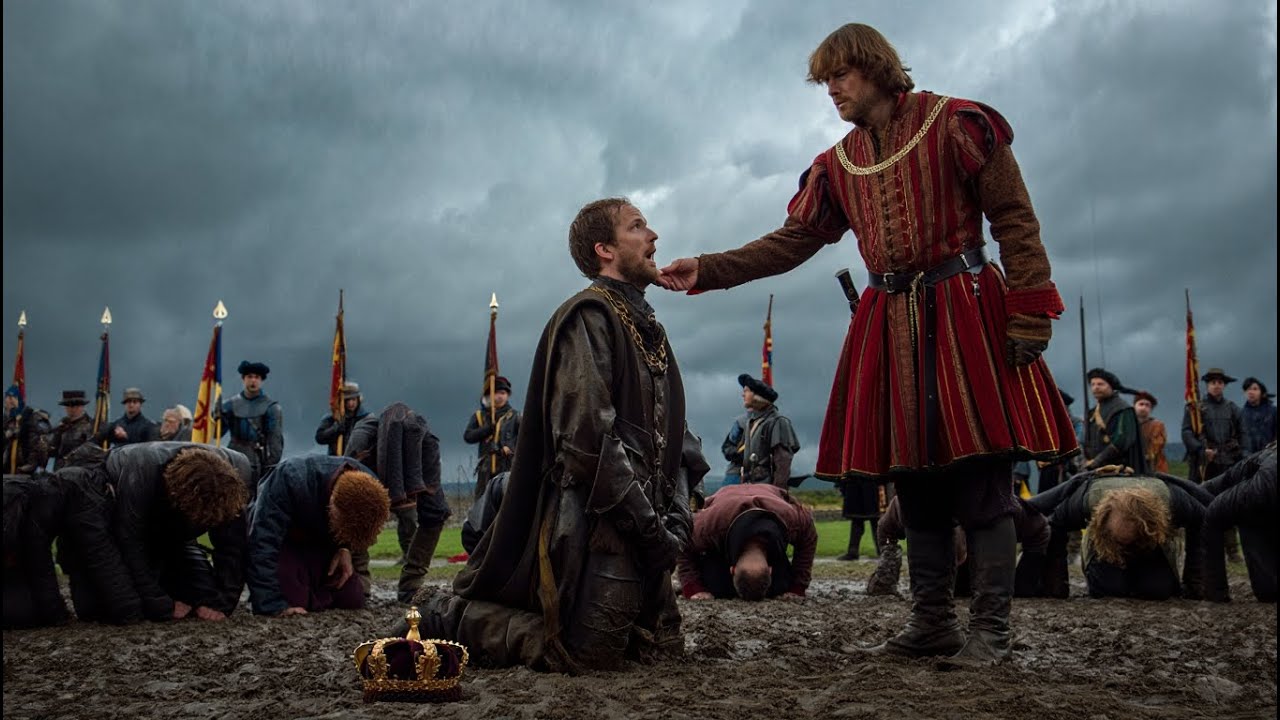
Richard, abandoned and deceived, was lured into captivity with false promises of safety. At Flint Castle, he met his cousin Henry for the last time — a prisoner facing his usurper. He had no army, no allies, no future. In Westminster Hall, before the very nobles who once knelt at his feet, Richard was forced to abdicate the crown he believed had been given to him by God.
His words, recorded by Shakespeare centuries later, echo with haunting truth:
“Must he lose the name of king? O God’s name, let it go.”
Henry Bolingbroke became Henry IV. Richard II became a prisoner — and soon after, a corpse. Whether starved, strangled, or slain, his death at Pontefract Castle in 1400 remains one of England’s darkest royal mysteries.
But his story endures. It is the story of a boy who faced down an army with words instead of swords — and a man destroyed by the same divine power he believed protected him. It is the story of loyalty and betrayal, of pride and punishment, of how kings rise through vision and fall through hubris.
This is not just history. It is a warning — that power without balance, no matter how divine it seems, always ends in ruin.

Информация по комментариям в разработке