Description:
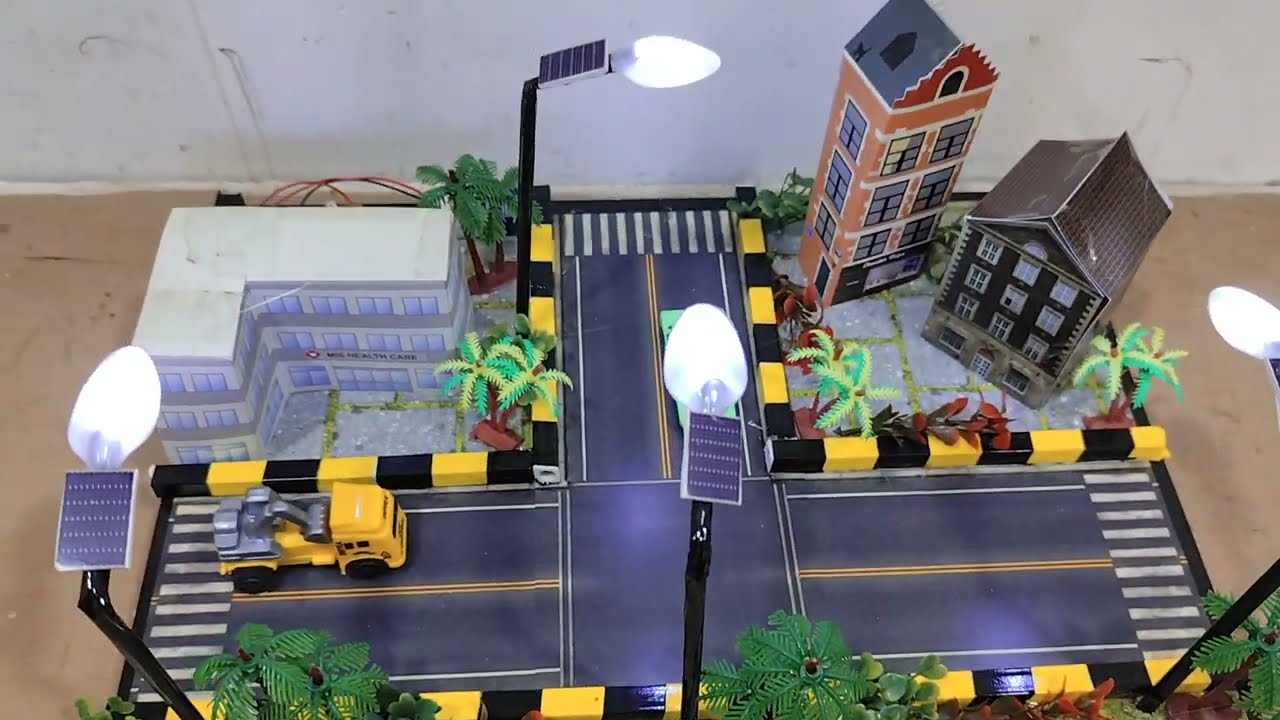
Welcome to our guide on creating a Smart City Model for a school project. This project aims to demonstrate the integration of technology and innovation in urban planning to create a sustainable, efficient, and livable city. We'll cover various smart city components, including energy management, transportation, waste management, and more.
Key Features:
Renewable Energy Sources: Solar panels and wind turbines for clean energy generation.
Smart Transportation: Automated traffic signals, electric vehicle charging stations, and public transportation systems.
Efficient Waste Management: Automated waste collection and recycling systems.
Smart Homes: Intelligent home systems with energy-efficient appliances and security features.
Public Services: Smart street lighting, parks, and healthcare facilities.
Materials Needed:
Cardboard and foam boards
LED lights
Small solar panels and wind turbines
Toy cars and buses
Plastic containers and bottles
Small motors and sensors
Connecting wires and batteries
Paints and brushes
Crafting tools (scissors, glue, etc.)
Step-by-Step Instructions:
Base and Layout:
Start by creating a base using a large piece of cardboard or plywood.
Draw the layout of the city, including roads, buildings, parks, and other key areas.
Building Structures:
Use cardboard and foam boards to construct buildings, houses, schools, hospitals, and other structures.
Paint and decorate the buildings to make them look realistic.
Add windows, doors, and other details using colored paper or markers.
Renewable Energy Sources:
Install small solar panels on the roofs of buildings to represent solar energy.
Place wind turbines in designated areas to showcase wind energy generation.
Smart Transportation:
Create roads using black paint or paper.
Use toy cars and buses to represent smart transportation.
Add small LED lights and sensors to simulate automated traffic signals.
Set up an electric vehicle charging station using small batteries and connectors.
Efficient Waste Management:
Create waste bins using plastic containers and place them around the city.
Design a waste collection truck with a small motor to demonstrate automated waste collection.
Show recycling bins and educate about waste segregation.
Smart Homes:
Construct homes with features like solar panels, LED lights, and small fans for energy-efficient living.
Use sensors to demonstrate automatic lighting and security systems.
Public Services:
Set up smart street lighting using LED lights connected to sensors.
Design parks with miniature trees, benches, and playgrounds.
Create a hospital and demonstrate smart healthcare facilities using small models and sensors.
Connecting Components:
Connect all the electrical components (LEDs, motors, sensors) to batteries and wires.
Ensure proper insulation and secure connections to prevent short circuits.
Test each component to ensure it works as expected.
Final Touches:
Add signage and labels to different parts of the city to explain their functions.
Make sure all the elements are securely attached to the base.
Review the model for any finishing touches and improvements.
Additional Tips:
Research real smart city projects for more inspiration and ideas.
Experiment with different materials and techniques to improve the model.
Ensure all electrical connections are safe and secure.
Thank you for watching! Don't forget to like, comment, and subscribe for more educational projects and guides!
more projects:-https://sites.google.com/view/anukul-...

Информация по комментариям в разработке