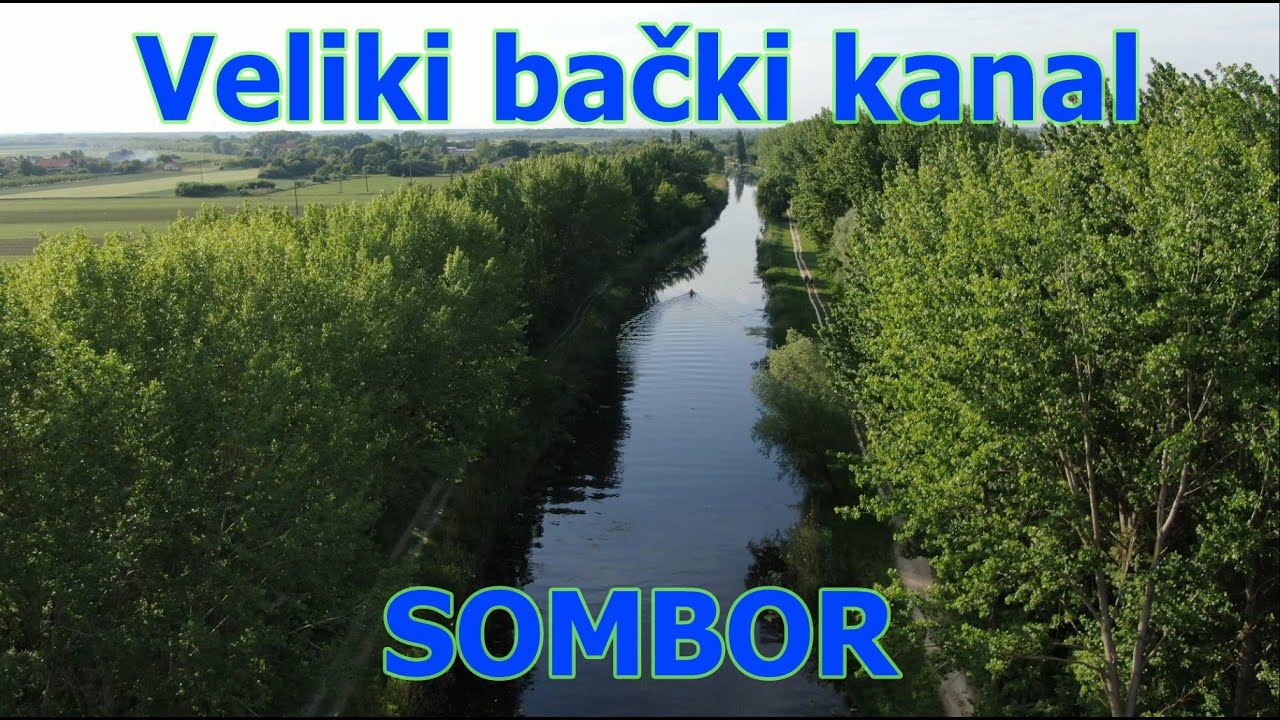
Veliki bački kanal kod Sombora, snimljen od Tromeđe do kupališta Štrand.
River near the city of Sombor - Serbia
Prokopavanje Velikog bačkog kanala predstavljalo je jedan od najznačajnijih poduhvata u istoriji Sombora, ali i cele Bačke. Kanal je bio posebno važan za regulisanje nivoa voda u gradskom ataru, pre svega na oranicama, pašnjacima i livadama. Njegovim prokopavanjem značajno je smanjen broj bara, močvara, mrtvaja, jezeraca i rečica koje su, povremeno ili stalno, ugrožavale zemljište u ataru grada i okolnih naselja. Samim tim, znatno su umanjene i stalne pretnje od malaričnih zaraznih bolesti, koje su decenijama i vekovima ranije često desetkovale ovdašnje stanovništvo i domaće životinje. Istovremeno, kanal je mogao i da navodnjava okolinu u vreme sušnih perioda. Poseban značaj kanal je imao za privredu grada jer su poljoprivredni proizvodi prevoženi daleko lakše, brže, sigurnije i i jeftinije nego ranije. Do 1918. g. kanal je zvanično nosio ime austrijskog cara Franca I, po čijem odobrenju je i bio prokopan. Kasnije, između dva svetska rata, nazvan je imenom Kralja Petra I, a posle Drugog svetskog rata zvaničan naziv je Veliki bački kanal.
Tekst preuzet sa sajta https://www.ravnoplov.rs/veliki-backi...
The excavation of the Grand Bačka Canal was one of the most significant undertakings in the history of Sombor, but also of the whole of Bačka. The canal was especially important for regulating the water levels in the city area, primarily on arable land, pastures and meadows. Its excavation significantly reduced the number of ponds, swamps, dead bodies, lakes and rivers that, occasionally or permanently, endangered the land in the area of the city and surrounding settlements. As a result, the constant threats of malaria infectious diseases, which decades and centuries ago often decimated the local population and domestic animals, have been significantly reduced. At the same time, the canal could irrigate the environment during dry periods. The canal had a special significance for the city's economy because agricultural products were transported much easier, faster, safer and cheaper than before. Until 1918. the canal was officially named after the Austrian Emperor Franz I, with whose approval it was dug. Later, between the two world wars, it was named after King Peter I, and after the Second World War, the official name was the Great Bačka Canal.
Text taken from the site https://www.ravnoplov.rs/veliki-backi...






Информация по комментариям в разработке