Many people with an anxious attachment style feel blindsided when they show care toward a fearful avoidant partner and are met with a harsh, defensive, dismissive, or even hostile reaction. These moments often happen when the relationship appears to be deepening — offering support, expressing concern, showing emotional availability, or moving closer when things seem stable.
From the anxious partner’s perspective, the reaction can feel confusing and deeply personal. The care was appropriate. The intention was not controlling or demanding. Yet the fearful avoidant may suddenly respond as if they are being smothered, pressured, or intruded upon.
What’s important to understand is that this response is rarely about the anxious partner doing something wrong. It is typically a nervous system reaction.
Fearful avoidant attachment — sometimes called disorganized attachment — is characterized by a push-pull dynamic. These individuals often crave intimacy but simultaneously associate closeness with emotional threat once it reaches a certain level of vulnerability. When genuine care is offered, their nervous system may interpret it as exposure, loss of autonomy, engulfment, or future abandonment. The body shifts into self-protection.
This is why the change can feel so sudden. One moment the connection feels warm and reciprocal. The next, the fearful avoidant becomes distant, irritated, cold, or rejecting. Their nervous system has flipped from approach to defense.
Attachment research shows that avoidant coping strategies rely heavily on emotional suppression, distancing, and disengagement when vulnerability is activated. While this can look controlled externally, it is often an internal shutdown designed to prevent emotional overwhelm.
Fearful avoidance intensifies this pattern because both desire and fear operate at the same time. Support may feel comforting briefly, but once the emotional significance registers, it can quickly feel overwhelming or dangerous. Care stops feeling like care and starts feeling like pressure.
This is typically where the anxious-avoidant cycle begins.
The anxious nervous system interprets withdrawal as relational danger, triggering urgency and proximity-seeking behaviors such as explaining, reassuring, or trying to repair the connection. This is not manipulation — it is the attachment system attempting to restore safety.
However, anxious pursuit and fearful avoidant defense amplify each other. The more urgently the anxious partner moves toward connection, the more threatened the fearful avoidant feels. Increased withdrawal then heightens anxious activation, creating a cycle that communication alone cannot resolve.
Many people are especially shocked by how cruel a fearful avoidant cutoff can feel. Blame may appear suddenly. The anxious partner may be labeled needy, intrusive, or suffocating. The tone may turn cold or angry.
In most cases, this is not calculated cruelty. It is psychological defense.
When fearful avoidants feel emotionally exposed, the brain looks for the fastest way to reduce vulnerability. Criticism creates distance. Anger restores a sense of control. Reframing the other person as “too much” allows them to avoid confronting their own overwhelm.
Research on disorganized attachment suggests that withdrawal under relational threat can sometimes be paired with hostility — not because the person is malicious, but because their internal regulation destabilizes when closeness activates old emotional wounds.
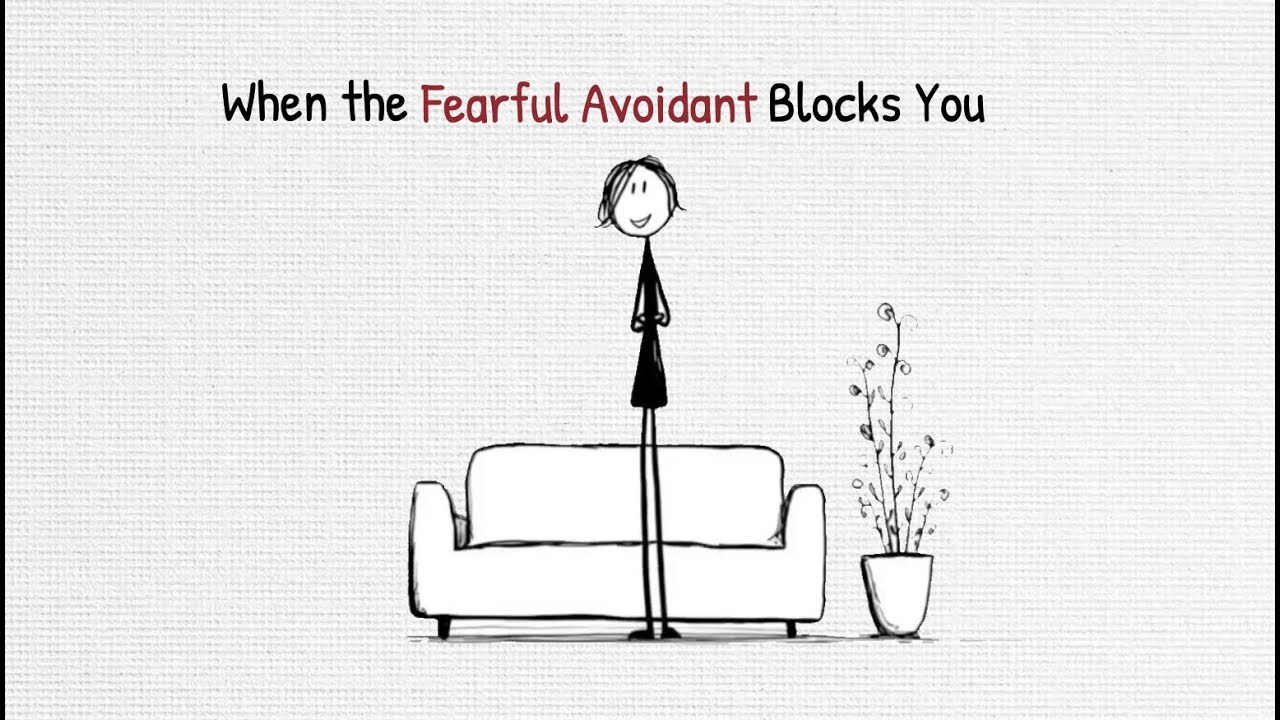
Blocking is also common in fearful avoidant dynamics, and it is often misunderstood.
Blocking is not always about punishment. It is frequently a nervous system regulation strategy. If reminders of the relationship trigger anxiety or internal conflict, removing those cues provides immediate relief. The goal is not resolution — it is emotional regulation.
Fearful avoidants may block because leaving the door open prolongs internal ambivalence. One part of them may want connection while another part fears it. Blocking ends that psychological tug-of-war.
For the person being blocked, the experience can feel devastating and final. For the fearful avoidant nervous system, it can feel like silence after an alarm.
This is a critical point for anxious attachers: chasing clarity rarely repairs this dynamic. Once a fearful avoidant has entered threat mode, pursuit typically intensifies shutdown rather than restoring connection.
Change begins when the anxious partner stops treating activation as an emergency and starts stabilizing their own nervous system first. This does not mean suppressing needs or abandoning yourself. It means responding from regulation rather than urgency.
When chasing stops, the cycle loses its fuel. That is where clarity returns — about the relationship, the other person’s emotional capacity, and what is truly sustainable for your wellbeing.
#fearfulavoidant #avoidantattachment #disorganizedattachment #anxiousavoidant #avoidantattachmentstyle








Информация по комментариям в разработке