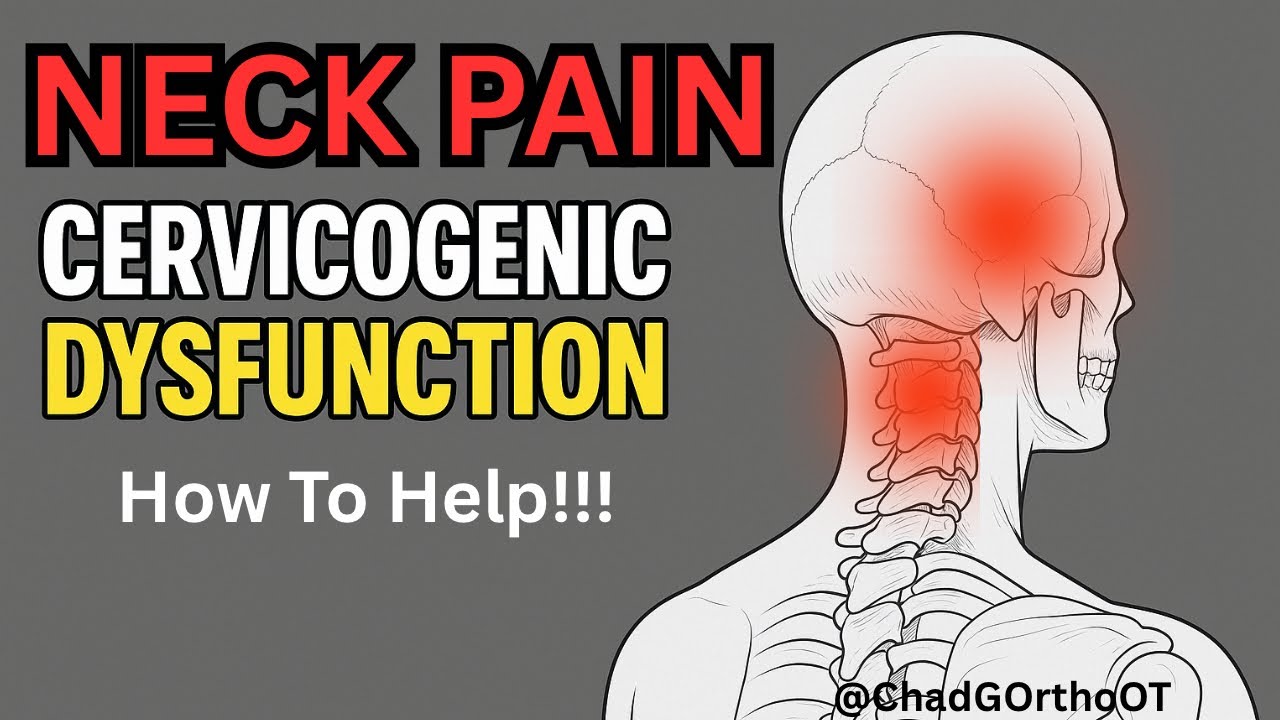
If you’re dealing with headaches that start at the base of your skull or radiate from your neck, you may have a cervicogenic headache — a type of pain that stems from dysfunction in the cervical spine and surrounding muscles.
In this video, Chad Guerrero, OT (Orthopedic Occupational Therapist) breaks down:
✅ What cervicogenic headaches are and how they differ from migraines or tension headaches
✅ The key neck and shoulder dysfunctions that cause referred pain to the head
✅ How posture, joint mobility, and muscle imbalances affect head and neck function
✅ Safe manual therapy and exercise strategies used in orthopedic occupational therapy to restore function and reduce pain
💪 Improve your cervical function, posture, and daily performance with these evidence-based techniques.
⸻
⚠️ Disclaimer:
This content is for educational and entertainment purposes only and is not medical advice. Consult your healthcare provider for individualized care.
💬 Comment below:
Have you ever experienced headaches starting in your neck? What helps you the most?
🔗 Follow for more:
🌐 ChadGOrthoOT.com
📱 @ChadGOrthoOT
10 Functional ADL & IADL Implications of Cervical Neck Pain
(Occupational Therapy Perspective)
ADLs (Basic Activities of Daily Living)
1. Dressing (Upper & Lower Body)
Cervical pain limits neck rotation and flexion, making it difficult to look down, turn the head, or coordinate bilateral UE movements when donning shirts, bras, jackets, or shoes.
2. Grooming (Hair Care, Shaving, Makeup)
Sustained cervical extension or rotation increases pain during activities like washing hair, shaving, or styling—often leading to reduced task tolerance.
3. Bathing & Showering
Difficulty turning the head to scan the environment increases fall risk, while pain with extension affects hair washing and overhead reach.
4. Feeding & Eating
Cervical flexion intolerance can cause discomfort when looking down at a plate, cutting food, or maintaining posture during meals.
5. Sleep & Bed Mobility
Neck pain disrupts sleep positioning, rolling, and supine ↔ side-lying transitions, resulting in poor rest and daytime fatigue.
⸻
IADLs (Instrumental Activities of Daily Living)
6. Driving & Community Mobility
Limited cervical rotation impairs checking blind spots, backing up, and scanning intersections—directly affecting safety and independence.
7. Work Tasks & Ergonomics
Desk work, computer use, lifting, and sustained postures aggravate symptoms, reducing productivity and work endurance.
8. Household Management (Cleaning, Laundry, Cooking)
Tasks requiring prolonged looking down, reaching, or carrying loads (vacuuming, folding laundry, meal prep) increase cervical strain.
9. Technology Use (Phone, Tablet, Computer)
Forward head posture during prolonged device use exacerbates pain, often referred to as “tech neck.”
10. Leisure, Exercise, & Social Participation
Reduced neck mobility and pain limit participation in hobbies, sports, fitness routines, and social activities—affecting quality of life.
⸻
How This Applies to Occupational Therapy
Orthopedic Occupational Therapy addresses cervical neck pain by:
• Linking impairments to functional limitations
• Analyzing posture, movement patterns, and task demands
• Modifying ADLs/IADLs through ergonomics and adaptive strategies
• Restoring functional independence, not just reducing pain
• Educating on activity modification, pacing, and symptom management
OT focuses on what the person needs and wants to do—and how cervical pain interferes with those occupations
#CervicogenicHeadache
#NeckPainRelief
#HeadacheRelief
#OrthopedicOT
#OccupationalTherapy
#ChadGOrthoOT
#TheOrthoOT
#NeckFunction
#PostureCorrection
#ManualTherapy

Информация по комментариям в разработке