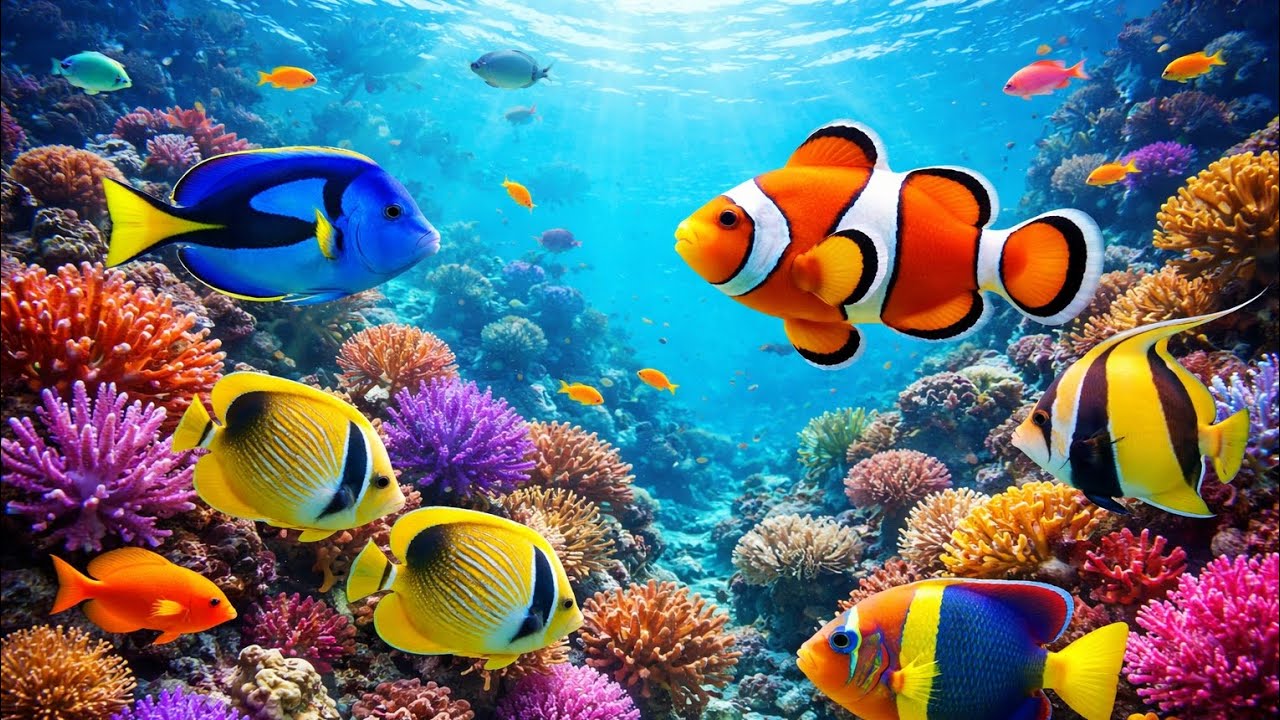
Colorful fish are among the most beautiful and fascinating creatures found in the world’s waters. From tiny reef fish glowing like rainbows to large tropical species shining with metallic colors, these aquatic animals attract people of all ages. Their bright patterns, shining scales, and graceful movements make oceans, rivers, and aquariums look like living paintings. In this detailed description, we will explore colorful fish, their habitats, body structure, behavior, importance, and some famous examples found around the world.
Colorful fish are mostly found in warm tropical regions, especially in coral reefs. Coral reefs are often called the “rainforests of the sea” because they are full of life and color. Places like the Great Barrier Reef in Australia are home to thousands of brightly colored fish. The reason many fish in these areas are colorful is because reefs provide a complex environment with corals, rocks, and plants. Bright colors help fish communicate, attract mates, scare predators, or even hide by blending with corals.
One of the most famous colorful fish is the clownfish. The clownfish is small, orange, and marked with white stripes bordered by black lines. It became popular worldwide after the movie Finding Nemo. Clownfish live among sea anemones. Anemones have poisonous tentacles that protect clownfish from predators. In return, clownfish help clean the anemone and bring it food. This relationship is called mutualism because both organisms benefit from each other.
Another stunning example is the mandarin fish. This small fish is often considered one of the most beautiful fish in the ocean. Its body is covered with bright blue, green, orange, and yellow patterns that look like artistic paintings. Unlike many other fish, the mandarin fish does not have scales but has a special protective slime on its body. It lives in coral reefs and moves slowly, searching for tiny food particles on the ocean floor.
The betta fish, also known as the Siamese fighting fish, is another colorful species often kept in home aquariums. Bettas are known for their flowing fins and bright shades of red, blue, purple, and white. Male bettas are especially colorful and aggressive toward other males. Their beautiful appearance and interesting behavior make them popular pets. They can breathe air from the surface using a special organ, which allows them to survive in low-oxygen water.
The discus fish is also a popular aquarium fish known for its round, flat body and brilliant colors. It comes in shades of blue, red, orange, and even patterns like leopard spots. Discus fish are peaceful and often swim in groups. They need clean, warm water to stay healthy. Because of their beauty and delicate nature, they are sometimes called the “king of the aquarium.”
In freshwater rivers and lakes, colorful fish can also be found. The guppy is a small, lively fish with a colorful tail that may look like a fan or a flag. Guppies come in many color combinations such as yellow, blue, green, and red. They are easy to keep and reproduce quickly, making them common in home fish tanks.
Colorful fish have special body structures that enhance their beauty. Their scales reflect light in different ways, creating shining effects. Some fish have iridescent scales that change color depending on the angle of light. Their fins may be long and flowing or short and sharp. Patterns like stripes, spots, or waves help them blend into their environment or warn predators.
Colors in fish come from special cells called chromatophores. These cells contain pigments that produce red, yellow, black, and other colors. Some fish also reflect light using special crystal-like structures in their skin. The combination of pigments and light reflection creates the amazing range of colors we see.
Bright colors are not just for beauty; they serve important purposes. In many species, males are more colorful than females. Bright colors help males attract females during mating season. In other cases, colors can signal danger. For example, some poisonous fish display bright colors to warn predators to stay away. This is called warning coloration.
Camouflage is another important reason for color patterns. While some fish are very bright, their colors actually help them hide in coral reefs filled with colorful plants and rocks. Stripes can break up the shape of the body, making it harder for predators to see them clearly.
Colorful fish also play an important role in ecosystems. They help maintain balance in coral reefs by eating algae and small organisms. Without these fish, algae might grow too much and harm corals. Larger fish also control the population of smaller fish, keeping the food chain balanced.
Humans are deeply attracted to colorful fish. . In
















Информация по комментариям в разработке