Title: Ki Tusi Azad Ho? (Are You Free?)
duration:1:30 min
location: Rose garden chandigarh
photos by : B. Ajay Sharma & Vrinder
This performance art takes place in a public park, a space where people usually come to relax, walk, and spend time freely. By choosing this everyday location, the artist brings an uncomfortable but necessary question into common life: Are we really free?
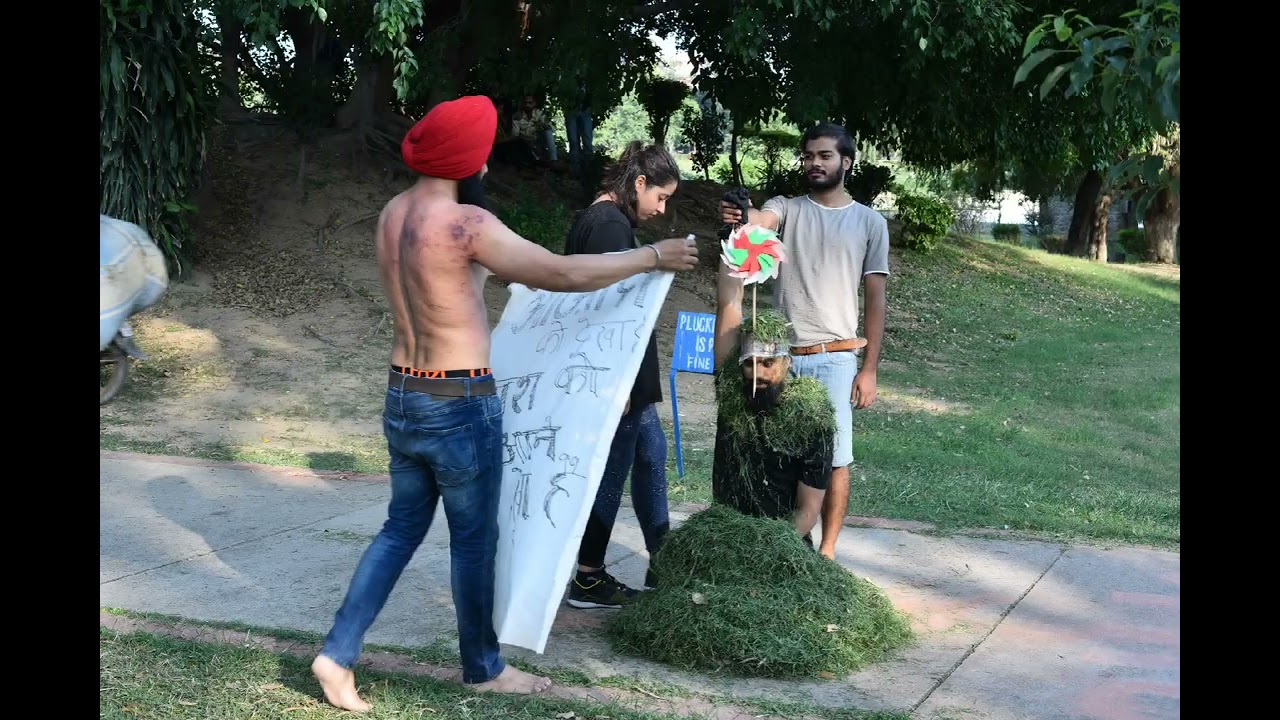
The performer moves slowly along the pathway, sometimes crawling, sometimes standing still. On the ground, the word “Azad” (free) is written again and again in red. The repeated word contrasts sharply with the physical struggle of the body. Freedom is written everywhere, yet it is not easily reached. The act of crawling reflects pain, oppression, and the long journey many people take in search of dignity and self-respect.
The artist’s bare body is vulnerable and exposed, symbolising the common person—stripped of protection, status, and power. The red turban represents identity, culture, and history. Together, they suggest that freedom in India is deeply connected to social background, class, caste, gender, and inherited traditions.
In one moment, the performer holds a hand-written banner that reads:
“Azadi ki dua yaaron ko apno ne di hai.”
This line points towards an important truth: many limits on our freedom do not come only from the government or system, but also from our own families, communities, and close relationships.
The audience stands around the performer—watching, recording, staying silent. Their presence becomes part of the artwork. The performance asks the viewers to reflect on their own position: Are we just observers, or are we also responsible?
Ki Tusi Azad Ho? is not a protest with answers. It is a question left open for everyone. It asks each person to think about freedom not only as a political idea, but as a lived reality—inside our bodies, our choices, and our everyday lives.
परफ़ॉर्मेंस आर्ट लेख
शीर्षक: ਕੀ ਤੁसी आज़ाद हो? (क्या आप आज़ाद हैं?)
यह परफ़ॉर्मेंस आर्ट एक सार्वजनिक पार्क में घटित होती है—एक ऐसा स्थान जहाँ लोग आमतौर पर आराम करने और स्वतंत्र रूप से घूमने आते हैं। इस रोज़मर्रा की जगह को चुनकर कलाकार एक असहज लेकिन ज़रूरी सवाल सामने रखता है: क्या हम सच में आज़ाद हैं?
परफ़ॉर्मर धीरे-धीरे रास्ते पर आगे बढ़ता है—कभी रेंगते हुए, कभी स्थिर खड़ा होकर। ज़मीन पर लाल रंग से बार-बार “आज़ाद” शब्द लिखा हुआ है। यह दोहराव शरीर के संघर्ष के विपरीत खड़ा दिखाई देता है। आज़ादी हर जगह लिखी है, लेकिन उसे पाना आसान नहीं है। रेंगने की क्रिया पीड़ा, दमन और सम्मान की तलाश में किए गए लंबे संघर्ष का प्रतीक है।
कलाकार का निर्वस्त्र ऊपरी शरीर असुरक्षा और संवेदनशीलता को दर्शाता है—एक आम इंसान की तरह, जो सुरक्षा, शक्ति और पद से वंचित है। लाल पगड़ी पहचान, संस्कृति और इतिहास का संकेत देती है। यह प्रस्तुति बताती है कि भारत में आज़ादी जाति, वर्ग, लिंग और परंपराओं से गहराई से जुड़ी हुई है।
एक क्षण में कलाकार एक हाथ से लिखा हुआ पोस्टर उठाता है, जिस पर लिखा है:
“आज़ादी की दुआ यारों को अपनों ने दी है।”
यह पंक्ति इस सच्चाई की ओर इशारा करती है कि हमारी आज़ादी पर रोक केवल व्यवस्था या सत्ता नहीं लगाती, बल्कि हमारे अपने लोग और समाज भी इसमें भूमिका निभाते हैं।
दर्शक चारों ओर खड़े होकर देखते हैं, रिकॉर्ड करते हैं और चुप रहते हैं। उनकी उपस्थिति भी इस कला का हिस्सा बन जाती है। यह प्रस्तुति दर्शकों से सवाल करती है—क्या हम सिर्फ़ देखने वाले हैं, या हमारी भी कोई ज़िम्मेदारी है?
ਕੀ ਤੁसी आज़ाद हो? कोई उत्तर नहीं देता। यह एक खुला सवाल है—जो हर व्यक्ति से उसकी अपनी आज़ादी के बारे में सोचने को कहता है, राजनीति से परे, रोज़मर्रा के जीवन के भीतर।
ਪੰਜਾਬੀ
ਸਿਰਲੇਖ: ਕੀ ਤੁਸੀਂ ਆਜ਼ਾਦ ਹੋ?
ਇਹ ਪਰਫ਼ਾਰਮੈਂਸ ਆਰਟ ਇੱਕ ਜਨਤਕ ਪਾਰਕ ਵਿੱਚ ਕੀਤੀ ਗਈ ਹੈ—ਇੱਕ ਐਸਾ ਸਥਾਨ ਜਿੱਥੇ ਲੋਕ ਆਰਾਮ ਕਰਨ ਅਤੇ ਖੁੱਲ੍ਹੇ ਦਿਲ ਨਾਲ ਘੁੰਮਣ ਆਉਂਦੇ ਹਨ। ਇਸ ਆਮ ਜਗ੍ਹਾ ਨੂੰ ਚੁਣ ਕੇ ਕਲਾਕਾਰ ਇੱਕ ਔਖਾ ਪਰ ਜ਼ਰੂਰੀ ਸਵਾਲ ਪੁੱਛਦਾ ਹੈ: ਕੀ ਅਸੀਂ ਵਾਕਈ ਆਜ਼ਾਦ ਹਾਂ?
ਪਰਫ਼ਾਰਮਰ ਹੌਲੀ-ਹੌਲੀ ਰਸਤੇ ‘ਤੇ ਅੱਗੇ ਵਧਦਾ ਹੈ—ਕਦੇ ਰਿੰਗਦਾ ਹੈ, ਕਦੇ ਖੜ੍ਹਾ ਰਹਿੰਦਾ ਹੈ। ਜ਼ਮੀਨ ‘ਤੇ ਲਾਲ ਰੰਗ ਨਾਲ “ਆਜ਼ਾਦ” ਸ਼ਬਦ ਵਾਰ-ਵਾਰ ਲਿਖਿਆ ਹੋਇਆ ਹੈ। ਲਿਖੀ ਹੋਈ ਆਜ਼ਾਦੀ ਅਤੇ ਸਰੀਰ ਦੀ ਤਕਲੀਫ਼ ਆਪਸ ਵਿੱਚ ਟਕਰਾਉਂਦੀਆਂ ਹਨ। ਆਜ਼ਾਦੀ ਹਰ ਥਾਂ ਹੈ, ਪਰ ਉਸ ਤੱਕ ਪਹੁੰਚਣਾ ਆਸਾਨ ਨਹੀਂ।
ਕਲਾਕਾਰ ਦਾ ਨੰਗਾ ਸਰੀਰ ਨਾਜੁਕਤਾ ਅਤੇ ਅਸੁਰੱਖਿਆ ਨੂੰ ਦਰਸਾਉਂਦਾ ਹੈ—ਇੱਕ ਆਮ ਇਨਸਾਨ ਵਾਂਗ, ਜੋ ਤਾਕਤ ਅਤੇ ਸੁਰੱਖਿਆ ਤੋਂ ਵੰਚਿਤ ਹੈ। ਲਾਲ ਪੱਗ ਪਹਿਚਾਣ, ਇਤਿਹਾਸ ਅਤੇ ਸਭਿਆਚਾਰ ਦਾ ਪ੍ਰਤੀਕ ਹੈ। ਇਹ ਪ੍ਰਦਰਸ਼ਨ ਦਿਖਾਉਂਦਾ ਹੈ ਕਿ ਭਾਰਤ ਵਿੱਚ ਆਜ਼ਾਦੀ ਵਰਗ, ਜਾਤ, ਲਿੰਗ ਅਤੇ ਰਿਵਾਇਤਾਂ ਨਾਲ ਡੂੰਘੀ ਤਰ੍ਹਾਂ ਜੁੜੀ ਹੋਈ ਹੈ।
ਇੱਕ ਪਲ ਵਿੱਚ ਪਰਫ਼ਾਰਮਰ ਇੱਕ ਹੱਥ-ਲਿਖਿਆ ਬੈਨਰ ਫੜਦਾ ਹੈ, ਜਿਸ ‘ਤੇ ਲਿਖਿਆ ਹੈ:
“ਆਜ਼ਾਦੀ ਦੀ ਦੁਆ ਯਾਰਾਂ ਨੂੰ ਅਪਣਿਆਂ ਨੇ ਦਿੱਤੀ ਹੈ।”
ਇਹ ਲਾਈਨ ਦਰਸਾਉਂਦੀ ਹੈ ਕਿ ਸਾਡੀਆਂ ਆਜ਼ਾਦੀਆਂ ‘ਤੇ ਰੋਕ ਸਿਰਫ਼ ਸੱਤਾ ਨਹੀਂ, ਸਗੋਂ ਸਾਡੇ ਆਪਣੇ ਸਮਾਜਕ ਰਿਸ਼ਤੇ ਵੀ ਲਗਾਂਦੇ ਹਨ।
ਦਰਸ਼ਕ ਚੁੱਪਚਾਪ ਖੜ੍ਹੇ ਦੇਖਦੇ ਹਨ—ਕੁਝ ਵੀਡੀਓ ਬਣਾਉਂਦੇ ਹਨ। ਉਹਨਾਂ ਦੀ ਮੌਜੂਦਗੀ ਵੀ ਇਸ ਕਲਾ ਦਾ ਹਿੱਸਾ ਬਣ ਜਾਂਦੀ ਹੈ। ਇਹ ਪਰਫ਼ਾਰਮੈਂਸ ਦਰਸ਼ਕਾਂ ਨੂੰ ਪੁੱਛਦੀ ਹੈ: ਕੀ ਅਸੀਂ ਸਿਰਫ਼ ਵੇਖਣ ਵਾਲੇ ਹਾਂ ਜਾਂ ਜ਼ਿੰਮੇਵਾਰ ਵੀ?
ਕੀ ਤੁਸੀਂ ਆਜ਼ਾਦ ਹੋ? ਕੋਈ ਜਵਾਬ ਨਹੀਂ ਦਿੰਦਾ। ਇਹ ਸਵਾਲ ਹਰ ਵਿਅਕਤੀ ਲਈ ਖੁੱਲ੍ਹਾ ਛੱਡਿਆ ਗਿਆ ਹੈ।

Информация по комментариям в разработке