NHÂN TRẦN – Adenosma glutinosum (L.) Druce
Họ Hoa mõm chó – SCROPHULARIACEAE family
Synonym: Adenosma caeruleum R. Br.
Vietnamese names: Chè cát, Chè nội, Tuyến hương, Mao xạ hương, Hoắc hương núi.
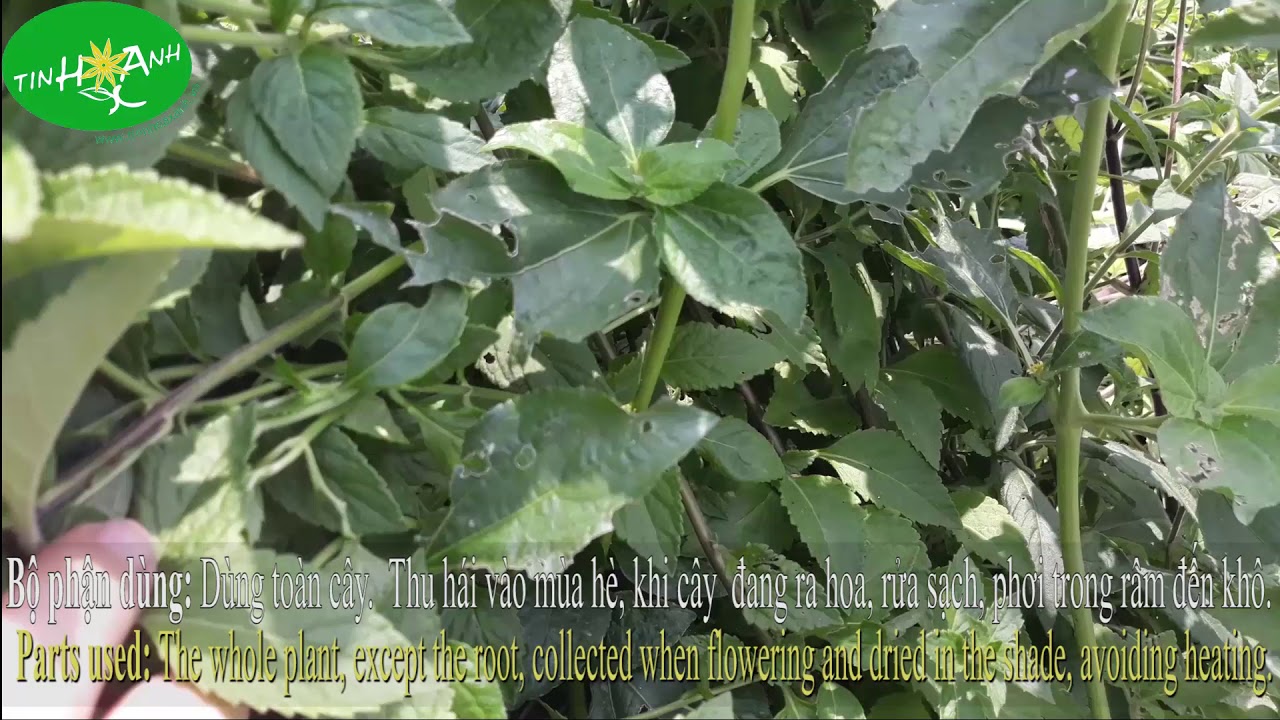
Mô tả: Cây thảo, cao 40-80cm, thân hình trụ, phân nhánh. Lá mọc đối, hình trái xoan, dài 4-6cm, rộng 2-3cm, đầu nhọn, gốc tròn, mép khía răng cưa; cuống dài 4-15mm. Cụm hoa là chùm ở đầu cành, dài tới 30cm, mang nhiều hoa màu lam tím, đài hình chuông, có 5 răng. Quả nang hình trứng, dài bằng đài hoa, có mỏ ngắn, mở thành 4 van, chứa nhiều hạt nhỏ màu vàng. Toàn cây phủ lông dày. Lá có mùi thơm. Mùa hoa, quả: Tháng 4-7.
Description: Anual herb, 40-70 cm high or more to 1m. Stems erect, cylindrical, covered with a dense pubescence. Leaves opposite, oval-shaped, apex obtuse or slightly acuminate, 4-6 cm long, 2-3 cm wide, pubescent on both sides; margins serrate. Inflorescence in axillary or terminal spiciform raceme, about 30cm long; flowers violet-blue; calyx campanulate, 5-toothed. Capsule, as long as the calyx, ovoid, apiculate; seeds numerous, yellow. Flowering and fruiting period: April – July.
Phân bố: Loài Nhân trần phân bố khắp vùng nhiệt đới của châu Á. Ở Việt Nam, cây mọc hoang trên đồi núi, bờ ruộng, bãi trống ở các tỉnh miền núi phía Bắc. Cũng được gieo trồng ở một số nơi.
Distribution: There are 15 species of the genus Adenosma R. Br. occurring in Asia. They are all heliophilous herbaceous annual plants widespread in midland and low mountainouas areas. In Vietnam, the plant is concentrated in some northern provinces, such as Bac Can, Cao Bang, Lang Son, Tuyen Quang, Yen Bai, Ha Giang, and Son La. In the South, it is only scattered at the height of more than 500m. Cultivation trials are in progress.
Bộ phận dùng: Dùng toàn cây. Thu hái vào mùa hè, khi cây đang ra hoa, rửa sạch, phơi trong râm đến khô.
Parts used: The whole plant, except the root, collected when flowering and dried in the shade, avoiding heating.
Thành phần hóa học: Cây Nhân trần chứa 1% tinh dầu, gồm paracymen (chủ yếu), pinen, limonen, cineol, anethol; các acid nhân thơm, coumarin, một số monoterpen, sesquiterpen và flavonoid.
Chemical Composition: The whole plant yields 1% essential oil, saponins, flavonoids and aromatic acids. The main composition of the oil is paracymene, limonene, cineole…
Công dụng: Theo Đông y, Nhân trần có vị hơi cay, đắng, mùi thơm, tính ấm; vào các kinh tỳ, vị, can, đởm. Có tác dụng thanh nhiệt, lợi thấp, hành khí, chỉ thống, lợi tiểu và làm ra mồ hôi. Thường dùng chữa vàng da, sốt nóng, tiểu tiện vàng đục và ít, dùng cho phụ nữ sau sinh đẻ, ăn chậm tiêu. Ngày dùng 20-30g, dạng thuốc sắc, trà... Thường phối hợp với các vị thuốc khác.
Adenosma glutinosum has a bitter taste, aromatic odour and cool character. It enters the meridians of spleen, stomach, liver and bile. It eliminates heat, removes damp, and promotes diuresis and perspiration.
In modern medicine, Adenosma glutinosum is employed for curing viral hepatitis. In traditional medicine, A. glutinosum is used for treating jaundice in hepatitis, fevers and oliguria; it is also used for dyspepsia in parturient.
Used in the form of decoction or syrup or tea, in a daily dose of 20 – 30g.













Информация по комментариям в разработке