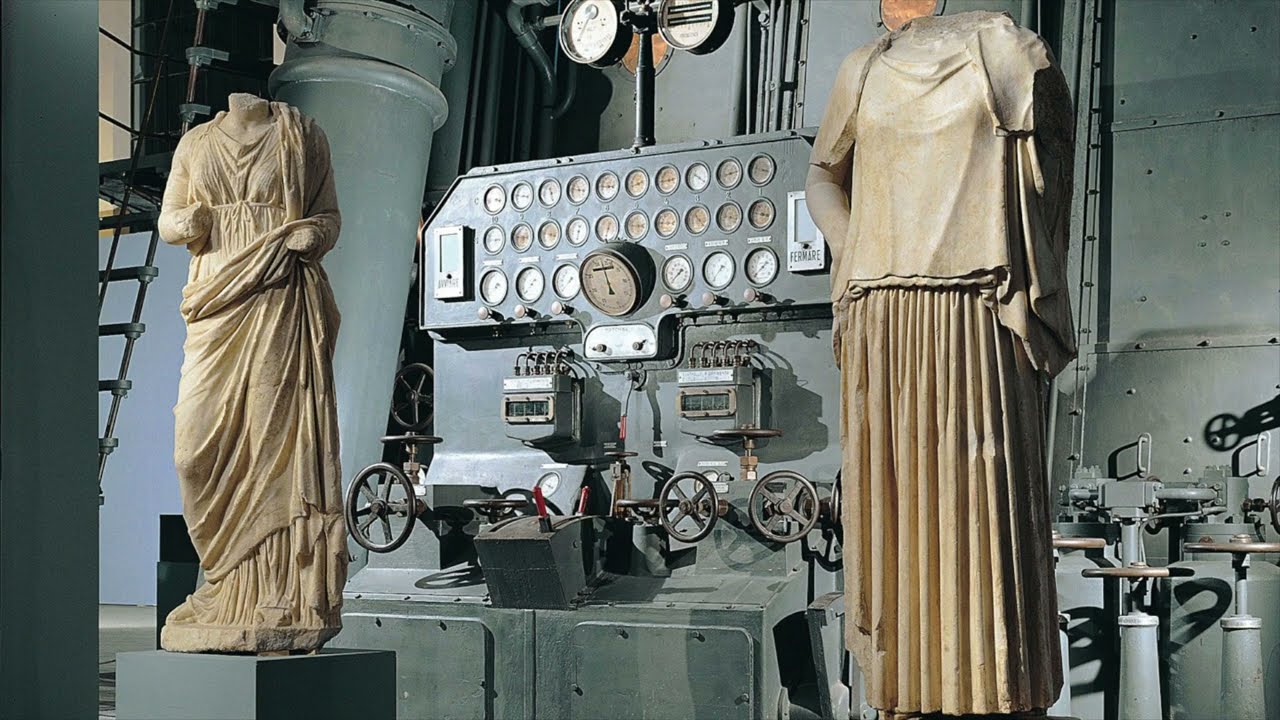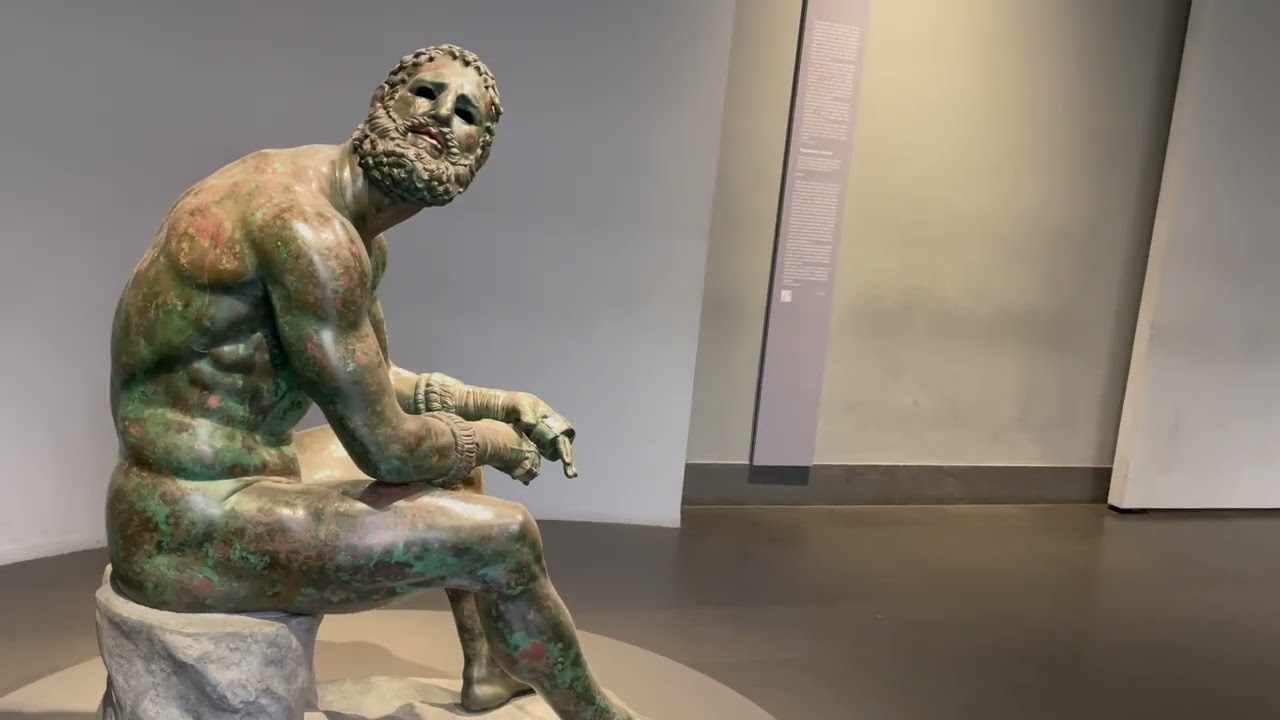
Step into Palazzo Massimo, one of the national museums of Rome, and take a journey from the Archaic Period through the Roman Imperial Era. As we look together at some of the most famous works in Palazzo Massimo’s collection, you’ll learn about the history of Romans interacting with Greek art.
Sources Consulted
Ambler, Jessica Leay. "Introduction to Ancient Roman Art.," Smarthistory, August 8, 2015, accessed October 15, 2024, https://smarthistory.org/introduction-to-a....
Gazda, Elaine K. “Roman Sculpture and the Ethos of Emulation: Reconsidering Repetition.” Harvard Studies in Classical Philology 97 (1995): 121–56. https://doi.org/10.2307/311303.
Giustozzi, Nunzio and Matteo Cadario. Palazzo Massimo alle Terme: Guide. Translated by Christopher Evans. Milan: Electa, 2012.
Gondek, Renee M. "Introduction to Ancient Greek Art.," Smarthistory, August 14, 2016, accessed October 15, 2024, https://smarthistory.org/greek_intro/.
Harris, Beth and Steven Zucker. "Roman Copies of Ancient Greek Art." Smarthistory, May 24, 2024, accessed October 15, 2024, https://smarthistory.org/roman-copies-of-a....
Kousser, Rachel. “The Roman Reception of Greek Art and Architecture.” In The Oxford Handbook of Greek and Roman Art and Architecture. Edited by Clemente Marconi, 374–94. Oxford: Oxford University Press, 2014.
“Palazzo Massimo.” Museo Nazionale Romano, accessed October 15, 2024, museonazionaleromano.beniculturali.it/en/palazzo-massimo/.
Pollitt, Jerome J. “The Impact of Greek Art on Rome.” Transactions of the American Philological Association 108 (1978): 155–74. https://doi.org/10.2307/284245.
Stocking, Charles Heiko. “Greek Ideal as Hyperreal: Greco-Roman Sculpture and the Athletic Male Body.” Arion: A Journal of Humanities and the Classics 21, no. 3 (2014): 45–74.
By Lily Mason, Annie Specker, and Cecily Torres for the Kenyon-Rome Program, fall semester 2024.
Информация по комментариям в разработке