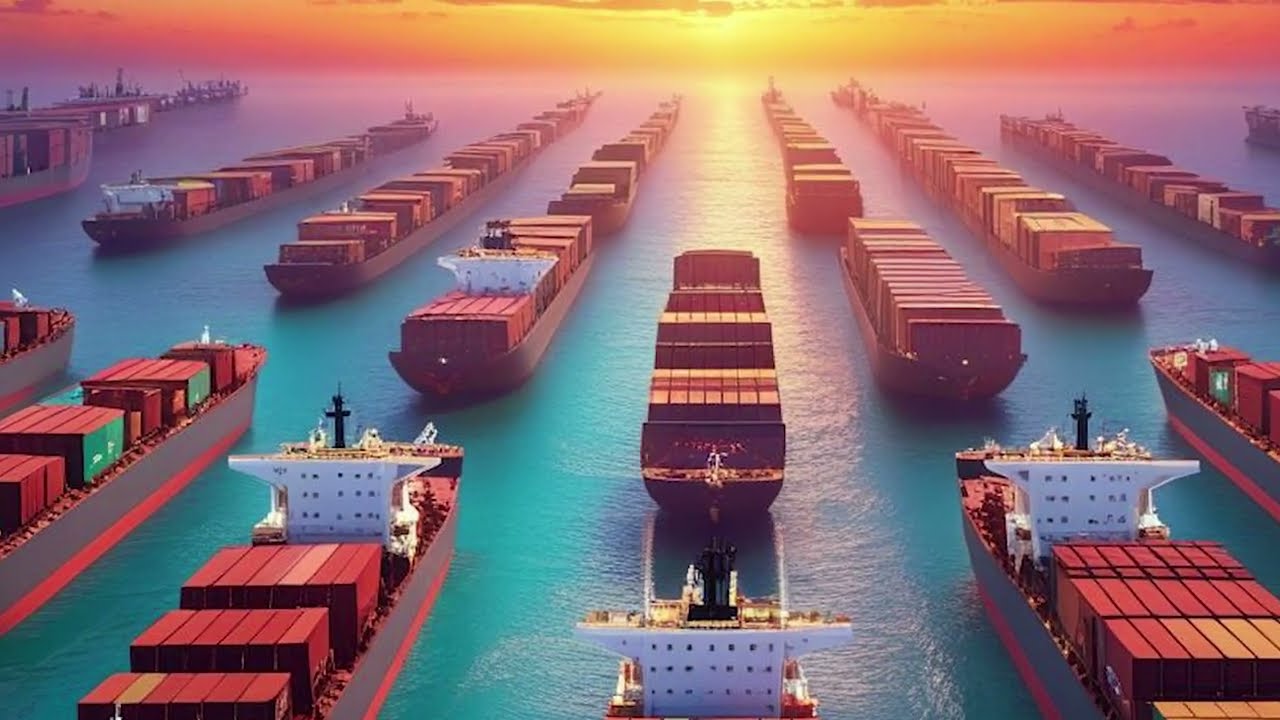
The Strait of Hormuz is one of the most critical and vulnerable shipping lanes in the world. Located between Iran and Oman, this narrow stretch of water connects the Persian Gulf with the Arabian Sea and is responsible for transporting over 20% of the world’s oil supply — including a large share of India’s crude oil imports.
But what if this vital passage is blocked or shut down?
In this video, we explain:
WHAT IS STRAIT OF HORMUZ?
WHY STRAIT OF HORMUZ IS SO IMPORTANT?
WHAT HAPPENS IF STRAIT OF HORMUZ IS CLOSED?
WILL FUEL PRICES INCREASE ?
This is not just a global issue — it directly affects India’s economy, energy prices, and strategic decisions.
Please Like Share and Subscribe!
The Strait of Hormuz is one of the most strategically important and geopolitically sensitive waterways in the world, serving as the vital maritime route for oil and natural gas exports from the Persian Gulf to the rest of the world. The Strait of Hormuz is located between Iran to the north and Oman and the United Arab Emirates to the south. Despite being only about 33 kilometers wide at its narrowest point, the Strait of Hormuz carries an enormous amount of global energy traffic, especially oil and liquefied natural gas (LNG). Over 20% of the world's oil supply flows through the Strait of Hormuz every single day, making it an irreplaceable chokepoint in the global energy infrastructure. The Strait of Hormuz is essential not just for the oil-rich Gulf nations like Saudi Arabia, Iran, Iraq, Kuwait, Bahrain, and the UAE, but also for oil-importing countries like India, China, Japan, and South Korea. India, in particular, is heavily dependent on oil imports, with over 85% of its crude oil needs being met through imports, a large portion of which comes through the Strait of Hormuz. This makes the Strait of Hormuz one of the most critical supply routes for India’s energy security.
In recent years, the Strait of Hormuz has gained even more attention due to rising geopolitical tensions between Iran, the United States, and other regional players. The possibility of a Strait of Hormuz closure has become a serious concern among global policymakers, economists, and defense analysts. If the Strait of Hormuz is closed, even temporarily, it would result in catastrophic disruptions to the global oil supply. The global oil markets are extremely sensitive to any news regarding the security of the Strait of Hormuz. Every time tensions escalate in the Persian Gulf—whether due to Iran's threats to block the Strait of Hormuz, U.S. military deployments in the region, or attacks on oil tankers—the prices of crude oil surge immediately. The Strait of Hormuz has, over time, become a symbol of global energy vulnerability.
For India, the closure of the Strait of Hormuz would be nothing short of an energy emergency. India imports more than 2 million barrels of crude oil per day through the Strait of Hormuz. These oil imports from Gulf nations are not just about energy—they also influence domestic inflation, transport costs, and the pricing of essential commodities. If the Strait of Hormuz is blocked or disrupted, India will face severe fuel shortages, skyrocketing petrol and diesel prices, and economic instability. The entire Indian economy would feel the ripple effect of a Strait of Hormuz closure. The closure of the Strait of Hormuz would also threaten India's maritime trade routes, as most of its oil tankers pass through this region. If the Strait of Hormuz gets blocked, India will have to look for alternative and more expensive routes or oil sources, which would increase the financial burden on the Indian government and the people.
The Strait of Hormuz is not just about oil—it is also about power and influence. Iran controls the northern shore of the Strait of Hormuz and has often used it as a strategic leverage point. In the past, Iran has threatened to block the Strait of Hormuz in response to economic sanctions, particularly those imposed by the United States.
India must pay close attention to developments around the Strait of Hormuz. While it has strategic petroleum reserves to last for a few weeks, a prolonged Strait of Hormuz closure would lead to fuel price shocks, inflation, and increased fiscal deficit. India’s economic growth is directly tied to energy availability, and the Strait of Hormuz plays a central role in that. India should also consider diversifying its oil import sources to reduce its dependency on the Strait of Hormuz. However, even with diversification, the Strait of Hormuz remains the shortest and most economical oil shipping route for India. If Iran closes the Strait of Hormuz due to regional conflict or military escalation, India will have to reroute its oil tankers via longer and more costly paths like the Cape of Good Hope, which would increase oil shipping time and costs.

Информация по комментариям в разработке