My son and I go through a pile of examples to talk about different aspects of easy gold jewelry identification. At least until he goes down for his nap...
Gold Fill Video Referenced in video: • How to Identify Gold Fill; what is gold fill?
We divide the video into main parts:
Markings; we dive into depth hunting for markings, showing how to find them, where to find them, talking about what they mean, and what tools you need to find them. We will cover a variety of specific marks like 18k, k18, 14k, 10k, Sterling, and others. We also discuss odd markings like 10kp or Plumb, which denotes that the piece should be near 10 karat, but not guaranteed. We also briefly touch on markings like CZ which tell you that the ring is set with Cubic Zirconia and not Diamonds. We also discuss markings that may wear off during use, and where to look for the remains of markings.
Quality: throughout the video the focus on quality and what signs you should pay attention to when considering what you should take a closer look at. With the tools we discuss like a cheap jewelers loop or a strong small magnet. We talk about features gold necklaces will have but cheaper necklaces may not. Features of construction in antique Victorian rolled gold and gold filled jewelry. Features of construction in pins that are GF (with gold frontage). A focus on reducing the amount of gold / material within the object. How gemstones like diamonds, rubies, sapphires, and pearls are staked into the piece instead of being glued in. There is also a discussion of mixed materials (such as silver and gold used in conjunction, either with Karat gold added to sterling or in gold plated silver such as vermeil).
Earrings, Necklaces, and Pins are all specifically singled out as categories of their own as they are good examples of how to look in strange places for markings.
Pendants are also specifically called out because the build quality of how a pendant is constructed can quickly tell us if if its high quality or lower end. Jewelry that is focused on staying on you even if the primary way it stays on (be it a pin, or a latch, or a loop), comes off, it has a backup form of staying on you.
We discuss how stones being natural can indicate that the piece is more likely to be made out of gold because higher quality materials (like gemstones, in the case we discuss; sapphires), will most likely not be used in something other than a precious metal.
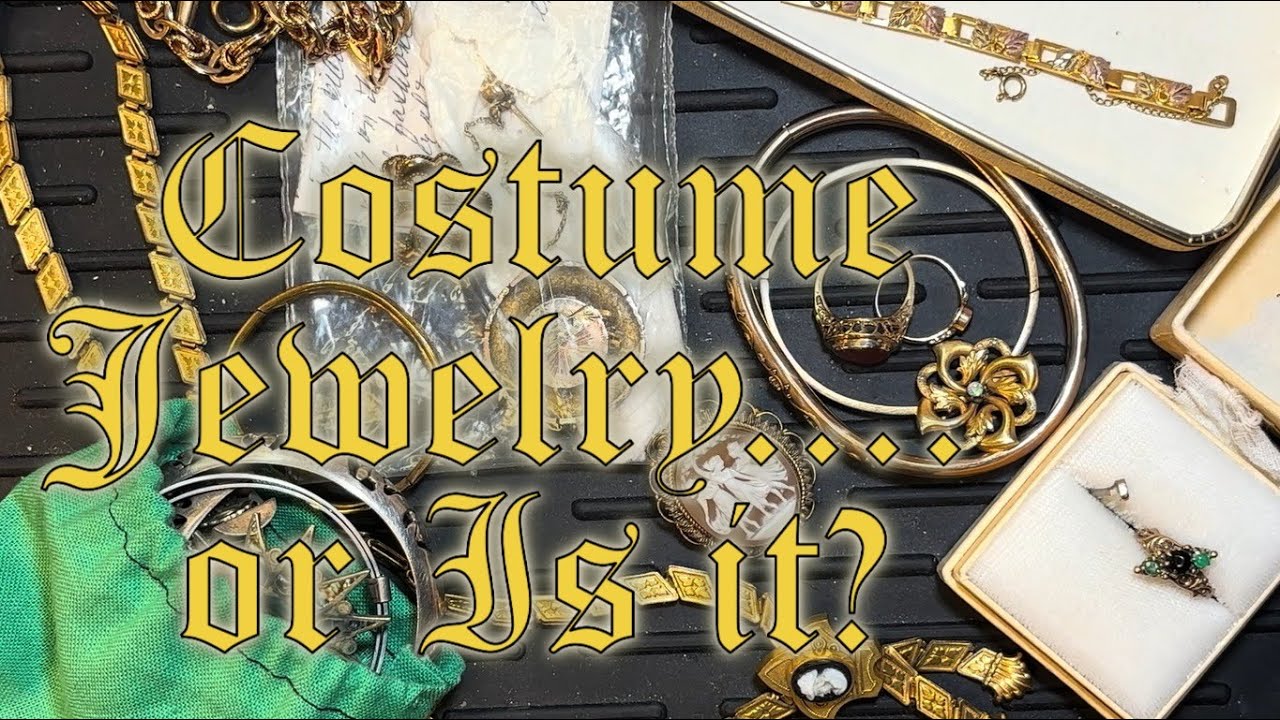
We also highlight a series of pieces of costume or fake jewelry, and point out the features that they will have that you don't see on Gold jewelry.
White Gold: we talk very specifically about white gold, as it is often mistaken for silver, and it's important understand that different Gold Alloys can produce different gold colors.
Brass: we talk specifically about brass, and how it can be polished to the point that it looks like Gold.
Men's Jewelry: we talk about award pins. Using Caterpillar and Ford as examples, and a set of gold and Coral cufflinks.
Antique Jewelry; we talk about low karat, unmarked, and very old jewelry that shows features you dont find in modern jewelry, but can still be an excellent buy. Also, where old jewelry may be gold, but set with glass or crystal instead of a gemstone.
Dirt: we talk about how old jewelry, dirty jewelry, shows up its quality through the wear on it.








Информация по комментариям в разработке