The Dimitrie Gusti National Village Museum (Romanian: Muzeul Național al Satului „Dimitrie Gusti”) is an open-air ethnographic museum located in Bucharest, Romania, on the shores of Herăstrău Lake within King Michael I Park. Established in 1936, the museum was founded by Romanian sociologist and ethnographer Dimitrie Gusti, together with a team of researchers who aimed to preserve and document the traditional rural life of Romania. Today, it is considered one of the most important open-air museums in Europe and one of the most distinctive cultural attractions in Bucharest.
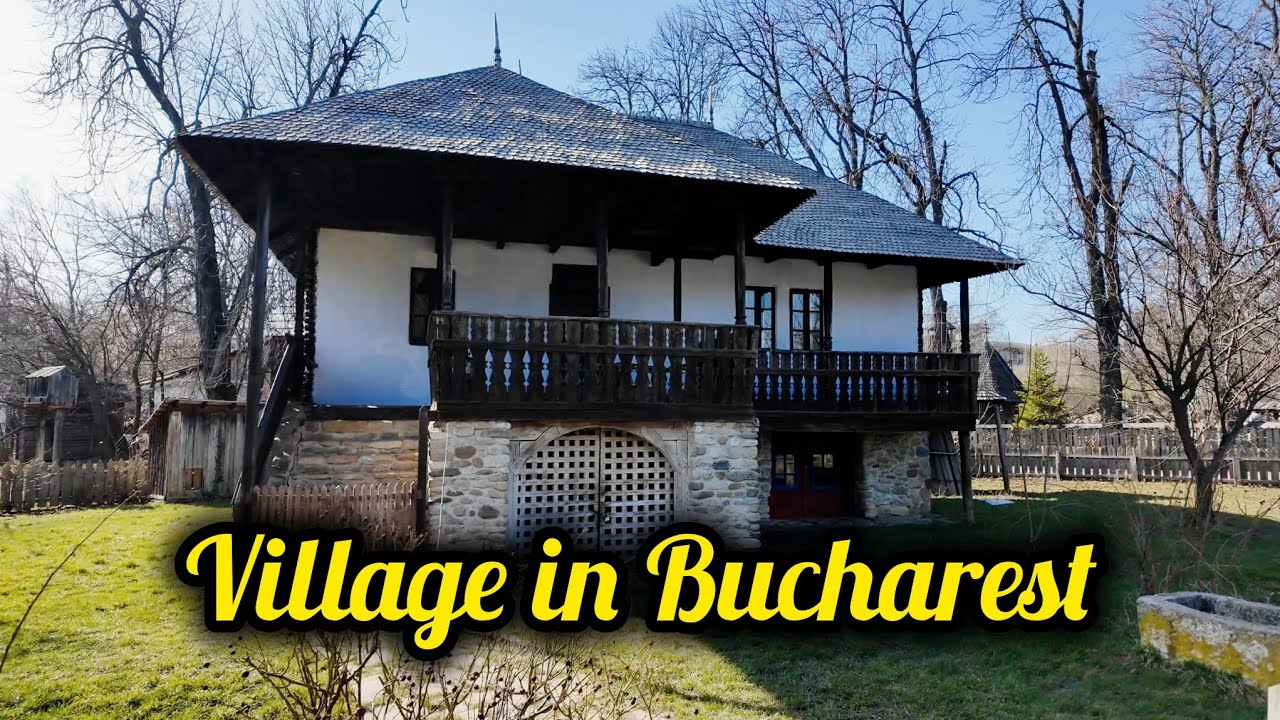
The museum covers an area of more than 10 hectares and features over 300 authentic buildings and structures collected from various historical regions of Romania, including Transylvania, Maramureș, Moldavia, Wallachia, Oltenia, Dobrogea, and Banat. These structures include traditional peasant houses, wooden churches, barns, watermills, windmills, workshops, and village installations. Each building was carefully dismantled in its original location and reconstructed on the museum grounds using traditional methods in order to preserve its architectural authenticity.
The layout of the museum resembles a traditional Romanian village, with houses arranged along winding pathways, gardens, orchards, and wooden fences that reflect regional building traditions. Visitors can observe the diversity of Romanian vernacular architecture, from the wooden houses of Maramureș to the stone and clay constructions of southern Romania. Many of the houses are furnished with authentic household objects, textiles, tools, and decorative items that illustrate the everyday life of Romanian villagers from the 17th to the early 20th centuries.
In addition to its architectural heritage, the museum plays an important role in preserving traditional crafts and folk culture. Throughout the year, it hosts cultural festivals, seasonal fairs, and craft demonstrations where artisans present traditional skills such as weaving, pottery, wood carving, and embroidery. These events provide visitors with an opportunity to experience Romanian customs, music, and gastronomy in an environment that reflects the atmosphere of historic rural communities.
The museum also serves as an educational and research institution dedicated to the study of ethnography, anthropology, and cultural heritage. Its collections include thousands of artifacts, historical objects, and archival materials related to rural life in Romania. Through exhibitions, publications, and educational programs, the institution continues the research tradition initiated by Dimitrie Gusti and his sociological school.
Located within the green surroundings of King Michael I Park and near Herăstrău Lake, the Dimitrie Gusti National Village Museum offers visitors a unique opportunity to explore Romania’s rural heritage without leaving the capital city. The site functions both as a cultural monument and as a living museum that illustrates the historical diversity and richness of Romanian village life.
Music:
1. While You Think It Over
Musician: Clo Sur (from Audiio)
2. Relax
Musician: Hotham (from Audiio)
3. Islands
Musician: Grohl (from Audiio)




![У нас в Москве [полная версия] (1986)](https://i.ytimg.com/vi/daVoVQAzvrA/maxresdefault.jpg)










Информация по комментариям в разработке