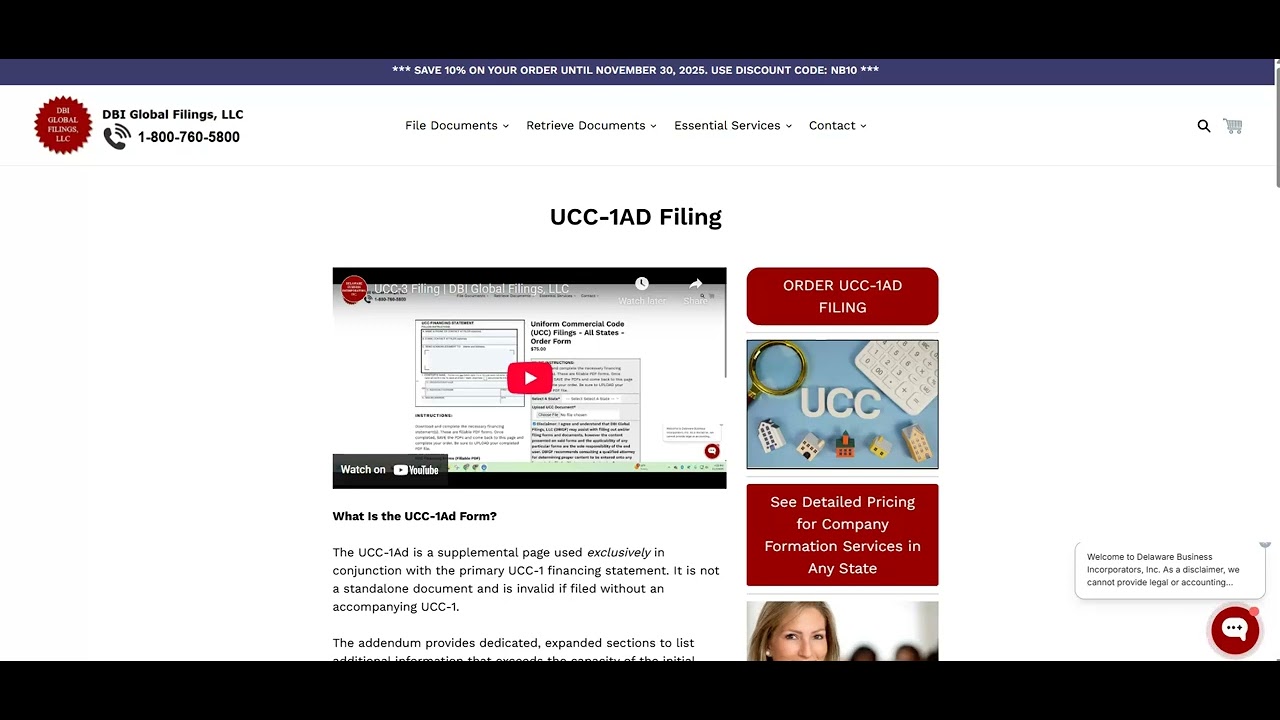
To Order UCC Filings: https://dbiglobalfilings.com/products...
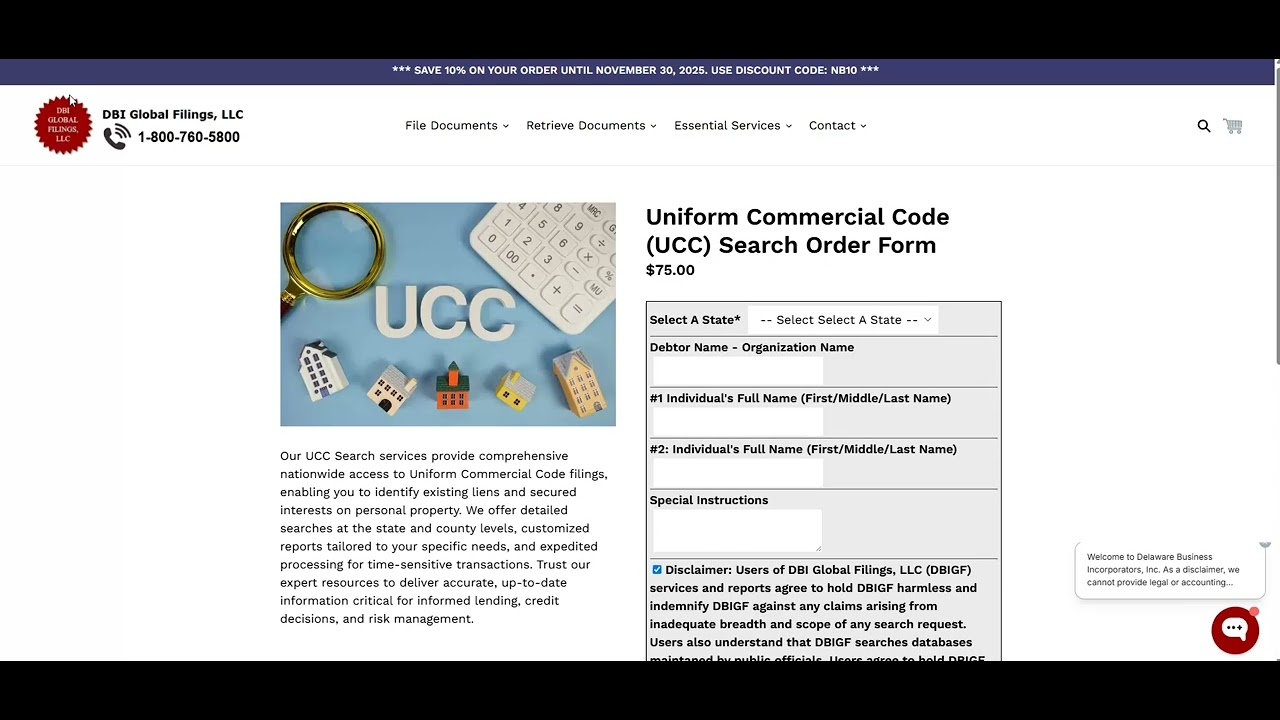
To order UCC Search: https://dbiglobalfilings.com/products...
Mastering the UCC-1Ad Addendum: When and How to Use the Financing Statement Addendum
________________________________________
When securing a significant commercial loan, the standard UCC-1 Financing Statement might not always provide enough room for all the necessary details. What happens when you need to list an extra debtor, a second secured party, or detail real estate collateral?
Hello, and welcome to DBI GLOBAL FILINGS, LLC. In today's video, we are breaking down the official UCC-1Ad form, the essential addendum used to supplement your initial financing statement. Hi, this is Russell Murray. The UCC-3AD form is critical for maintaining proper public record and protecting your security interests.
The UCC-1Ad, or Uniform Commercial Code Financing Statement Addendum, is not a standalone document. It is a supplemental page that must be attached to a standard UCC-1 Financing Statement when additional space is required or specific real estate-related information needs to be included.
Its primary purpose is to ensure all relevant parties and collateral details are publicly recorded without modifying the standardized format of the main UCC-1 form.
There are four primary scenarios where using the UCC-1Ad is required:
1. Multiple Parties: If you have more than one debtor or secured party involved in the transaction, the addendum provides designated space to list them correctly.
2. Lengthy Names/Info: If the names or addresses of the primary debtor or secured party don't fit entirely within the fields of the initial UCC-1 form, you continue that information on the addendum.
3. Real Estate-Related Collateral: When the collateral is tied to real property—such as timber to be cut, mineral rights, or fixtures—the UCC-1Ad is used to provide a description of the real estate and the name of the record owner if the debtor doesn't hold that interest.
4. Special Entity Types: For security interests where the debtor is a trust, a trustee, or a decedent's estate, the addendum includes specific checkboxes to identify the nature of the entity.
Let's highlight a few key sections of the addendum.
• Item 9: This section simply requires you to re-enter the name of the first debtor from the main UCC-1 form. This creates the necessary cross-reference for the filing office's system.
• Item 10/11: These are your main entry points for additional debtors and secured parties. Remember to use the exact legal name of the organization or individual, as mistakes can have serious legal consequences for perfection and priority.
• Items 14-17: These sections manage the real estate details, fixture filing information, and record owner names when the collateral involves land or attached assets.
The golden rule of UCC filings is accuracy. The UCC-1Ad ensures that your public notice is complete and unambiguous, which is vital for establishing your lien priority over other creditors.
If you have specific scenarios or questions, leave them in the comments below.
Managing your secured transactions effectively protects your business interests. For further assistance with complex filings, please visit our website at www.dbiglobalfilings.com to speak with our UCCp compliance specialists.
Thank you for listening, and be sure to file accurately!
UCC-1Ad, UCC-1, Uniform Commercial Code, Financing Statement Addendum, Secured Transactions, Lien Priority, Collateral, Fixture Filing, Real Estate Collateral, Business Law, Commercial Lending, Debtors, Secured Parties, Legal Compliance, UCC Filing, UCC Forms, Business Finance, Legal Guide, How To File UCC, UCC Documentation, Liens, Security Interests, Legal Education, Finance Professionals















Информация по комментариям в разработке