The sighting of these birds was carried out on two trips to Costa Rica, one in January 2021 where we visited the national parks of Bahía Drake, Puerto Jiménez, and Sirena, and another in October of the same year when we explored Cerro Chirripó, Marino Ballena, Mirador de Quetzales, Monteverde, Puerto Jiménez, Tortuguero, and Volcán Arenal.
The camera used for taking photos or videos is a Fujifilm XH1 with a Fuji XF 100-400 lens, augmented with the Fujinon XF 1.4 X Teleconverter. For those not familiar with photography, as it is a medium-format camera, focal distances need to be multiplied by 1.5, resulting in an 840mm equivalent when compared to a full-frame camera.
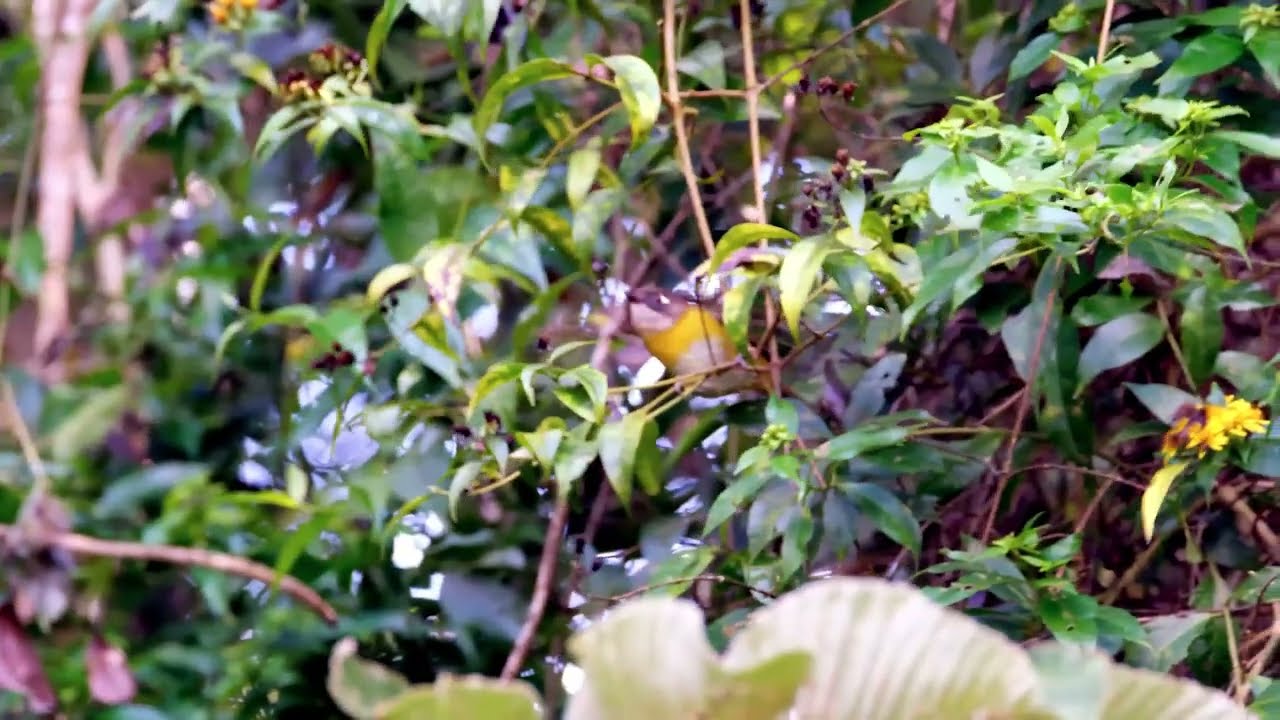
All photos and videos were taken without a tripod or monopod, as it involved walking to find and photograph the different birds. To understand the difficulty of what we see now, one must consider that in Costa Rica, trees reach heights exceeding 30 meters, and these birds are sometimes found more than 50 meters away. The images were captured handheld, so in some videos, you can hear the sound of struggling to hold one's breath to minimize movement during the image capture process.
All those videos, especially when the bird was far away and high up, had significant movements that had to be stabilized to make it appear as if they were taken with the camera on a tripod. This is a manual process in which, in the video editing program, you adjust the position of the image frame by frame to match the intended position, not the actual one. Considering that each second of video has, depending on the shooting configuration, between 30 or 60 frames per second, a one-minute video would require correcting between 1,800 and 3,600 frames. To give you an idea of the volume of material, the October trip alone generated 250 GB.
Being a novice in bird matters, as I am an amateur photographer and it was my first time doing this work, identifying each bird species from the photos or videos was a real challenge. "Saint Google" and his Google Lens application, along with the book "Birds of Costa Rica" by Richard Garrigues and Robert Dean, were my helpers in this regard. The difference between one bird and another often lies in a small detail, and the book, in particular, helped me strive for accuracy.
Achieving the completion of over 300 videos by January 1, 2023, was a task that required 8, 10, 12 hours of daily work throughout the year 2022. Various sports injuries prevented me from leading my usual life, so being at home allowed me to dedicate so many hours to finish the job. In any case, time passes, and today I am happy to be able to offer everyone, and especially myself, these videos of those beautiful birds that can be seen in every corner of beautiful Costa Rica.
Within the "PAJAREAR ES VIDA" channel, I have created a playlist called "Aves de Costa Rica," featuring a video with short clips of each of these over 150 species and then longer individual videos of each species.
The name of each bird is taken from the book "Birds of Costa Rica" by Richard Garrigues, but for better identification, the title on YouTube includes this name, the name in Spanish given by eBird, the English name, and the scientific name.
I hope you enjoy it.
Greetings,
Antonio Jiménez
#CostaRicaBirds #BirdWatching #WildlifePhotography #NatureVlog #BirdIdentification #BirdingAdventure #CostaRicaWildlife #BirdPhotography #BirdSpecies #NatureExploration #FujifilmXH1 #BirdingInCostaRica #BirdLovers #WildlifeConservation #BirdsOfCostaRica #NatureDocumentary #AntonioJimenezAves #BirdsPlaylist #BirdsOfInstagram #BirdingCommunity #TravelVlog #CostaRicaNationalParks #BirdingTrip #BirdingEnthusiast #NatureConservation #WildlifeDiscoveries #YouTubeNatureChannel #NatureInCostaRica #BirdingJourney

Информация по комментариям в разработке