This powerful prayer and reflection reminds the listener of one of the Qur’an’s most sobering realities: everything we possess in this world will eventually disappear, while what is with Allah Subhanahu wa Ta'ala alone remains. Through a moving recitation led by Imam Ragab Abdelmoneim, the verses from Surah An-Nahl confront the human tendency to trade the eternal reward of the Hereafter for the fleeting gains of worldly life.
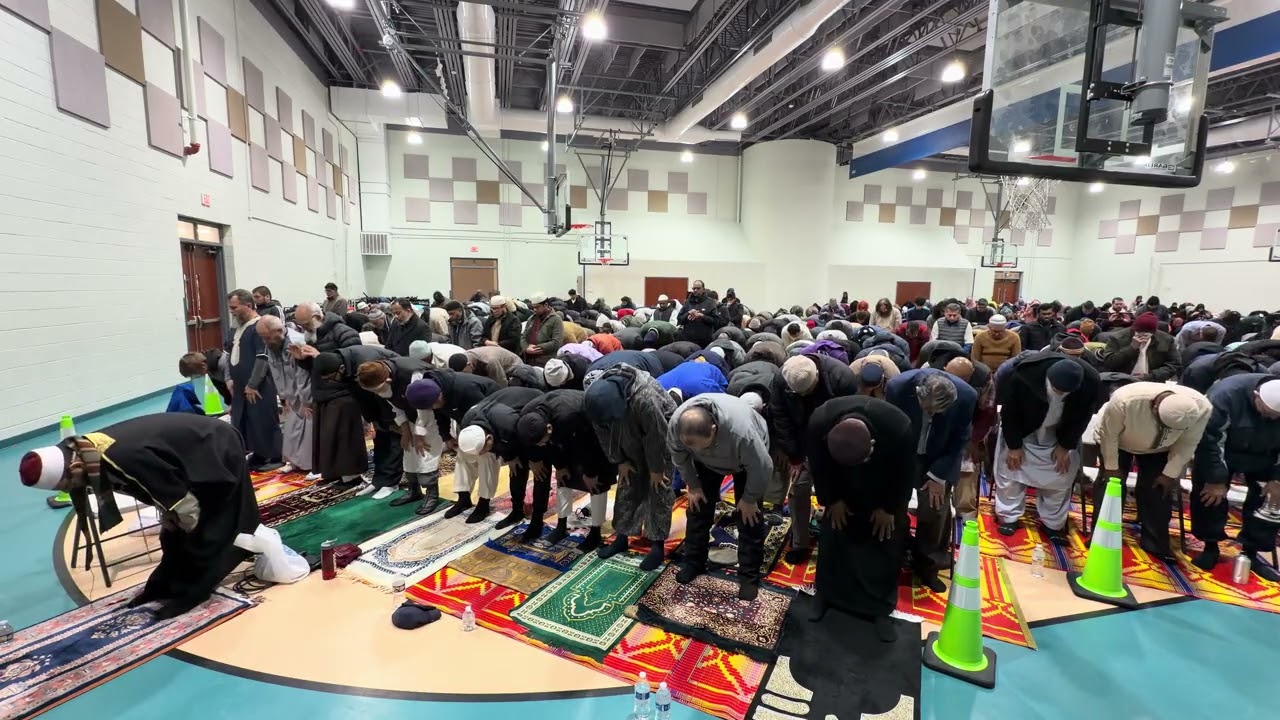
The recitation begins with the call to prayer and the organization of the rows (0:03–0:53), reminding believers that prayer itself is a declaration that our lives are oriented toward something greater than temporary worldly pursuits. As the prayer begins with Surah Al-Fatiha (1:04–1:41), the believer renews the central covenant with Allah Subhanahu wa Ta'ala: “You alone we worship, and You alone we ask for help.” This declaration establishes the foundation of the message that follows—our loyalty, our commitments, and our ambitions must ultimately belong to Allah Subhanahu wa Ta'ala.
The central theme emerges in the recitation of Surah An-Nahl (1:45–3:36), where Allah Subhanahu wa Ta'ala commands justice, excellence, and fulfilling the covenant with Him:
“Indeed Allah commands justice, excellence, and giving to relatives, and forbids immorality, wrongdoing, and oppression.” (16:90)
These verses remind the believer that faith is not merely words but a covenant with Allah Subhanahu wa Ta'ala that must not be broken for worldly advantage. The Qur’an warns believers not to treat their oaths and commitments as tools for personal gain or social manipulation.
The warning becomes even more direct in the second rak‘ah (4:57–5:38), where the Qur’an states:
“Do not sell the covenant of Allah for a small price. Indeed what is with Allah is better for you, if only you knew.”
Here the Qur’an exposes one of the greatest spiritual dangers: trading eternal reward for temporary benefit. Whether it is wealth, status, influence, or comfort, the believer is reminded that these things vanish quickly. The verse that follows delivers the decisive truth:
“What you have will run out, but what is with Allah remains.” (5:38–5:43)
This statement forms the heart of the reflection behind the title. Everything people accumulate—money, possessions, reputation, even physical strength—will eventually disappear. But the deeds done sincerely for Allah Subhanahu wa Ta'ala are preserved forever.
The prayer concludes with remembrance and supplication (9:16–10:05), including the beautiful du‘a:
“O Ever-Living, O Sustainer, by Your mercy I seek relief. Rectify all of my affairs and do not leave me to myself even for the blink of an eye.”
This supplication perfectly captures the message of the recitation. Human beings cannot rely on their own plans, wealth, or strength, because these are temporary. Only the mercy and guidance of Allah Subhanahu wa Ta'ala endure.
In the final moments, the reminder of Ramadan and the nights of worship (12:02–15:46) further emphasizes that this life is a brief opportunity to invest in the eternal. The believer who understands this truth approaches worship, charity, patience, and righteousness with urgency, knowing that what is done for Allah Subhanahu wa Ta'ala is never lost.
The question the Qur’an leaves us with is deeply personal: Are we living for what disappears, or for what remains forever?
#QuranReflection #SurahAnNahl #IslamicReminder #Akhirah #Hereafter #IslamicReminder #QuranRecitation #RamadanReminders #ImamRagabAbdelmoneim #IslamicSpirituality #FaithAndAccountability #WhatRemainsForever









Информация по комментариям в разработке