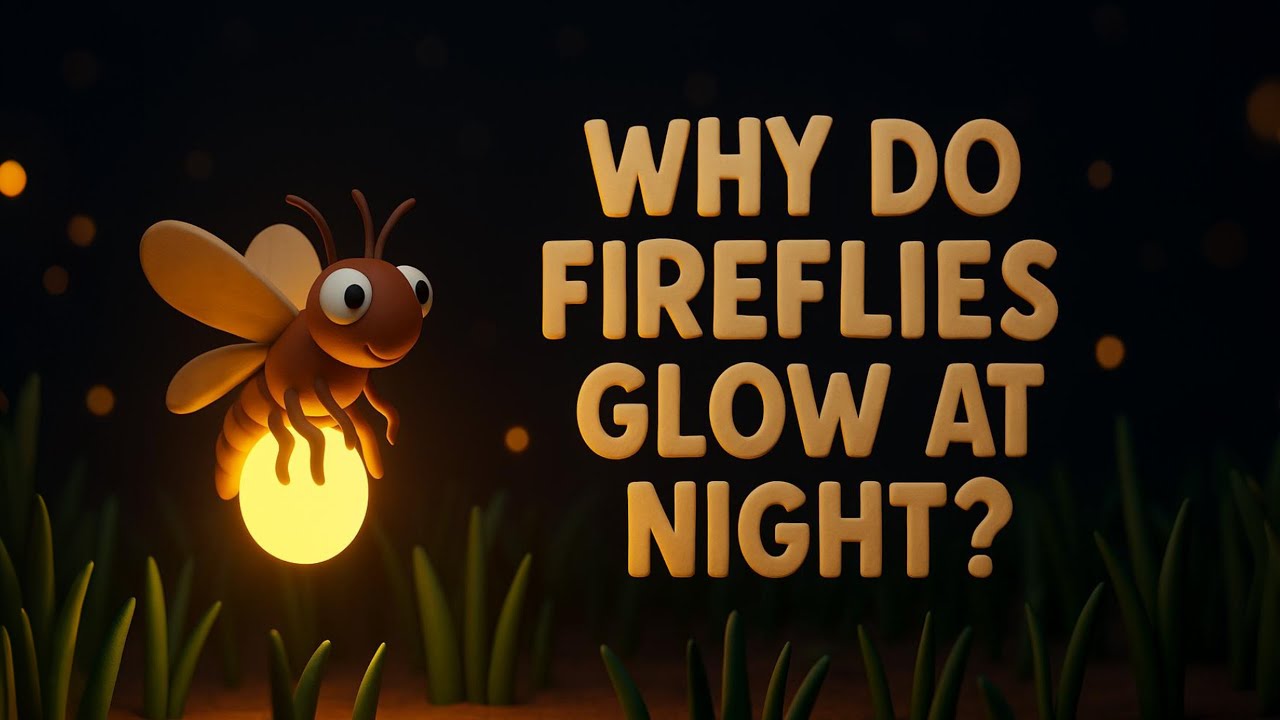
Fireflies have always felt like tiny floating stars, but the truth behind their glow is even more magical than it looks. In this claymation-style science video, we explore exactly why fireflies glow at night and uncover the fascinating biology that makes their light possible. From the chemical reaction between luciferin and luciferase, to the oxygen flow inside their glowing abdomen, to the way bioluminescence allows fireflies to communicate, attract mates, and stay safe from predators — everything is explained in a simple, visual, and engaging way.
You’ll discover how fireflies produce a “cold light” that releases almost zero heat, why different firefly species blink in unique patterns, how synchronized firefly displays happen, and what makes bioluminescence one of nature’s most efficient light systems. This video blends storytelling, biology, chemistry, and nature facts to help you understand the science behind one of the world’s most magical natural phenomena.
If you’ve ever searched for things like why do fireflies glow, how do fireflies make light, what is bioluminescence, luciferin luciferase reaction, firefly science for kids, nature documentary, insect glowing explained, or claymation science animation, this video is made for you. Our goal is to make science fun, cinematic, and easy to understand — all while keeping the warm charm of handcrafted claymation visuals. ✨
We hope this video inspires curiosity about nature, biology, and the hidden systems that allow tiny creatures to create such a breathtaking light show. Sit back, relax, and enjoy this glowing journey into the world of fireflies.
❤️ If you enjoyed the video, please support the channel:
👍 Like the video
💬 Comment your thoughts
🔔 Subscribe for more claymation science videos!
Your support helps us create more magical educational content. Thank you!
#Fireflies #Bioluminescence #ScienceAnimation #Claymation #NatureFacts
Информация по комментариям в разработке