𝐒𝐮𝐛𝐬𝐜𝐫𝐢𝐛𝐞 𝗙𝐨𝐫 𝗠𝐨𝐫𝐞 𝗜𝐧𝐟𝐨𝐫𝐦𝐚𝐭𝐢𝐨𝐧 𝐨𝐧 𝗛𝐞𝐚𝐥𝐭𝐡 👩⚕ 𝐚𝐧𝐝 𝗠𝐞𝐝𝐢𝐜𝐢𝐧𝐞💉🩺💊
📌𝗜𝗻𝘀𝘁𝗮𝗴𝗿𝗮𝗺 : / clinical.learning
6. Anti- Mycobacterial Drugs: Pyrazinamide: Pharmacology Video Lectures
-----------------------------------------------------------------------------------------------------------------------
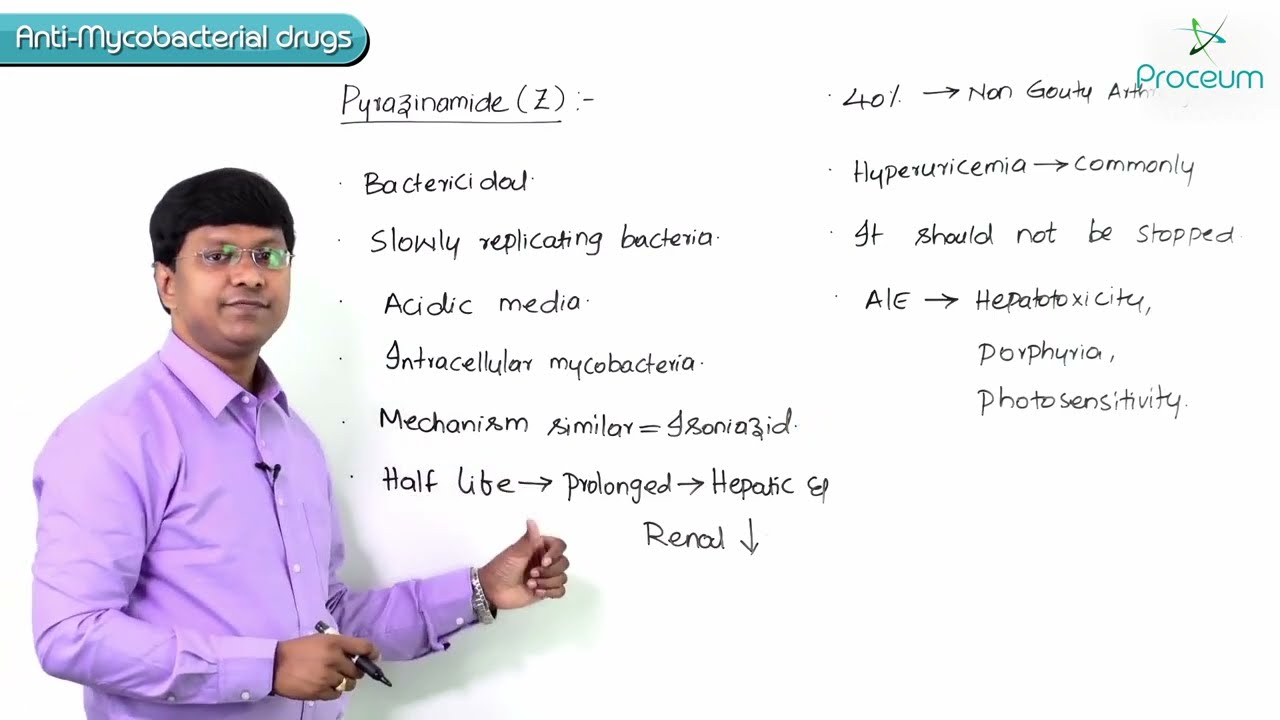
Pyrazinamide (PZA) is a crucial first-line anti-mycobacterial drug used in the intensive phase of tuberculosis (TB) treatment as part of the RIPE regimen (Rifampin, Isoniazid, Pyrazinamide, Ethambutol) 💊🦠. Unlike other anti-TB drugs, Pyrazinamide is highly effective in killing dormant Mycobacterium tuberculosis present within acidic environments, such as inside macrophages and inflammatory lesions, making it a key agent in shortening TB therapy from 9–12 months to 6 months 🔬⏳.
🔹 Mechanism of Action: Pyrazinamide is a prodrug that is converted into its active form, pyrazinoic acid (POA), by the bacterial enzyme PncA (pyrazinamidase) 🛡️💥. This lowers the intracellular pH, disrupts membrane potential, and inhibits fatty acid synthesis (FAS I), leading to bacterial death 🩸🔥. It works best in acidic environments, making it particularly effective against latent intracellular TB in macrophages and caseous granulomas 🦠🛑.
🔹 Pharmacokinetics: Pyrazinamide is well-absorbed orally, distributes widely into tissues, and penetrates the cerebrospinal fluid (CSF), making it highly effective in tuberculous meningitis 🧠💉. It undergoes hepatic metabolism and is excreted primarily by the kidneys, requiring dose adjustments in renal impairment 🏥⚠️.
🔹 Adverse Effects: The most significant side effect of Pyrazinamide is hepatotoxicity, ranging from mild liver enzyme elevation to severe drug-induced hepatitis, requiring regular liver function monitoring 🩸🚨. It can also cause hyperuricemia by inhibiting uric acid excretion, leading to gout attacks, joint pain, and arthralgia 🦵🔥. Other side effects include GI upset, rash, and photosensitivity ⚠️💊.
🔹 Resistance Mechanisms: Pyrazinamide resistance occurs due to mutations in the pncA gene, preventing conversion into its active form, making it ineffective in multidrug-resistant tuberculosis (MDR-TB) and extensively drug-resistant TB (XDR-TB) 🦠🚨.
🔹 Clinical Uses: Pyrazinamide is never used as monotherapy due to the rapid development of resistance; it is always combined with Rifampin, Isoniazid, and Ethambutol during the initial 2-month intensive phase of TB therapy, contributing to its bactericidal activity and treatment shortening 🔄💡.
🔹 Contraindications: Pyrazinamide should be avoided or used with caution in patients with liver disease, severe gout, or pregnancy, and its use should be carefully monitored in patients with renal impairment 🚑🛑.
Pyrazinamide remains a game-changing drug in tuberculosis treatment, but proper monitoring of liver function and uric acid levels is crucial for patient safety 🌍💊.
#pyrazinamide #AntiTBDrugs #RIPERegimen #Tuberculosis #MDRTB #XDRTB #LatentTB #Hepatotoxicity #Hyperuricemia #TBResistance #Pharmacology #Microbiology #DOTS #SaveLives #MedicalScience #USMLE #NEETPG #GlobalHealth #MycobacteriumTuberculosis #TBPrevention #CardiacCare

Информация по комментариям в разработке