Logo video2dn
  • Сохранить видео с ютуба
  • Категории
    • Музыка
    • Кино и Анимация
    • Автомобили
    • Животные
    • Спорт
    • Путешествия
    • Игры
    • Люди и Блоги
    • Юмор
    • Развлечения
    • Новости и Политика
    • Howto и Стиль
    • Diy своими руками
    • Образование
    • Наука и Технологии
    • Некоммерческие Организации
  • О сайте

Скачать или смотреть Did the assimilation work? Computing increments - Data Assimilation Research Testbed (DART)

  • NSF NCAR Computational and Information Systems Lab
  • 2025-05-12
  • 37
Did the assimilation work? Computing increments  - Data Assimilation Research Testbed (DART)
  • ok logo

Скачать Did the assimilation work? Computing increments - Data Assimilation Research Testbed (DART) бесплатно в качестве 4к (2к / 1080p)

У нас вы можете скачать бесплатно Did the assimilation work? Computing increments - Data Assimilation Research Testbed (DART) или посмотреть видео с ютуба в максимальном доступном качестве.

Для скачивания выберите вариант из формы ниже:

  • Информация по загрузке:

Cкачать музыку Did the assimilation work? Computing increments - Data Assimilation Research Testbed (DART) бесплатно в формате MP3:

Если иконки загрузки не отобразились, ПОЖАЛУЙСТА, НАЖМИТЕ ЗДЕСЬ или обновите страницу
Если у вас возникли трудности с загрузкой, пожалуйста, свяжитесь с нами по контактам, указанным в нижней части страницы.
Спасибо за использование сервиса video2dn.com

Описание к видео Did the assimilation work? Computing increments - Data Assimilation Research Testbed (DART)

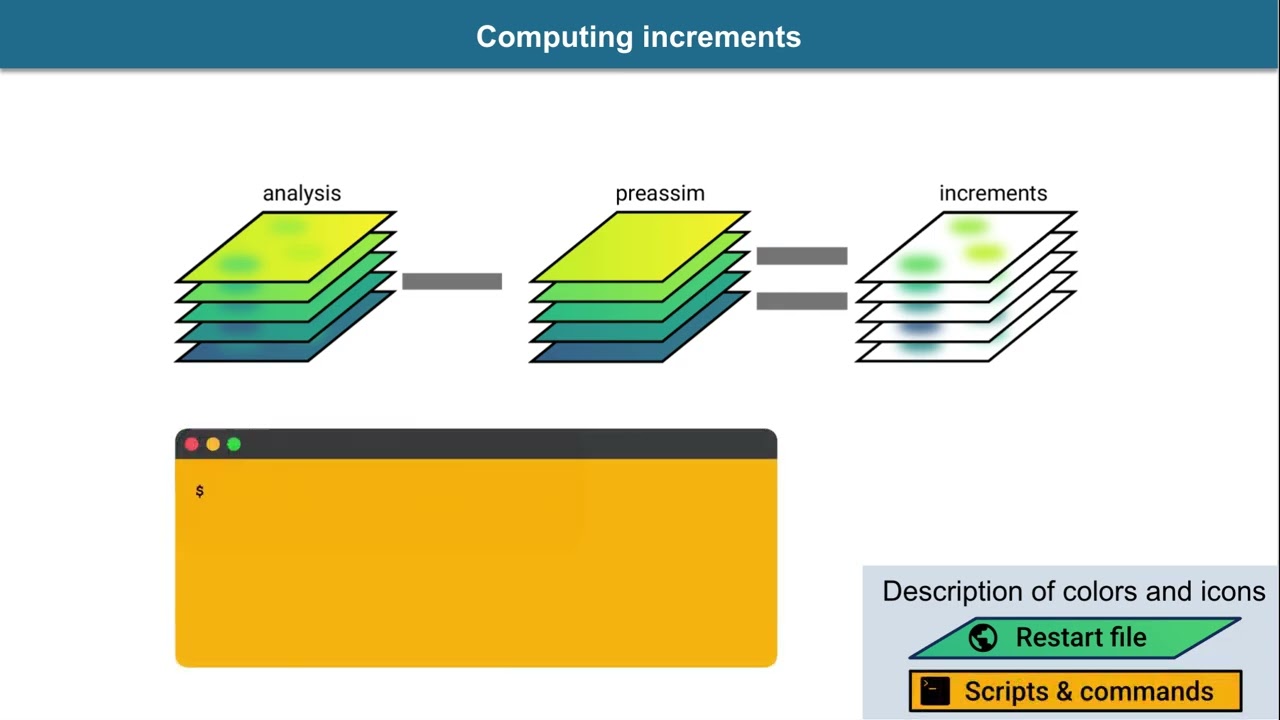
When data assimilation is being performed, the algorithm updates the model states in the ensemble using Bayes’ Theorem with the information contained in the observations to generate what is known as an analysis or a best estimate of the state of the system given the past state of the system and the available observations. In DART the difference between the initial model states and the analysis can be visualized by computing what are known as increments depicted here. This can be accomplished by editing the filter namelist within input.nml so that the stages_to_write entry instructs DART to output the preassim and analysis stages. Then after running DART and moving to a terminal on your computing system you can check to see that the files were output by filter. Here the preassim and analysis mean files were output by dart in the work directory And a set of tools known as nco or netCDF operators can be used to subtract the files. On some systems the nco module must be loaded as such by running module load nco and the specific utility that differences the files is known as ncdiff. It takes two files as input here the analysis_mean and preassim_mean .nc files and the last argument is the name of the output file which can be anything you specify but here is increments.nc. This file can be viewed using your favorite netCDF visualization utility such as ncview and the resulting file, if the assimilation was completed correctly, should show the analysis increments.

This material is based upon work supported by the NSF National Center for Atmospheric Research, a major facility sponsored by the U.S. National Science Foundation and managed by the University Corporation for Atmospheric Research. Any opinions, findings and conclusions or recommendations expressed in this material do not necessarily reflect the views of the U.S. National Science Foundation.

Комментарии

Информация по комментариям в разработке

Похожие видео

  • О нас
  • Контакты
  • Отказ от ответственности - Disclaimer
  • Условия использования сайта - TOS
  • Политика конфиденциальности

video2dn Copyright © 2023 - 2025

Контакты для правообладателей [email protected]