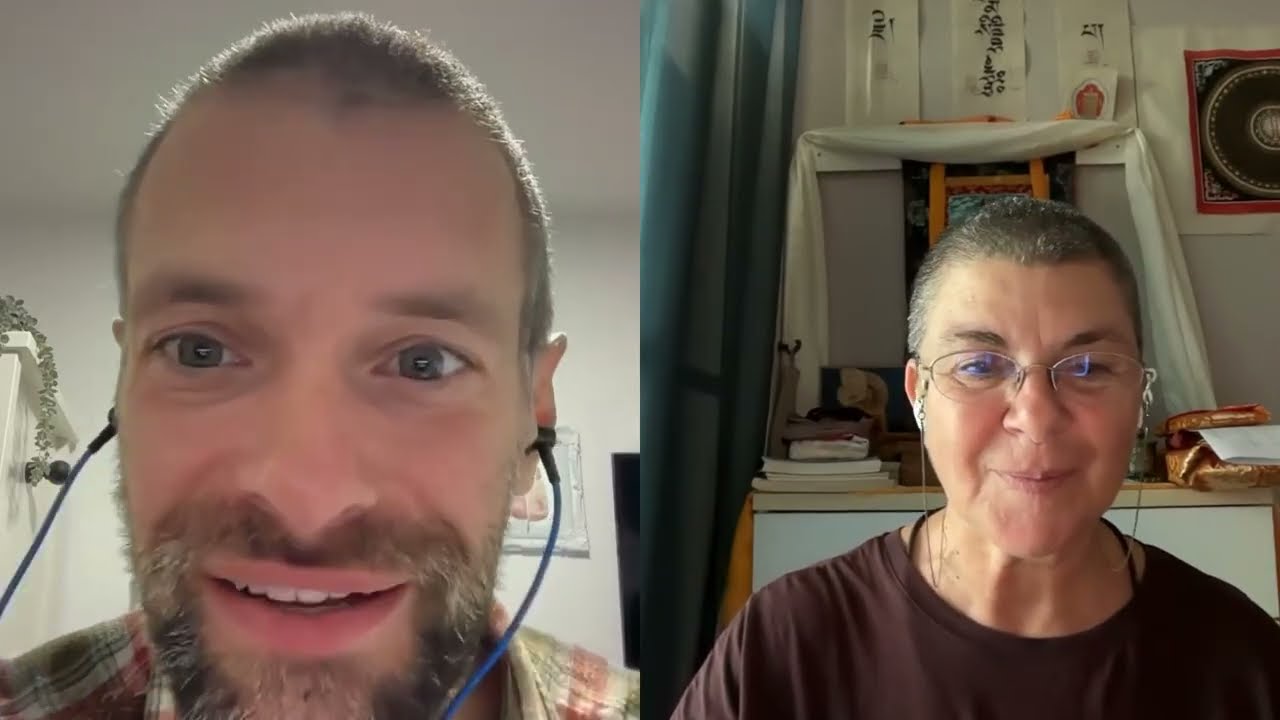
(Ai assist:) In this wide-ranging Dharma conversation and a kind of follow up episode, Asoka and I discuss types of identity and self-exploration (e.g., her ongoing shaved-head practice as a lay eight-precept holder despite no longer living monastically), then pivot to the viral Walk for Peace—a 120-day, ~2,300-mile pilgrimage by ~18–26 Vietnamese/Theravada-aligned Buddhist monastics from Huong Dao Vipassana Bhavana Center in Fort Worth, Texas, to Washington, D.C. (started October 26, 2025; expected end mid-February 2026). Accompanied by rescue dog Aloka, they promote inner peace, compassion, non-harming, and healing through meditative walking (inspired by traditional Thudong but with an engaged-Buddhism focus), drawing thousands of supporters, media attention, and occasional challenges (e.g., confrontations with preachers, a traffic accident injuring monastics).
00:00 Introduction and Identity Exploration
02:28 The Walk for Peace: Purpose and Impact
06:32 Challenges and Encounters on the Journey
09:04 Inner Peace and the Brahma Viharas
13:30 The Role of Politics in Personal Peace
18:42 Non-Duality and Interdependence
28:39 Dissolving Boundaries: Self and Other
32:00 The Dangers of Idiot Compassion
36:24 Embracing Paradoxes in Spirituality
40:44 Understanding Compassion and Boundaries
47:28 Compassion in Politics and Society
51:42 The Importance of Authentic Teachings
57:32 The Significance of Pilgrimage Sites
58:25 Preserving Teachings Amidst Impermanence
01:00:00 Unity in Diversity: Bodhgaya's Role
01:02:21 Defining Salvation and Inner Peace
01:05:09 Freedom from Distractions
01:07:14 Navigating Modern Challenges with Mindfulness
01:13:58 Building Resilience Through Inner Peace
01:18:18 The Middle Way in Practice
Key themes include:
Inner peace as the foundation for outer peace (start within via mind training, resolving inner conflict before external action).
The Brahma Viharas (loving-kindness/metta, compassion/karuna, sympathetic joy/mudita, equanimity/upekkha—sometimes reframed as resilience) as tools for relating to self/others and dissolving the three poisons (or poisonous roots of greed, hatred/ill will, delusion).
Non-duality as interdependence, seeing self/other reflections, loosening grasping/stickiness to stories and identity (anatta/non-self), while avoiding pitfalls like "idiot compassion" (over-giving without boundaries/dignity) or spiritual bypassing.
Paradoxes in practice (conventional vs. ultimate reality; restriction vs. freedom; empathy vs. action).
Practical applications: ethical precepts for merit/wishes fulfilled, spatial/situational awareness, breath-focused meditation (e.g., resting in natural awareness at breath pauses), middle way balance (avoid extremes), contentment/freedom from distractions (including digital ones), compassion even for flawed leaders/politicians by separating person from defilements.
Modern concerns: AI/delusion risks, generational tech shifts, accelerating change, need for lineage verification, open inquiry (ehipassiko: come and see for yourself), and preserving authentic Dharma amid impermanence.
Inspirations: Bodhgaya as unifying pilgrimage site across traditions; merit of hearing Dharma; freedom from (vs. freedom to); contentment with little.
Takeaways:
"Inner peace is your strength."
"You can only rely on your own inner peace."
"Compassion for others starts with compassion for yourself."
"Freedom from desire leads to true contentment."
"Navigating duality requires a strong foundation in ethical practice."
"The middle way is about finding balance in all aspects of life."
"Self-honesty is a form of self-love."
"Everything can disappear from your life in just one instant."
"The seeds of inner peace grow from consistent practice."
Links:
/ walkforpeaceusa
/ walkforpeace.usa
Past episode with Asoka: https://integratingpresence.com/2025/...
Asoka’s Echoes & Stories of Dharma podcast:
https://podcasts.apple.com/us/podcast...
https://music.amazon.com/podcasts/78a...
/ echoes_and_stories_of_dharma
/ @dhammaonthesidewalk108
Original blog post: https://integratingpresence.com/2026/...

Информация по комментариям в разработке