The Great Heck Rail Crash – Britain’s Worst Rail Disaster of the 21st Century
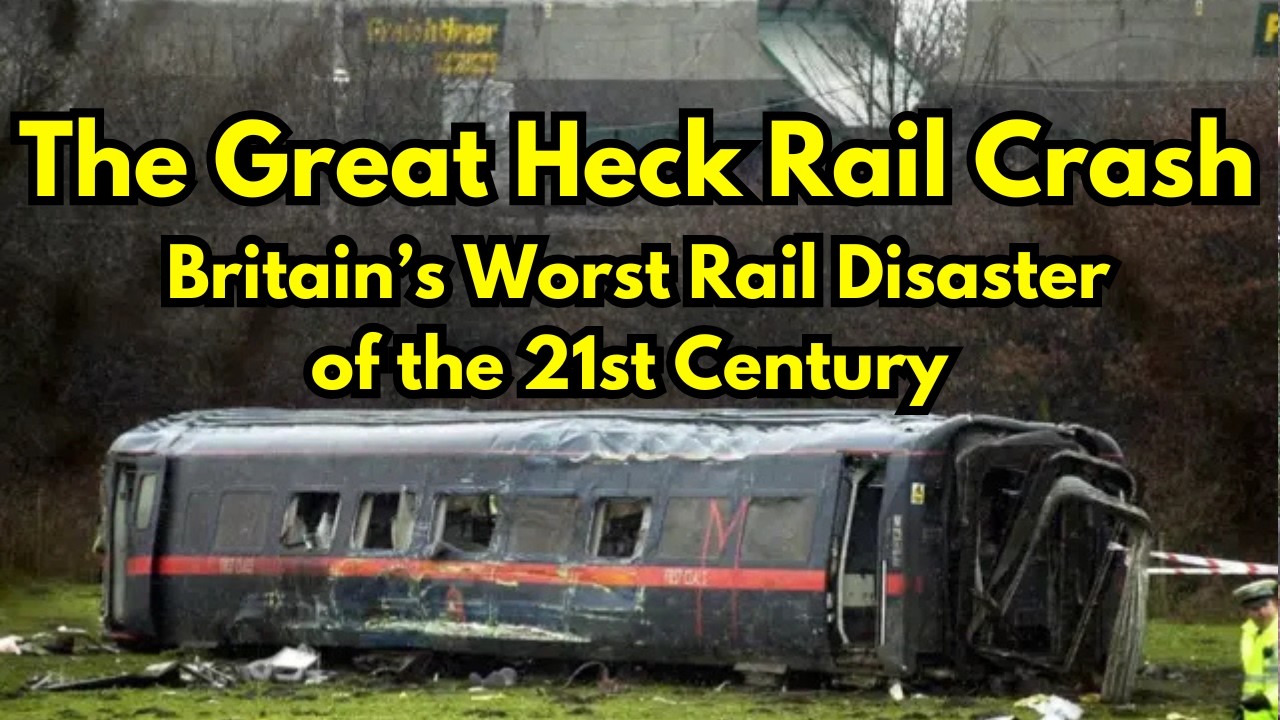
On 28th February 2001, the East Coast Main Line was shaken by one of the most devastating railway accidents in modern British history. Known as the Great Heck Rail Crash, or sometimes the Selby Rail Crash, this tragedy unfolded just before dawn when a fatigued driver’s Land Rover towing a trailer veered off the M62 motorway and came to rest on the tracks near Great Heck in North Yorkshire.
At 06:13 AM, a GNER InterCity 225 high-speed passenger service travelling from Newcastle to London King’s Cross struck the stranded vehicle at nearly 120 mph. The impact caused the train to derail and career into the path of an oncoming Freightliner coal train. The two trains collided head-on at a combined closing speed of 142 mph – making it the fastest ever rail crash in the United Kingdom.
The result was catastrophic: 10 people lost their lives, including both train drivers, and 82 passengers were injured. The violent collision left wreckage scattered across the countryside and shocked the nation.
What caused this tragedy?
The Land Rover driver had been awake all night and was dangerously fatigued.
Road barriers were unable to prevent the vehicle from breaching the motorway and landing on the railway.
The East Coast Main Line’s sheer speed meant there was no time for evasive action once the vehicle was spotted.
The aftermath and investigation
The subsequent inquiry revealed the devastating consequences of fatigue and highlighted weaknesses in road-rail interface safety. The incident led to widespread discussions about driver tiredness, motorway safety barriers, and rail crash resilience. Improvements in laminated train windows, stronger bodyshells, and emergency preparedness were among the lessons learned.
Legacy
A memorial was established at the crash site, and each anniversary serves as a sombre reminder of those lost and the importance of continued vigilance in road and rail safety. Even today, the Great Heck disaster stands as a defining moment in British railway history—one that reshaped how we think about transport safety.
In this video, we’ll explore:
The full timeline of the accident and its devastating sequence of events
The role fatigue played in triggering the tragedy
A technical breakdown of how the collision unfolded at such high speed
The official inquiry, findings, and safety reforms
The memorial and the lasting legacy of Great Heck
This is more than a story of disaster – it is a lesson in safety, human error, and resilience.
If you love railway history, safety analysis, or want to understand the human side of engineering failures, this documentary is for you.
⚠️ Don’t forget to like, share, and subscribe for more powerful railway stories and forgotten histories. Click the bell icon so you never miss an upload.
#GreatHeckCrash, #SelbyRailCrash, #TrainCrash, #RailSafety, #EastCoastMainLine, #GNER, #Freightliner, #UKRailHistory, #AccidentAnalysis, #LearnFromHistory

Информация по комментариям в разработке