Our body consists of multiple systems that work together to maintain movement, health, and balance. Some of the most important ones include the integumentary system (skin, hair, and nails) which protects the body, the skeletal system which provides structure and allows movement with muscles, the muscular system which enables body movement and posture, the cardiovascular system which transports oxygen and nutrients through the blood, the nervous system which controls body activities through electrical signals, and the digestive system which breaks down food into nutrients for energy.
In recent years, another system has gained more recognition in science: the fascial system. Fascia is a continuous three-dimensional network of connective tissue that wraps around and supports every muscle, organ, nerve, and joint in the body. It was originally thought to only provide support for organs, muscles, and bones, but research now shows that fascia surrounds nearly every structure in the body, including cells, nerves, tendons, ligaments, and tissues.
Fascia is a thin, fibrous tissue made mostly of collagen, a protein that gives the body both strength and flexibility. It forms multiple layers that glide over each other with the help of a substance called hyaluronan. This allows muscles, joints, and organs to move smoothly without friction. When fascia is healthy, it is flexible and adapts as you move.
However, injury, inflammation, or lack of movement can cause the hyaluronan between these layers to dry up. When that happens, the fascial layers can tighten around muscles and other tissues. This may lead to stiffness, pain, limited mobility, and postural imbalances.
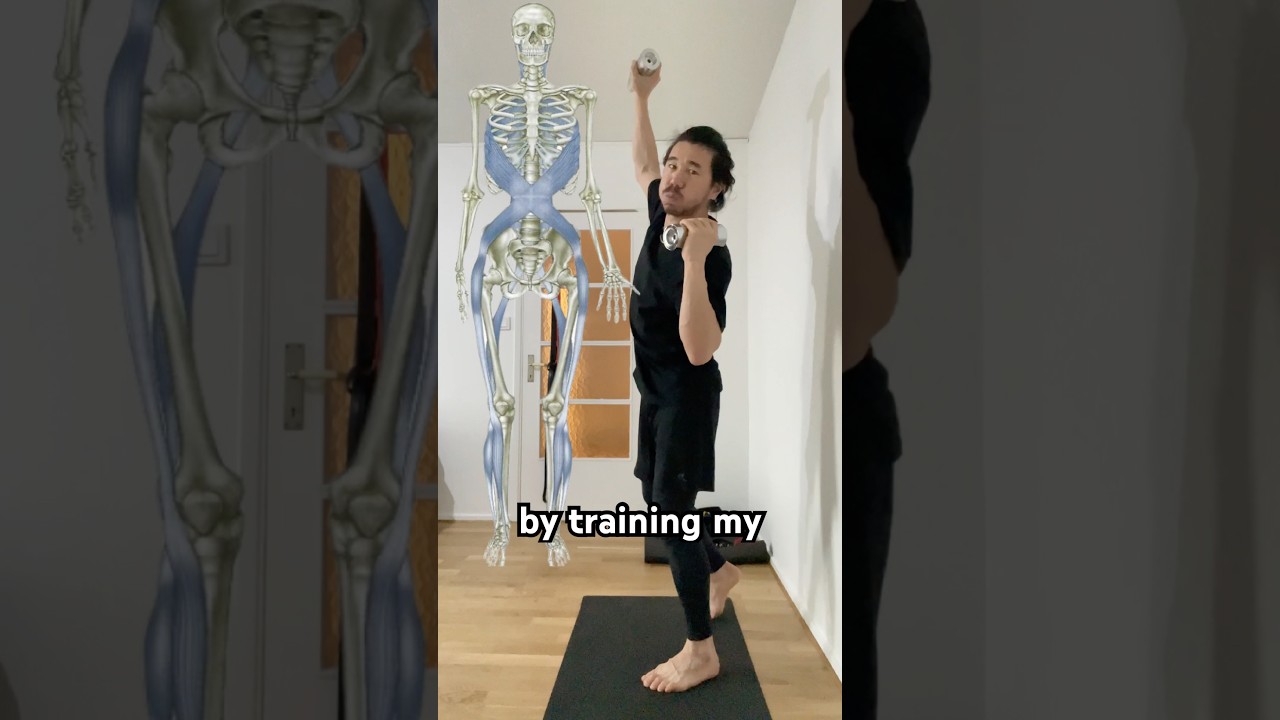
Fascia also forms continuous lines throughout the body that connect different muscle groups together. Because of this connection, an injury or restriction in one area—such as the lower back—can affect other areas like the hips, knees, shoulders, or neck. This is one reason why pain and posture problems often spread through the body instead of staying in one place.
To improve posture, reduce imbalances, and support better movement, approaches such as myofascial release and whole-body movement exercises may help release tension and improve coordination across the body.
Train smarter → move better → feel stronger 🌱
Sources:
https://en.wikipedia.org/wiki/List_of...
https://my.clevelandclinic.org/health...
@Doctorsmart
Disclaimer:
This video is for educational purposes only and is not medical advice. The information shared is based on publicly available educational sources and general movement principles. Always consult a qualified healthcare professional for medical concerns, injuries, or treatment.
#fascia #functionalpatterns #posturecorrection #movementtraining #mobility #myofascialrelease #bodymovement #backpain #shorts














Информация по комментариям в разработке