What is a Hot Button?
Hot Button can be defined as an emotional and usually controversial issue or concern that triggers immediate intense reaction.
What are the triggers that take you completely off the hook?
Emotional triggers are hot buttons that elicit powerful negative emotions
Emotional triggers can develop from several factors such as insecurities or times when others hurt you in the past.
What are your hot buttons?
Everyone has “hot buttons.” They’re your tender spots, the places where you’re most sensitive, and the points where you get irritated, or hurt, or angry, and have to respond. The trick to preventing them from messing up your day is awareness:
Hot buttons are strong values triggered by specific events or circumstances.
There’s nothing rational or considered about a response that comes from a hot button. It’s pure emotion.
Some Examples of Hot Buttons:
You are stupid
How did you get this job?
You call yourself a boss
I don’t know
I cannot. I don’t know
Practice self awareness
Types of hot buttons and overcoming them:
Your hot buttons are dormant most of the time. They only come alive when something hits one of them. The rest of the time, you’re almost unconscious of their existence. So you’re not ready to deal with them when they spring into action. That’s why people act first and think about it afterwards, when the damage has been done.
Recognize the triggers
Acknowledge
Dissect
Accept
Communicate It
Resort to taking help and social support
Talk to closed friends and loved ones
Self Regulation and Management:
Learn self calming techniques, allow emotions to pass through you, reflect before making decision.
Build on your skills by leading with integrity, being open to change, practicing self-discipline, and believing in yourself. Keep calm under pressure by identifying your triggers to stress and reframing negative thoughts, and always consider the consequences of your actions. You feel more centred.
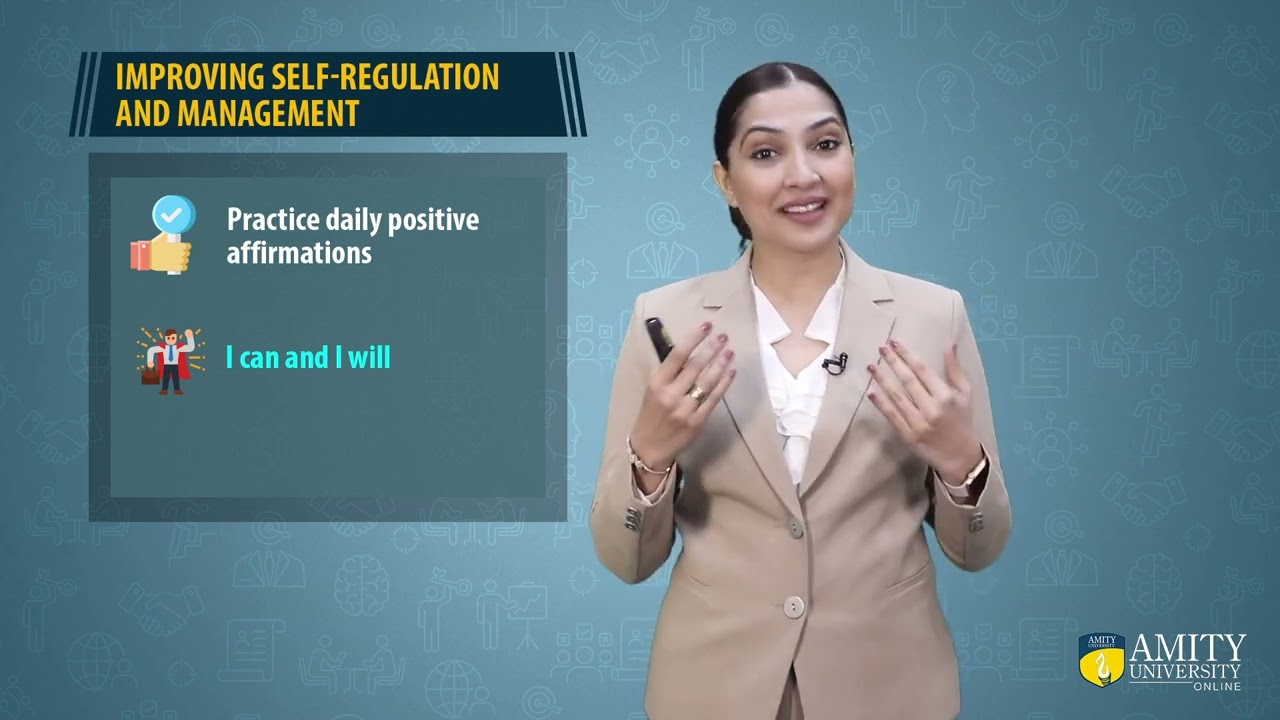
Improving Self Regulation and Management: ‘
Self-regulation is a critical skill for people of all ages. It is the ability that helps us to control our behaviours to make good decisions for the long-term, rather than just doing what we want in the moment. It’s also the skill that allows us to manage our emotions when we’re feeling angry, disappointed, or worried.
Management tips:
Remember your values
Be accountable
Practice daily positive affirmations
I can and I will
I am awesome
Practice being calm
Self Motivation:
The best kind of motivation is self-motivation.
It’s the drive you have to work toward your goals, to put effort into self-development, and to achieve personal fulfilment.
Sublimation is one of the many healthier ways to achieve self motivation
Achieve the best out of the worst by directing negative users and impulses into socially acceptable and rewarding behaviours
Indulging into physical activity and sport
Improving Self motivation:
Set Goals
Stay focused
Do not procrastinate
Stay optimistic
Reward yourself
Share your goals
Surround yourself with positive thoughts
Empathy:
Empathy is the capacity to understand or feel what another person is experiencing from within their frame of reference, that is, the capacity to place oneself in another's position.
Empathy is, at its simplest, awareness of the feelings and emotions of other people. It is a key element of Emotional Intelligence, the link between self and others.
Application of Empathy:
Understanding other people’s emotion is a key skill in the workplace. It can enable us to resolve conflicts, to build more productive teams, and to improve our relationships with co- workers, clients and customers.
At work place looks for Co- workers, Boss, Team members
In a Family:
Don’t take other person for granted
Look for their emotional needs
Have a conversation
Celebrate other persons strength rather than focussing on their weaknesses
Improving Empathetic Skills:
Well, first and foremost, you can work to increase your empathy – with friends, co-workers, and even strangers – so here are some tips to do exactly that.
Creativity
Collaboration
Negotiation
Feeling safe
Emotional connection
Identifying Needs
Improving Social Skills:
The number one key to building relationships is having strong social skills.
It doesn’t matter how smart you are. If you don’t have good social skills, you will top out before you are meant to.
The good news is that even if you’re an introvert or lack the social ease and grace of your colleagues, you can become good at this. You don’t need to settle for “average” either on the job or at home.
Playback and summarize
Try on their shoes, walk a mile
Suspend your judgement
Read body language and non verbal cues
Spend extra time- Observing, Asking and listening
Maintain eye contact
Give the speaker all your attention
To sum it up:
When you work on all the five components:
Social Skills
Self Regulation
Self Awareness
Motivation
Empathy
You will be able to build your emotion intelligence skill.

Информация по комментариям в разработке