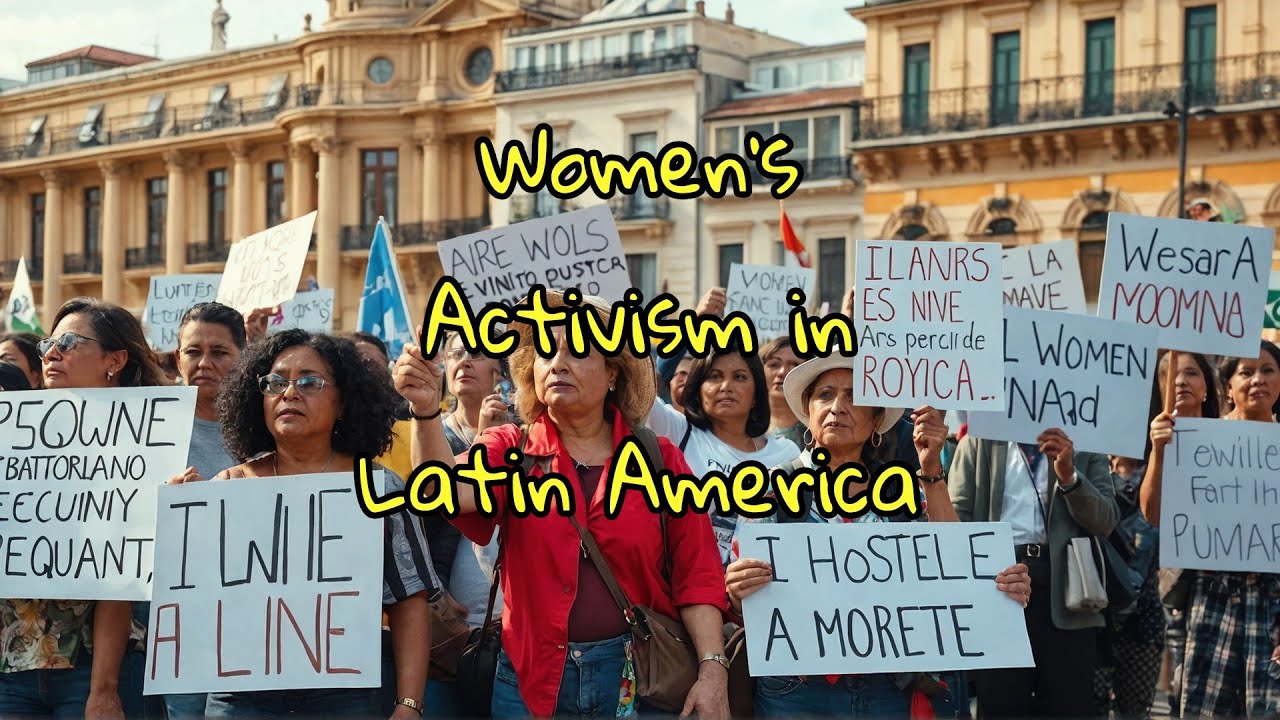
Women’s Activism in Latin America
Women have been pivotal in Latin America's social movements, advocating for civil rights, gender equality, and social justice from the early 20th century to today. Their involvement in suffrage, opposition to dictatorships, and feminist movements has transformed the political landscape. Iconic groups like the Mothers of the Plaza de Mayo exemplify their courage. Contemporary movements like Ni Una Menos continue to address issues such as femicide and environmental justice, despite ongoing challenges.
[Hashtags]
#WomenEmpowerment #SocialJustice #Feminism #LatinAmerica #Activism
The participation of women in social movements has been a defining feature of the political landscape in Latin America. Throughout the region's history, women have actively engaged in movements advocating for civil rights, gender equality, and social justice.
From the early 20th century to the present day, their commitment and resilience have heralded significant transformation, though not without facing substantial challenges. The early 20th century saw women's involvement in suffrage movements across Latin America, paralleling global trends.
For instance, in Argentina, a fervent campaign led to women's right to vote in 1947, thanks to the unwavering dedication of Eva Perón and other key figures.
Similarly, in Chile, Amanda Labarca and her contemporaries played a pivotal role in advocating for women's suffrage, which was partly achieved in 1934 through limited local voting rights.
As the century progressed, women found themselves at the forefront of movements opposing dictatorial regimes and demanding human rights. In countries like Brazil, Argentina, and Chile, mothers and grandmothers of the disappeared became iconic figures, leading protests and hunger strikes.
The "Mothers of the Plaza de Mayo" in Argentina exemplify this courageous activism, as they demanded accountability and transparency from authoritarian regimes during the Dirty War.
Parallel to these struggles, women in Latin America have also been pivotal in the feminist movements, which gained momentum in the latter half of the 20th century.
The Encuentros, a series of feminist gatherings beginning in 1981, ignited dialogue and solidarity among women from various nations, advocating for reproductive rights, labor rights, and protection against gender-based violence.
These meetings signaled a collective awakening and unity of purpose among diverse cultural and social backgrounds.
In contemporary times, women continue to drive significant social change, focusing on issues like femicide, indigenous rights, and environmental justice.
Movements such as Ni Una Menos, originating in Argentina, have spread throughout the region, highlighting the epidemic of gender-based violence and advocating for systemic change.
Indigenous women, too, have played a critical role in advocating for environmental justice and land rights, recognizing the intrinsic connection between their communities and the Earth.
Despite the progress, women activists face ongoing obstacles, including political repression, societal violence, and persistent gender discrimination.
However, their steadfastness in advocating for equality and justice underscores their critical role in shaping a more equitable and just society in Latin America.

Информация по комментариям в разработке