Most liked video Scientists have detected the most distant supernova ever seen, exploding when the universe was less than a billion years old. The event was first signaled by a gamma-ray burst and later confirmed using the James Webb Space Telescope, which was able to isolate the blast from its faint host galaxy. Surprisingly, the explosion closely resembles supernovae linked to gamma-ray bursts in the modern universe.Astronomers from around the world have reached a major milestone in studying the early universe. Using the James Webb Space Telescope , they identified a supernova, the explosive death of a massive star, at a distance never observed before. To know more information subscriber to my channel
The blast, occurred when the universe was only about 730 million years old. This places it firmly within the era of , a period when the first stars and galaxies were beginning to emerge. The observation offers a rare and direct view of how massive stars ended their lives during this formative stage of cosmic history.
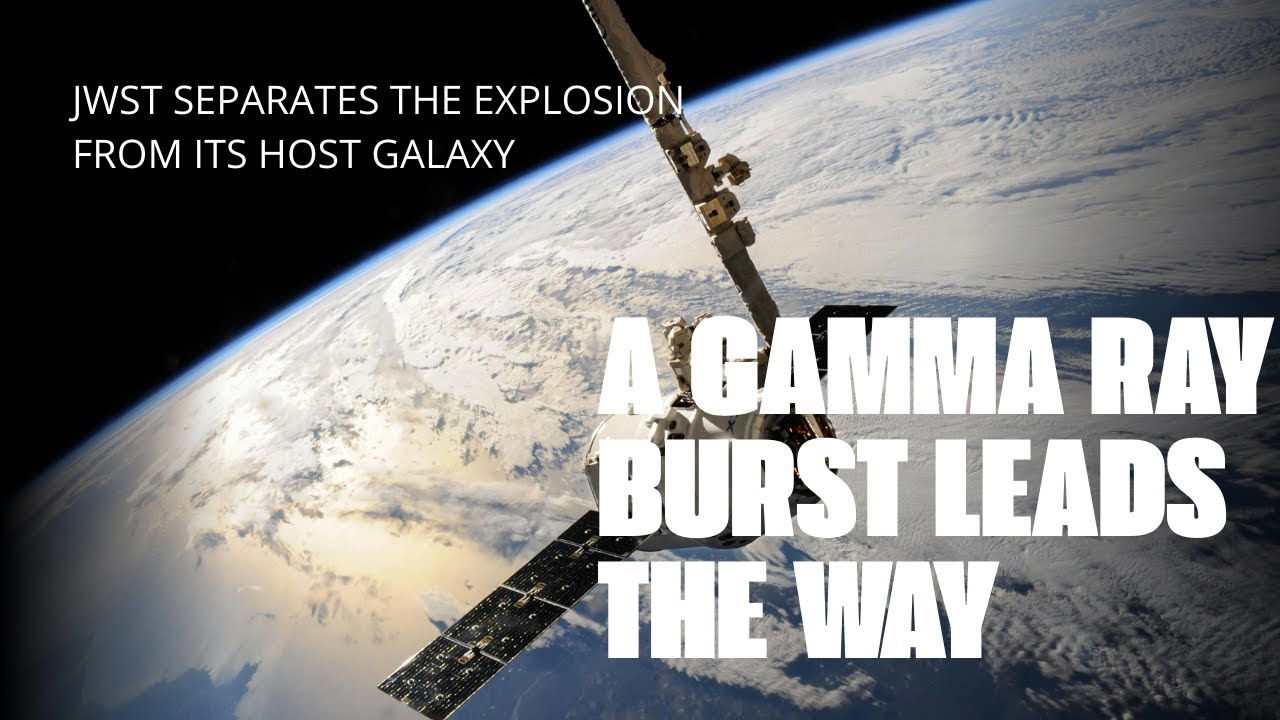
A Gamma Ray Burst Leads the Way
The discovery was first reported in the academic paper 'JWST reveals a supernova following a gamma-ray burst (Astronomy & Astrophysics, 704, December 2025). The event initially drew attention after a powerful flash of high energy radiation, called a long duration Gamma Ray Burst (GRB), by the space based multi band astronomical Variable Objects Monitor (SVOM). Astronomers then used the European Southern Observatory's Very Large Telescope to confirm that the source was located at an extreme distance.
JWST Separates the Explosion From Its Host Galaxy
The decisive observations came about 110 days after the burst, when JWST targeted the region using its Near Infrared Camera (NIRCAM). These images allowed researchers to isolate the fading light of the supernova from the much dimmer glow of its host galaxy, a critical step in confirming the nature of the explosion. #space #science #nasa #jwst #telugu #telescope
"Using models based on the population of supernovae associated with GRBs in our local universe, we made some predictions of what the emission should be and used it to proposed a new observation with the James Webb Space Telescope. To our surprise, our model worked remarkably well and the observed supernova seems to match really well the death of stars that we see regularly. We were also able to get a glimpse of the galaxy that hosted this dying star."
Each rocket launch sends valuable materials into the sky that cannot be recovered, while also releasing large amounts of greenhouse gases and chemicals that damage the ozone layer.
"As space activity accelerates, from mega-constellations of satellites to future lunar and Mars missions, we must make sure exploration doesn't repeat the mistakes made on Earth," says senior author and chemical engineer of the University of Surrey. "A truly sustainable space future starts with technologies, materials and systems working together."
Growing debris and the problem of abandoned satellites
The environmental toll continues long after launch. Most spacecraft and satellites are never recycled, which means that large amounts of material are permanently lost when missions end. Many older satellites are shifted into "graveyard orbits," while others become drifting orbital debris that can disrupt the operation of active systems.
The authors argue that this approach cannot continue, especially with the increasing pace of private space missions. They highlight the need for a circular space economy, a model in which materials and equipment are created with reuse, repair, and recycling in mind. They also note that industries such as personal electronics and automotive manufacturing have already adopted similar ideas with considerable success.
"Our motivation was to bring the conversation about circularity into the space domain, where it's long overdue,Circular economy thinking is transforming materials and manufacturing on Earth, but it's rarely applied to satellites, rockets, or space habitats."

Информация по комментариям в разработке