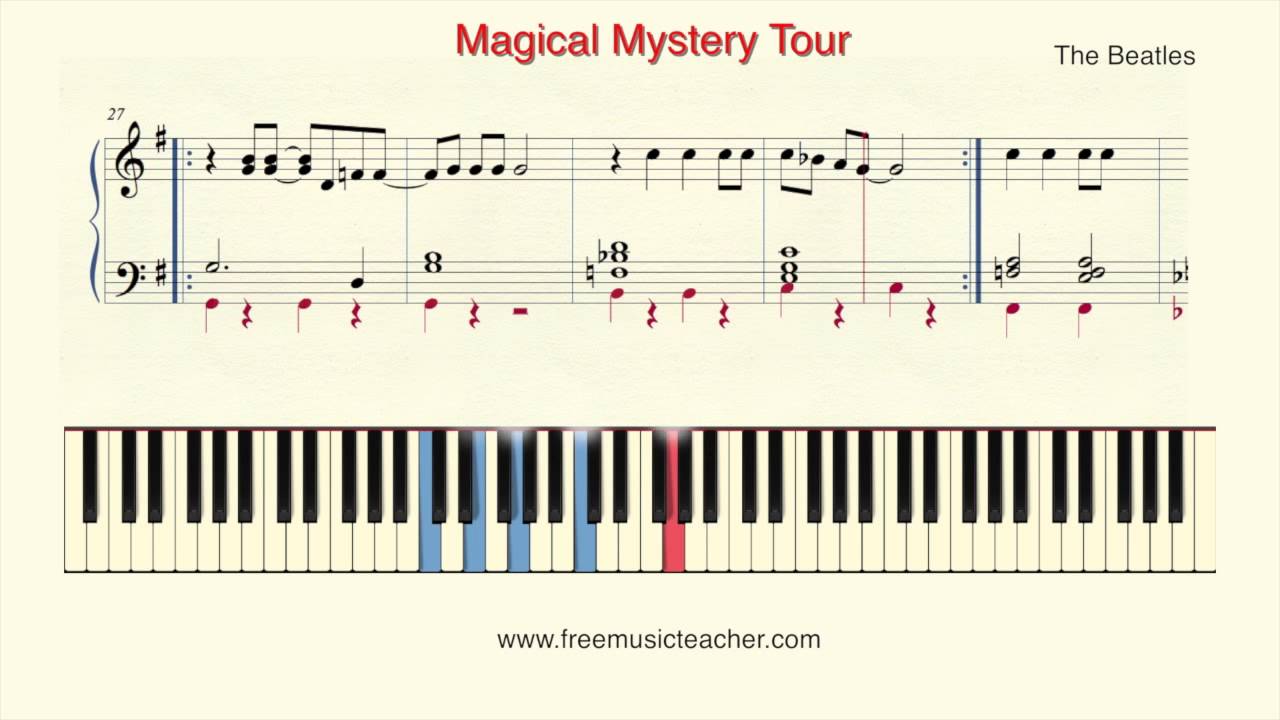
Please consider supporting us on Patreon: / freemusicteacher http://www.freemusicteacher.com/
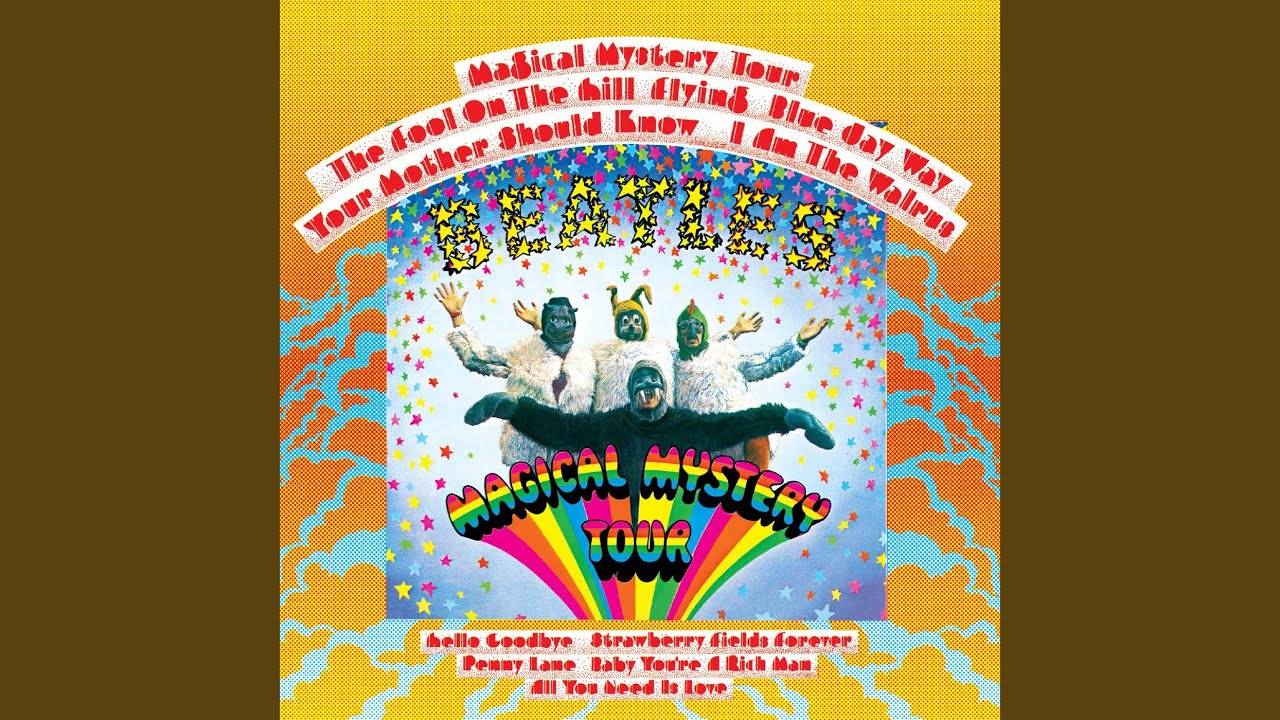
Magical Mystery Tour is a record by the English rock band the Beatles that was released as a double EP in the United Kingdom and an LP in the United States. It includes the soundtrack to the 1967 television film of the same name. The EP was issued in the UK on 8 December 1967 on the Parlophone label, while the Capitol Records LP release in the US occurred on 27 November and featured an additional five songs that were originally released as singles that year. In 1976, Parlophone released the eleven-track LP in the UK.
When recording their new songs, the Beatles continued the studio experimentation that had typified Sgt. Pepper's Lonely Hearts Club Band (1967) and the psychedelic sound they had pursued since Revolver (1966). The project was instigated by Paul McCartney in April 1967, but after the band recorded the song "Magical Mystery Tour", it lay dormant until the death of their manager, Brian Epstein, in late August. Recording then took place alongside filming and editing, and as the Beatles furthered their public association with Transcendental Meditation under teacher Maharishi Mahesh Yogi.
The sessions have been characterised by some biographers as aimless and unfocused, with the band members overly indulging in sound experimentation and exerting greater control over production. McCartney contributed three of the soundtrack songs, including the widely covered "The Fool on the Hill", while John Lennon and George Harrison contributed "I Am the Walrus" and "Blue Jay Way", respectively. The sessions also produced "Hello, Goodbye", issued as a single accompanying the soundtrack record, and items of incidental music for the film. Further to the Beatles' desire to experiment with record formats and packaging, the EP and LP included a 24-page booklet containing song lyrics, colour photos from film production, and colour story illustrations by cartoonist Bob Gibson.
Despite widespread media criticism of the Magical Mystery Tour film, the soundtrack was a critical and commercial success. In the UK, it topped the EPs chart compiled by Record Retailer and peaked at number 2 on the magazine's singles chart (later the UK Singles Chart) behind "Hello, Goodbye". The album topped Billboard's Top LPs listings for eight weeks and was nominated for the Grammy Award for Album of the Year in 1969. With the international standardisation of the Beatles' catalogue in 1987, Magical Mystery Tour became the only Capitol-generated LP to supersede the band's intended format and form part of their core catalogue.
After the Beatles completed Sgt. Pepper's Lonely Hearts Club Band in April 1967, Paul McCartney wanted to create a film that captured a psychedelic theme similar to that represented by author and LSD proponent Ken Kesey's Merry Pranksters on the US West Coast. Titled Magical Mystery Tour, it would combine Kesey's idea of a psychedelic bus ride with McCartney's memories of Liverpudlians holidaying on coach tours. The film was to be unscripted: various "ordinary" people were to travel on a coach and have unspecified "magical" adventures. The Beatles began recording music for the soundtrack in late April, but the film idea then lay dormant. Instead, the band continued recording songs for the United Artists animated film Yellow Submarine and, in the case of "All You Need Is Love", for their appearance on the Our World satellite broadcast on 25 June, before travelling over the summer months and focusing on launching their company Apple.
In late August, while the Beatles were attending a Transcendental Meditation seminar held by Maharishi Mahesh Yogi in Wales, their manager Brian Epstein died of a prescription drug overdose. During a band meeting on 1 September, McCartney suggested they proceed with Magical Mystery Tour, which Epstein had given his approval to earlier in the year. McCartney was keen to ensure the group had a point of focus after the loss of their manager. His view was at odds with his bandmates' wishes, with George Harrison especially eager to pursue their introduction to meditation. According to publicist Tony Barrow, McCartney envisaged Magical Mystery Tour as "open[ing] doors for him" personally and as a new career phase for the band in which he would be the "executive producer" of their films. John Lennon later complained that the project was typical of McCartney's "tendency" to want to work as soon as he had songs ready to record, yet he himself was unprepared and had to set about writing new material.













Информация по комментариям в разработке