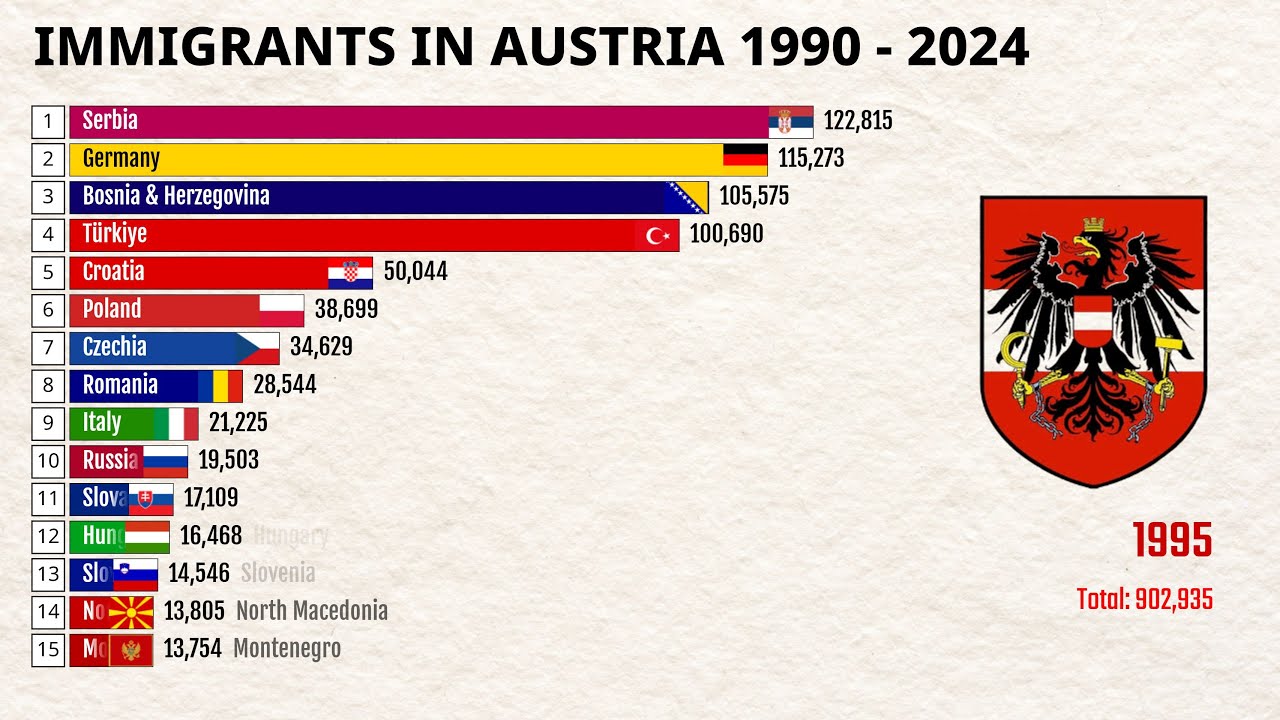
Austria has long been a destination for immigrants, particularly due to its central location in Europe and strong economy. Historically, immigration to Austria increased significantly after World War II, with labor migration from Southern and Eastern Europe. The 1960s and 1970s saw an influx of guest workers (Gastarbeiter), primarily from Turkey and Yugoslavia, to fill labor shortages. Over time, many of these workers settled permanently, contributing to Austria’s cultural and economic landscape.
In recent decades, Austria has experienced further immigration waves due to political and economic instability in other regions. The fall of the Iron Curtain in 1989 led to increased migration from former Eastern Bloc countries. Additionally, Austria played a key role in the European refugee crisis of 2015, receiving a large number of asylum seekers, particularly from Syria, Afghanistan, and Iraq. This has fueled discussions on integration, social policies, and the challenges of multiculturalism within Austrian society.
Immigrants in Austria contribute significantly to the workforce, especially in industries such as construction, healthcare, and hospitality. They also play a role in the country’s entrepreneurship sector, with many starting small businesses. However, challenges remain, including language barriers, employment discrimination, and political debates on immigration policies. The Austrian government has implemented various integration programs, such as German language courses and vocational training, to help immigrants adapt to society.
Public attitudes toward immigrants in Austria vary, with some viewing them as a valuable part of the economy and others concerned about cultural shifts and social cohesion. Right-wing political parties have gained support by advocating stricter immigration controls, while other groups emphasize the benefits of diversity and inclusion. As Austria continues to navigate migration trends, the country faces the ongoing task of balancing economic needs, social integration, and national identity.

Информация по комментариям в разработке