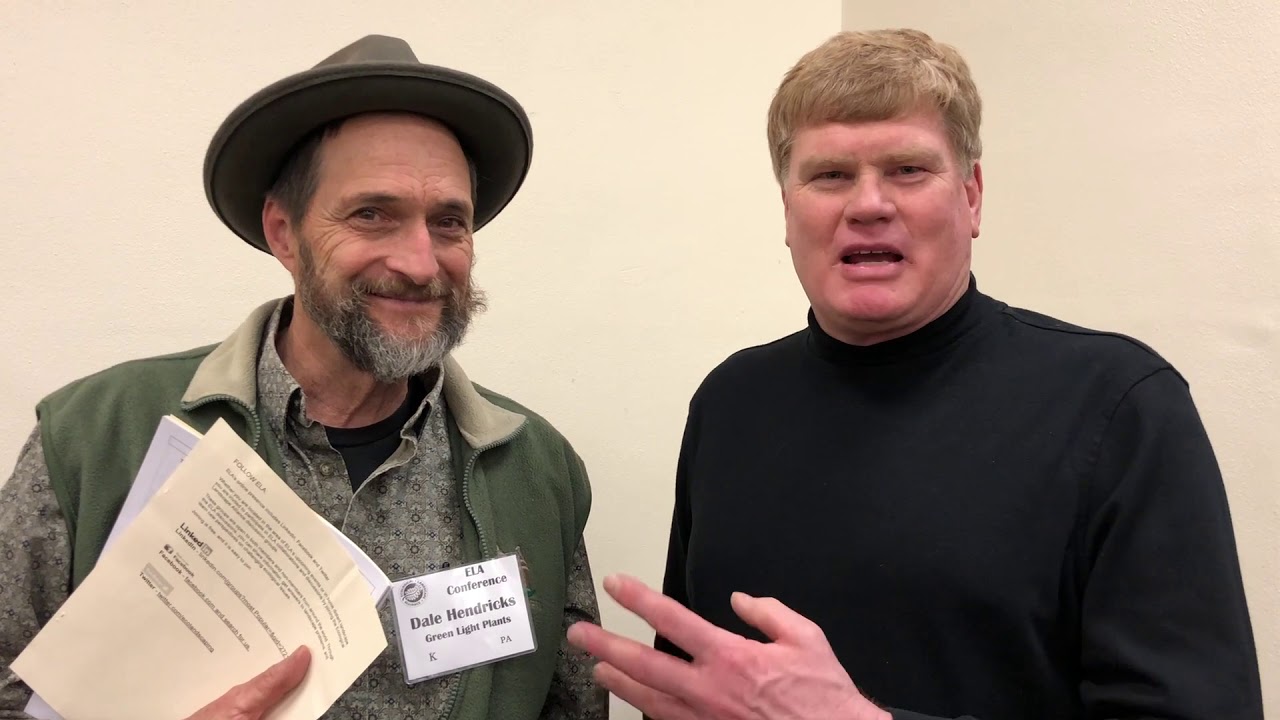
Dale Hendricks breaks down agroforestry in this episode of Landscapes for Better Living.
http://greenlightplants.com
For more info:
https://www.shelterwoodplants.com/blo...
TRANSPCRIPT:
[Jay]:
Hi I’m Jay Archer from Green Jay Landscaping, Welcome to Landscapes for Better Living. This is my good friend Dale Hendricks.
[Dale]:
From Green Light Plants. What would you like me to talk about?
[Jay]:
Well what’s new and interesting?
[Dale]:
Well we’ve been exploring agroforestry. What’s so cool is—and I didn’t plan this so I gotta think for a sec-- there are 80-90 year old plannings where this guy was trying to feed is pigs, chickens, cows, and ducks so he was selecting mulberry trees that bear for many months, persimmons, all manner of nut trees, and honey locust with the big pods that are very sweet. So, there’s people that created tree-based ecosystems to more or less be farmed. So we always think about farms as bare fields; but there’s a whole art and science of agroforestry that can use improved trees of different kinds. Compare that to how we do agriculture today. You know so the animals sit in their little wire caged prisons, and we bring them rations from a farm far, far away. This guy, from the ‘20s to the ‘60s, this guy named John Hershey was developing farms, and producing and selling tree and shrub crops that would allow the chickens, pigs, cows to munch to their hearts content and to have carbon friendly, wildlife friendly, mostly native trees, reigning down an abundance of food. So it’s a whole different image for agriculture.
[Jay]: And so this is why you have to talk to Dale, because he’s always on to some new technology.
[Dale]:
Ah well, this is new and old. Again, it’s more or less a type of forest gardening, its more or less farming by incorporating trees by design and so that’s what’s so cool about this place, I can see thirty foot apart rows where there are English walnuts and then Oak trees that are selected for more acorns and not as bitter, and then these honey locust which the pigs just love, lots of sugar, three rows of them and then hazel nuts underneath. So, its multi-layered agroforestry, but it started out as young trees and you grow your crops in between for several years. And gradually as the trees build shade you have more understory crops, but you attract birds in this thing, and birds give you lovely nutrients.
[Jay]:
Its wildlife beneficial and you’re also using the mass of the nuts to grow live stock
[Dale]:
The nuts, the persimmon, the honey locust, the mulberries, the blueberries. So we discover these remnants, and I wrote an article about it in the most recent Permaculture Design magazine, so its about agroforestry and I can send you a PDF of that. So that’s some of the crazy new things I’ve been doing.
[Jay]:
And this is one of the father of native plants, creators in seed production, and a pioneer on biochar. So thank you brother!
[Dale]: Master Jay! Happy to be a fly in your neighborhood.

Информация по комментариям в разработке