We propose a moderated discussion to share Uganda’s experiences scaling up IMNCI, considerations to achieve critical numbers of trained health workers, strategies to foster inter-agency cooperation, and approaches to integrate quality improvement practices (QI) to sustain training gains.
Background: Uganda’s under-five child mortality rate remains high at 42 deaths per 1,000 live births with persistent subnational disparities. Scaling coverage of high-impact interventions for common childhood illnesses is a priority for the Ministry of Health (MoH).
In 1996, Uganda adapted the 11-day Integrated Management of Childhood Illness training, which was later expanded to include newborns, WHO updates, and renamed Integrated Management of Newborn and Childhood Illnesses (IMNCI).
The lengthy, classroom-based training was resource-intensive and kept critical cadres from service delivery. By 2017, reach was limited to around 83 HWs in four districts.
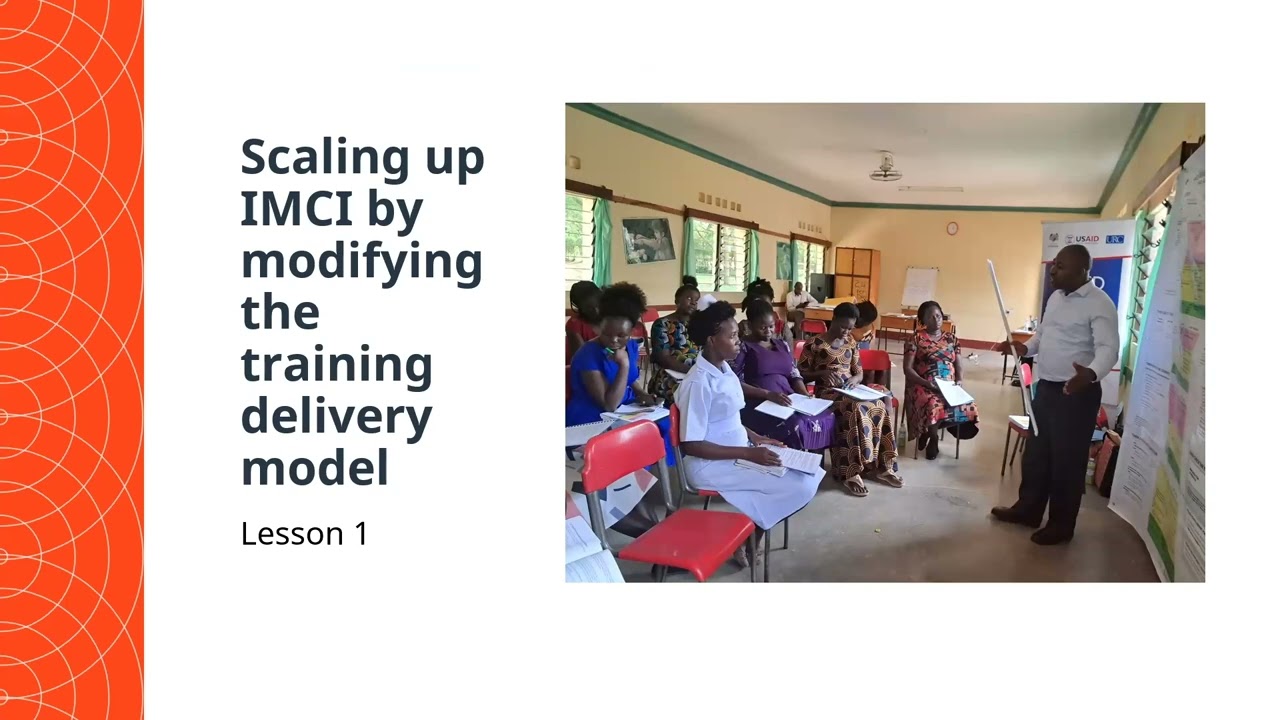
Implementation Approach: In 2017, MoH, WHO, UNICEF, and USAID modified and tested the training delivery to a “short, interrupted course” (SIC), which involved a 2½-day face-to-face orientation, 2-weeks of self-study and case practices, and 1½-day of review and synthesis. The SIC reduced the cost of training and service disruption and increased HWs trained per facility. Further, QI practices focused on establishing Oral Rehydration Therapy corners, tracking appropriate pneumonia treatment, malaria test-and-treat, and integrating ORS+zinc co-packs for diarrhea management were incorporated to help sustain training gains by supporting HWs to assess and address identified gaps continuously. Using this approach with stakeholder collaboration, IMNCI was scaled to 26 additional districts and 1,024 HWs between 2019 to 2022.
Lessons learned/Conclusion: Modifying the training delivery to achieve critical numbers of trained HWs combined with integrated QI practices enabled the scale-up of IMNCI in Uganda. This work remains a priority, and MoH, USAID, and UNICEF will target implementation in districts with the highest burden of child mortality.
Presenters:
Mrs. Agnes Namagembe, Maternal Child Health Specialist, FHI 360/ USAID Maternal Child Health and Nutrition Activity Uganda
Dr. Peter Waiswa, Professor, Makerere University, School of Public Health
Dr. Bodo Bongomin, National Professional Officer - Child and Adolescent Health, World Health Organization Uganda
Dr. Jesca Nsungwa, Commissioner of Reproductive and Child Health, Ministry of Health
Dr. Emmanuel Mugisa, Program Management Specialist for Child Health and Nutrition, USAID, Uganda

Информация по комментариям в разработке