Welcome to Stock View Studio - Your Ultimate Source for Royalty-Free Images, Footage, and Audio!
No more worries about copyright issues or licensing fees. You have the freedom to unleash your creativity without any restrictions!
For contact - [email protected]
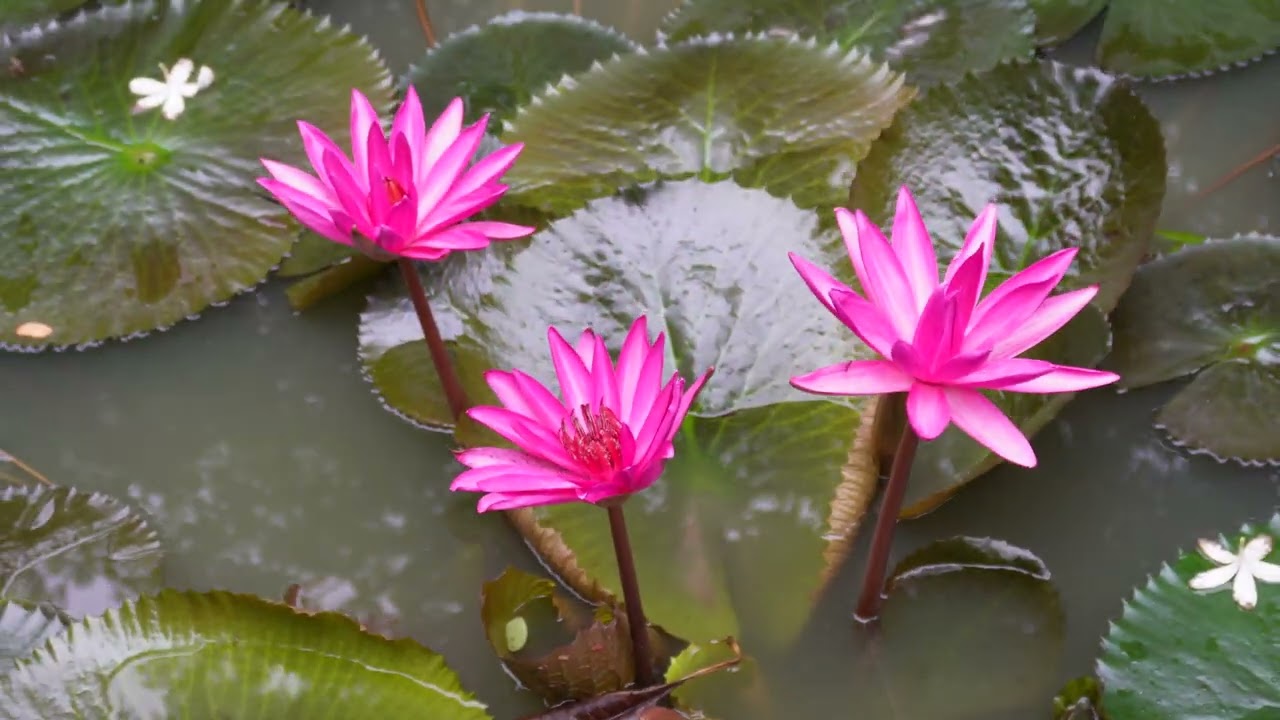
Nymphaea nouchali, commonly known as the "Blue Water Lily," "Red and Blue Water Lily," or "Star Lotus," is a striking aquatic plant belonging to the family Nymphaeaceae. It is native to various regions across Asia, including the Indian subcontinent and Southeast Asia. Here are some key characteristics and facts about Nymphaea nouchali:
Appearance:
Nymphaea nouchali is a perennial water plant with large, round, floating leaves that have a distinct notch on one side.
The leaves are green and often have reddish or purple undersides.
The flowers of the Blue Water Lily are large, showy, and come in various shades, including blue, purple, and sometimes white.
The flowers have numerous petal-like tepals arranged in multiple layers, and they may measure up to 20 centimeters in diameter.
The center of the flower contains numerous bright yellow stamens, which add to its allure.
Habitat:
Blue Water Lilies are typically found in freshwater habitats such as ponds, lakes, slow-moving rivers, and marshes.
They prefer calm, shallow waters with muddy or silty bottoms.
Life Cycle:
Nymphaea nouchali is a perennial plant, meaning it lives for multiple years.
The plant grows from rhizomes (underground stems), which anchor it in the mud or sediment of the water body.
Leaves and flowers emerge from the water's surface during the warm months of the year.
The flowers are pollinated by insects, and after successful pollination, they produce large, round fruits with numerous seeds.
Cultural Significance:
Like other water lilies, the Blue Water Lily holds cultural and symbolic significance in various societies and religions.
In many Asian cultures, including India, Sri Lanka, and Thailand, the water lily is revered as a sacred flower and often associated with spirituality, purity, and beauty.
In some traditions, the flower's opening and closing with the sun's movements symbolize rebirth and renewal.
Medicinal Uses:
Nymphaea nouchali has been used in traditional medicine for various purposes.
Different parts of the plant, including the flowers, leaves, and rhizomes, have been utilized for their potential medicinal properties, such as treating skin conditions, inflammation, and gastrointestinal issues.
Conservation:
While Nymphaea nouchali is not currently listed as a globally threatened species, like many aquatic plants, it can face challenges from habitat degradation and pollution.
Conservation efforts may focus on protecting the water bodies where these plants grow and ensuring their habitats remain healthy and undisturbed.
The captivating beauty and cultural significance of Nymphaea nouchali have made it a beloved and iconic aquatic plant in many parts of Asia, enriching the ecosystems it inhabits and inspiring art, literature, and spirituality throughout history.

Информация по комментариям в разработке