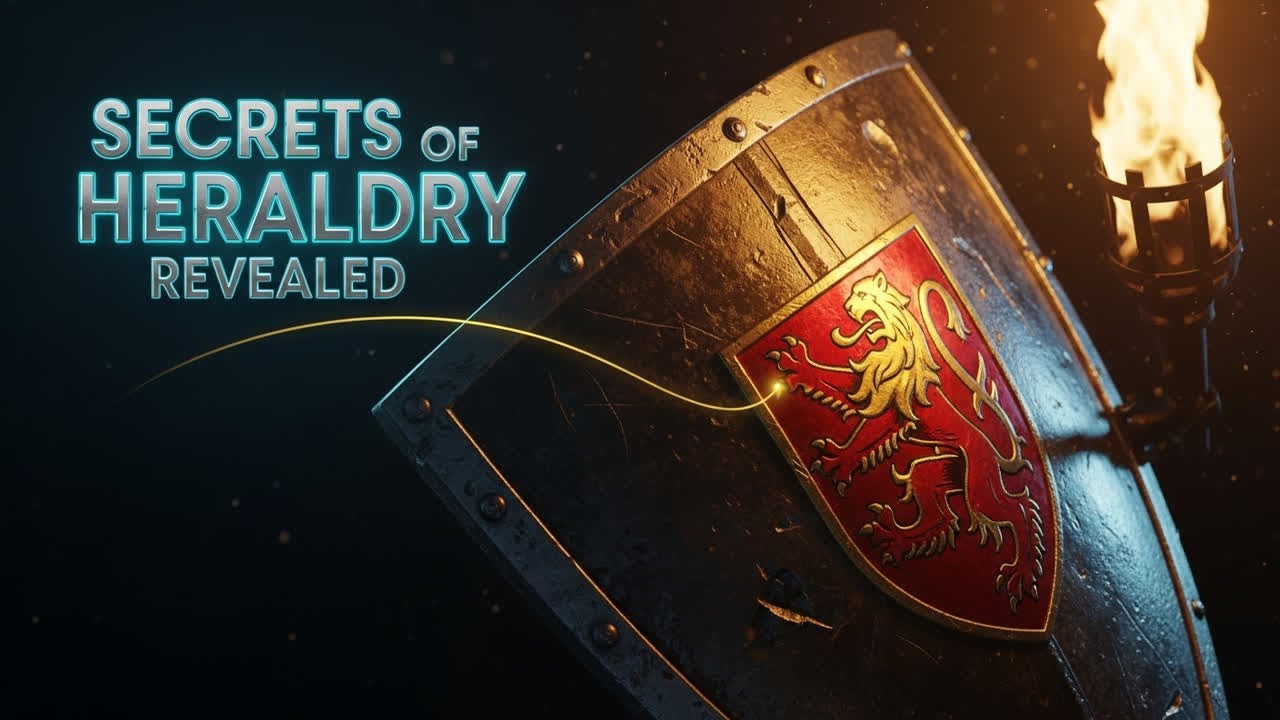
The medieval battlefield was a place of iron and chaos, where a knight encased in steel became a faceless figure among hundreds. In the 12th century, the advent of full-face helmets created a critical problem: identification. When every warrior looked identical, how could a commander rally his troops, or a soldier know friend from foe? The solution was heraldry, a visual system that transformed shields and banners into instant markers of identity, lineage, and allegiance. The Secret Language of Heraldry Symbols, Power, and Identity in Warfare was not an artistic flourish but a strategic necessity, born from the need to prevent friendly fire, organize command structures, and project power across the smoky expanse of combat. By the 13th century, this system had evolved into a regulated, hereditary code overseen by specialized officials called heralds, who could identify hundreds of noble families by their arms alone. The colors, beasts, and geometric shapes on a shield told a story of character, ambition, and political alliance, making every coat of arms a carefully crafted piece of battlefield communication.
🔹 The Rule of Tincture enforced high-contrast design by forbidding color-on-color or metal-on-metal, ensuring shields remained legible from across a field of war
🌐 Colors carried psychological weight: red for martial strength, blue for loyalty and truth, black for constancy, green for hope and renewal
⚙️ Metals like argent and or symbolized divine favor and purity, elevating their bearers above those who used only common colors
📌 Partitioning divided shields into sections that displayed alliances, territorial claims, and combined family lineages through marriage
🔭 The lion rampant, the most iconic beast, declared courage and nobility, while its posture—passant, couchant, or rampant—conveyed specific messages
🧩 Mythical creatures like dragons, griffins, and unicorns allowed families to claim legendary virtues and divine protection
🏛️ Geometric ordinaries such as the chevron, pale, and chief communicated rank, military command, and protective duty through simple, bold shapes
✨ Canting arms used visual puns on family names, turning shields into memorable, literal rebuses for an illiterate society
🧭 Blazon, a precise linguistic code derived from Norman French, allowed heralds to describe any coat of arms with absolute accuracy across Europe
Heraldry was weaponized symbolism. On the battlefield, a lord's banner served as a mobile command post, guiding troops and boosting morale, while its loss meant catastrophic dishonor. In tournaments, knights used elaborate arms to attract patrons and build their reputations, transforming the shield into a personal brand. Kings and emperors marshaled arms to legitimize their rule, quartering symbols from conquered territories to create visual maps of their power. The cross appeared in dozens of forms, from the simple Greek cross to the potent cross of Jerusalem, each a declaration of faith and crusading purpose. Even human figures and flora—saints, warriors, roses, and fleurs-de-lis—became part of this rich vocabulary, connecting bearers to divine favor, regional pride, and political unity.
Which heraldic symbol would you choose to represent your own identity and values? Subscribe for more investigations into the strategies, symbols, and systems that shaped medieval power and continue to influence the visual language of authority today.
🎯 Keywords: heraldry symbols and identity, medieval battlefield communication, coat of arms meaning, Rule of Tincture explained, heraldic colors and metals, lion rampant symbolism, tournament heraldry, blazon language, canting arms, political propaganda in heraldry, marshaling coats of arms, ordinaries in heraldry, mythical creatures in coats of arms, visual identification in medieval warfare
📌 Related Topics: Medieval Warfare Tactics, Chivalric Culture, European Nobility, Crusader Symbolism, Tournament History, Genealogy and Lineage, Feudal Society, Visual Communication Systems
#Heraldry #MedievalHistory #CoatOfArms #Symbolism #Knights #Warfare #Identity #ChivalricCulture #HistoricalResearch #DocumentaryEducation
Excited for our next video? Subscribe now to stay ahead! / @beneathmedievalpower
Watch "Revealed The Alchemists Laboratories Early Science and the Pursuit of Transformation Secret" here: • Revealed The Alchemists Laboratories Early...
Watch "The Texts Should Have Vanished : Forgotten Women Scholars Preserve Medieval Knowledge by Night" here: • The Texts Should Have Vanished : Forgotten...
00:00 The Silent Language of Heraldry
01:30 The Shield as Battlefield Billboard
02:32 The Rule of Tincture
04:03 The Meaning of Heraldic Colors
06:38 The Power of Metals
08:30 Geometric Partitions and Marshalling
10:43 The Rise of the Heralds
13:15 The Lion: King of Heraldic Beasts
16:02 The Eagle and Other Creatures
18:22 Birds in Heraldry
21:04 Mythical Beasts
23:44 Plants and Floral Symbols
26:39 Geo














Информация по комментариям в разработке