This is how we schedule to show homes in Cincinnati. its on a first come first serve basis. & scheduled in half hour window time slots.
if in a multiple offer situation, the more we can show the strength of you as a buyer/less risky we can show of there being issues with you getting to closing, the better.
Ultimately, sellers want the highest price, closing on their Terms/timeline/flexibility or as quickly as possible with least amount of risk of the deal falling apart (potential inspection request/issues, appraisal issues, lender issues)
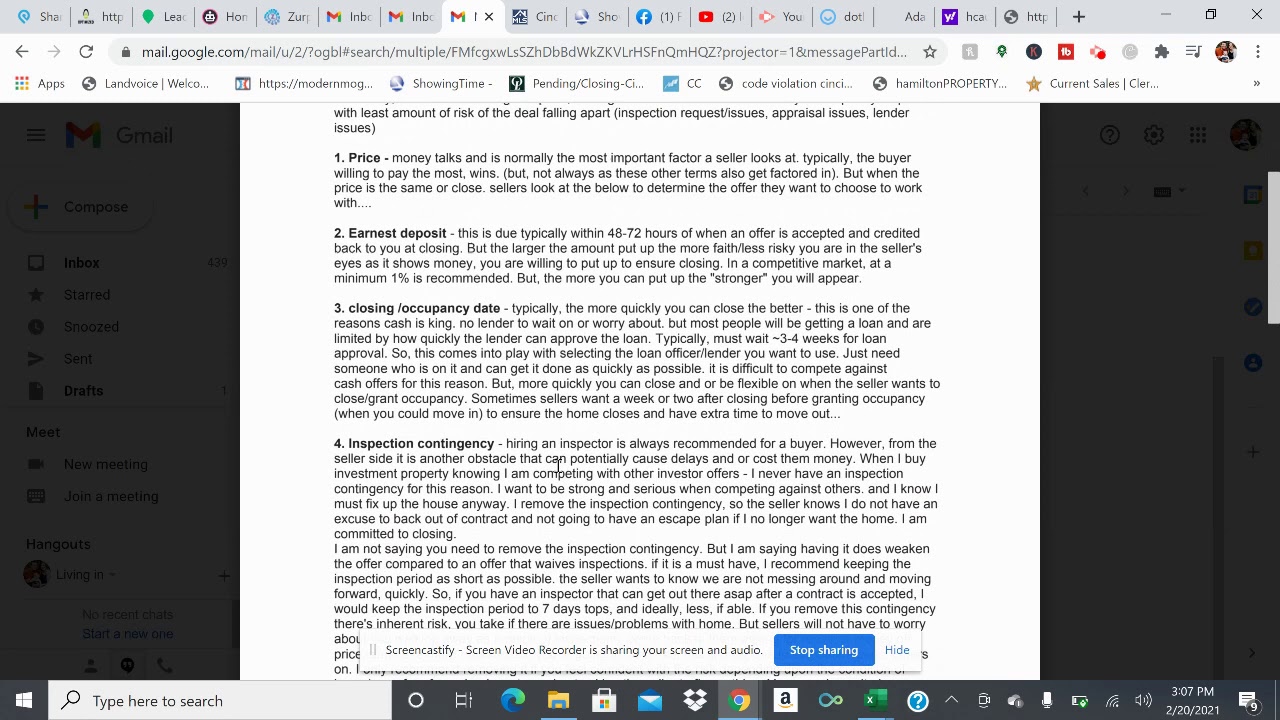
1. Price - money talks & is normally the most important factor a seller looks at. typically, the buyer willing to pay the most, wins. (but, not always as these other terms also get factored in).
2. Earnest deposit - this is due typically within 48-72 hours of when an offer is accepted & credited back to you at closing. In a competitive market, about 1% is recommended. But, the more you can put up the "stronger" you will appear.
3. closing /occupancy date - typically, the more quickly you can close the better - this is one of the reasons cash is king. No lender to wait on or worry about. but most people will be getting a loan & are limited by how quickly the lender can approve the loan. So, this comes into play with selecting the loan officer/lender you want to use. But, more quickly you can close & or be flexible on when the seller wants to close/grant occupancy. Sometimes sellers want a week or two after closing (when you could move in) to ensure the home closes & have extra time to move out...
4. Inspection contingency - hiring an inspector is always recommended for a buyer. However, from the seller side it is another obstacle that can potentially cause delays & or cost them money. I am not saying you need to remove the inspection contingency. But I am saying having it does weaken the offer compared to an offer that waives inspections. if it is a must have, I recommend keeping the inspection period as short as possible. the seller wants to know we are not messing around & moving
forward, quickly. So, if you have an inspector that can get out there asap after a contract is accepted, I would keep the inspection period to 7 days tops. If you remove this contingency there's inherent risk, you take if there are issues/problems with home. But sellers will not have to worry about you walking away as a result of inspections, come back to them asking for repair or money off price, & have more reassurance you're going to close. so, this is a big one to compete against others on. I only recommend removing it if you feel confident with the risk depending upon the condition of home/age of roof, mechanics, etc. & not asking the seller to fix anything. You can also write in an inspection contingency to have inspection for sake of finding any deal breaker items but purchase "as-is", not asking the seller to remedy/fix anything as a result. This eases sellers mind that you are not going to come back & ask for money as a result of inspections. But you still have an "out" if something major comes up, that keeps you from wanting to move forward.
5. Appraisal contingency - If cash, do not have to worry about this. But, if financing your lender will require an appraisal. But, in a hot market like this, where prices may get bided up to above what a licensed appraiser may say the home is worth. Buyers & sellers may have to negotiate the difference/gap between appraised amount (if it comes in less) & agreed contract price. Some buyers will write in contract to make the offer stronger so that buyer will cover any shortage between appraised amount & contract price. Because if appraisal comes in short, may cause you to bring more money to closing that you would have financed. But, depends how bad you want house/how strong you want to make your offer.
6. Financing Contingency - If you are getting a loan, we will have to keep this. The contract is contingent upon getting the loan. if you are competing with a cash offer, they will not have this.
7. Other contingencies – Do we have to make your offer contingent upon your home selling? If we do, this will weaken your offer against competing offers who do not have this contingency.
8. Price- Escalation clause - going back to price-this is likely the most important most sellers consider-whose willing to pay the most for home- When you offer in multiple offer situation you can write in an escalation clause. you can offer x price & escalate the price to an amount $500 or $1,000 over the highest offer (if there is a higher offer) in an amount not to exceed x price.
JEFF WILLIAMSON
call/text: (513) 205-7904
[email protected]
www.jeffwilliamsonhomes.com
/ cincinnatirealestateagent
• Schedule to see a home in the Cincinnati m...
#realestate #cincinnati #realtor
Thanks for watching Schedule to see a home in the Cincinnati market and tips for multiple offers in this seller's market

Информация по комментариям в разработке